


Iranian Hacking Group MuddyWater Linked to Ransomware Attack: A Complex Cyber Intrusion Operation
The Iranian state-sponsored hacking group known variously as MuddyWater, Mango Sandstorm, Seedworm, and Static Kitten has recently been implicated in a ransomware attack characterized by its deceptive nature and complexity. This incident, observed by Rapid7 in early 2026, was classified as a “false flag” operation that leveraged social engineering techniques through Microsoft Teams to initiate a multifaceted infection sequence.
Methodology and Execution
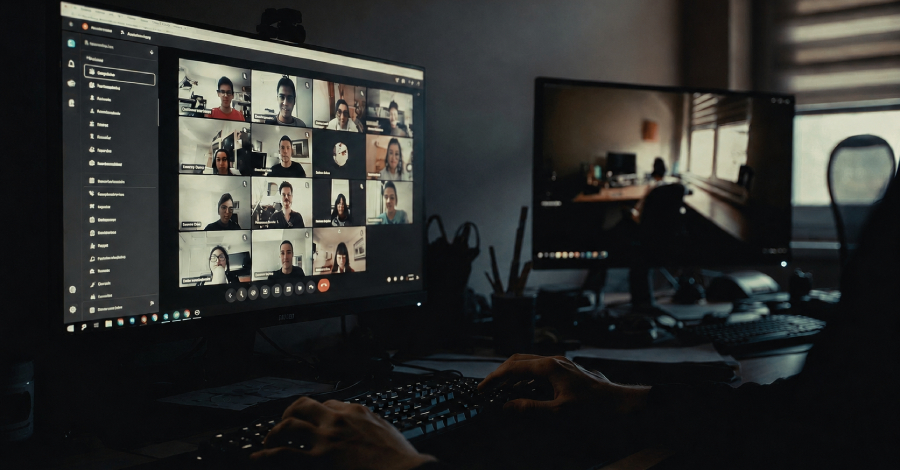
Initially appearing to follow the typical procedures of a ransomware-as-a-service (RaaS) operation associated with the Chaos brand, the evidence gathered suggests the attack was more targeted and orchestrated by state-backed actors disguised as opportunistic extortionists. Rapid7 detailed in a comprehensive report that the attackers employed an interactive social engineering phase on Microsoft Teams, utilizing screen-sharing to extract credentials and manipulate multi-factor authentication (MFA).
Following the initial breach, the hack deviated from conventional ransomware workflows by forgoing file encryption. Instead, MuddyWater opted for data exfiltration and maintaining long-term access through remote management tools like DWAgent. This tactic highlights a strategic shift in the group’s approach, which aims to obscure attribution by relying more heavily on widely-available tools from the cybercrime underground.
Evolving Tactics and Historical Context
The evolution of MuddyWater’s tactics was further documented by several cybersecurity firms, including Ctrl-Alt-Intel, Broadcom, Check Point, and JUMPSEC, who have observed their usage of tools such as CastleRAT and Tsundere. This is not the first instance of MuddyWater’s involvement in ransomware attacks; a notable occurrence dates back to September 2020 when the group targeted significant Israeli organizations using malware named PowGoop, which deployed a variant of the Thanos ransomware known for its destructive capabilities.
In 2023, Microsoft disclosed a collaboration between MuddyWater and another threat actor, DEV-1084, known to operate under the DarkBit persona. This partnership involved destructive attacks conducted under the pretext of employing ransomware methodologies. More recently, in October 2025, it is believed that they used Qilin ransomware against an Israeli government hospital, further suggesting an ongoing strategic focus on significant entities.
In March, Check Point explained that the emerging pattern of attacks indicates these Iranian-affiliated hackers are working within the cybercriminal ecosystem while deploying methods aligned with broader extortion schemes. This hybrid approach allows them to blur the lines between state-sponsored actions and financially motivated cybercrime.
A Look at the RaaS Landscape: Chaos Group
Chaos, the RaaS group that emerged in early 2025, has become notorious for utilizing a double extortion model. The group not only targets organizations but also publicly releases sensitive data to exert additional pressure. Their criminal methods include vishing campaigns via Microsoft Teams for impersonating IT personnel, tricking victims into installing remote access tools like Microsoft Quick Assist, and subsequently deploying ransomware.
Moreover, Chaos employs triple extortion tactics, threatening distributed denial-of-service (DDoS) attacks against victims’ infrastructures, further amplifying the fear and chaos experienced by targeted organizations. The group has managed to claim 36 victims, predominantly from the United States, specifically focusing on sectors such as construction, manufacturing, and business services.
Intricate Access Methods and Malware Details
In the intrusion that Rapid7 analyzed, the actors began by initiating external chat requests through Microsoft Teams, engaging users to obtain initial access via screen-sharing. Subsequently, they executed reconnaissance efforts and established persistent access using tools like DWAgent. The attackers further engaged in lateral movement through compromised user accounts and initiated data exfiltration. Upon completing this phase, they contacted the victim via email to negotiate a ransom.
The report indicated that, during the connected session, the threat actor executed basic commands to discover files related to the victim’s VPN and requested users to enter their credentials into text files. Additionally, the hackers were observed employing various malware families, with a notable executable dubbed “ms_upd.exe” entailing a multi-stage infection chain designed to further deliver malicious payloads.
Rising Threats and Implications for National Security
Recent developments also underscore the geopolitical dimensions of cyber warfare, particularly with Iran’s increasing cyber activities. Hunt.io has identified a significant intrusion aimed at Omani government institutions, resulting in the exfiltration of over 26,000 sensitive records. This particular incident illustrates the potential for cyber operations to intersect with national security, indicating that the focus has shifted from mere intelligence gathering to real-world consequences that could destabilize infrastructures.
Sergey Shykevich from Check Point Research highlighted the nature of this escalation, suggesting an alarming trend in which cyber operations are increasingly being tied to physical attacks, thereby raising the stakes considerably.
As cyber threats evolve, the implications for national security become increasingly dire, suggesting that every moment of quiet in the physical realm may provoke intensified cyber activity. This persistent threat from groups like MuddyWater illustrates the rapidly changing landscape of cyber warfare, necessitating ongoing vigilance and adaptive strategies to counter such complex attacks.