


Agentic Security Startup Identifies AI Capabilities Embedded Across Enterprise Apps
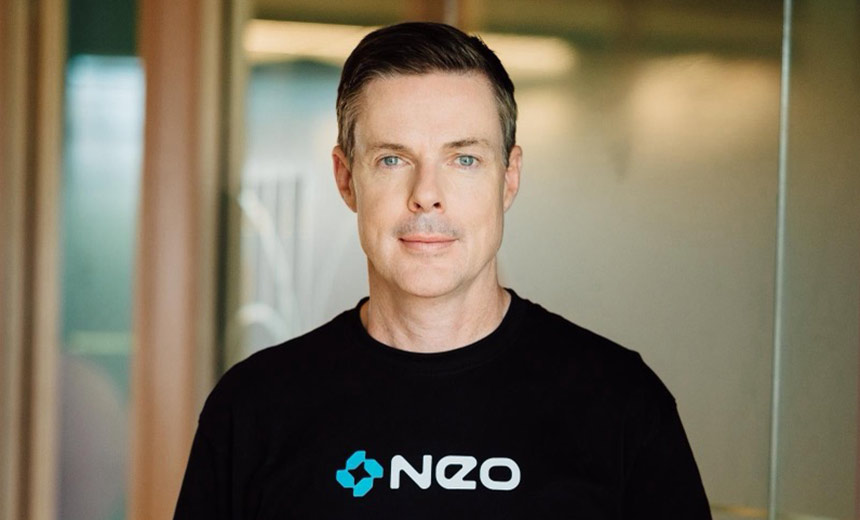
On July 20, 2026, the startup Neo emerged from stealth mode, announcing its commitment to mapping the expanding landscape of artificial intelligence-enabled software within enterprise applications. Founded by Nick Warner, who notably served as the president of SentinelOne, Neo has secured an impressive $100 million in funding from prominent investors including Andreessen Horowitz and Bessemer Venture Partners.
The financial backing will enable Neo to delve into both traditional binary software and innovative non-binary components that incorporate AI skills, plug-ins, browser extensions, and various tools. Warner emphasized that this funding is crucial for launching Neo’s security platform, which aims to enhance discovery, visibility, and policy enforcement across diverse software environments.
"The adoption cycle for AI software has moved faster than anticipated," Warner stated in an interview with ISMG, expressing confidence in Neo’s technology. According to Warner, nearly half of all enterprise software will possess agentic capabilities by the end of the current year. This rapid evolution has generated heightened interest in Neo’s offerings, surprising even the company’s founders.
Neo, established in August 2025, is spearheaded by Warner, whose extensive experience includes over five years at SentinelOne, where he held multiple executive roles. His background also includes leadership positions at Cylance, where he drove global sales, and McAfee, focusing on advanced technology sales. His leadership trajectory has provided him with valuable insights into the complexities of both security and sales in the tech landscape.
However, as AI capabilities proliferate within HR systems, finance tools, customer relationship management platforms, and productivity software, security challenges are emerging. Warner noted that organizations frequently lack comprehensive knowledge regarding the AI functions being integrated into their existing systems, the underlying models supporting these capabilities, and their interplay with sensitive corporate data. This unawareness poses a substantial security risk, as businesses grapple with the vulnerabilities associated with these newly agentic applications.
"Most companies are flying blind and need illumination," Warner explained. He underscored the urgency for organizations to gain clarity about the software within their environments, including downloads and active software, especially in this new era characterized by agentic functionalities. As autonomous AI agents begin to automate workflows and interact with confidential data, they inherit the permissions of the human users from which they operate. This inheritance leads to pressing security inquiries about what information these AI systems can access and whether their training processes properly evaluate corporate data before implementation.
"The identity is inherited from the human user," Warner reiterated, indicating that the blending of user identity with AI capabilities creates a fundamentally new challenge for security teams. The integration of automation with existing permissions transforms the security landscape, and many organizations are struggling to adapt to these new dynamics.
To navigate these complexities, Neo utilizes AI agents that autonomously detect software functionalities, scrutinize capabilities, and compare discovered functionalities with actual performance. This analysis enables the identification of potentially malicious or deceptive software that could pose a threat to business operations. Additionally, the platform examines terms of service and data usage policies, evaluating whether applications utilize sensitive enterprise information or demand excessive privileges.
"Our platform provides discovery, context, visibility, policy, and control—all within a single product that is easy to deploy," Warner asserted. This comprehensive approach differentiates Neo’s offering by leveraging unique intellectual property developed by experts with vast experience in threat research and world-class endpoint solutions.
While many early AI security solutions focused on monitoring gateway or proxy interactions, often assuming that AI activities would primarily transpire through browser-based cloud models, Neo takes a different approach. The startup has designed a full endpoint agent capable of identifying AI software and monitoring their activity directly on the device. This localized analysis mitigates privacy concerns since sensitive information remains on-site, and it allows Neo to detect transactions that might not traverse traditional enterprise networks.
"We’re not reliant on sending data to the cloud for analysis," Warner noted, highlighting the distinct advantage of conducting detection and protection on the endpoint itself. This proactive strategy enables organizations to better understand the software landscape, pinpoint which applications possess agentic functions, and recognize the associated permissions and data interactions.
As the AI landscape continues to transform enterprise software, clients increasingly require insights into their environments—knowing what software exists, what capabilities they entail, and how they interact with other systems. Warner believes this market will be at least as substantial as the endpoint security market, emphasizing that Neo’s offerings are foundational for all enterprises seeking clarity in this evolving software sphere.
Ultimately, Neo positions itself not as just another niche solution but as a necessary tool for all enterprises vying to understand and secure this new software layer ushered in by the era of artificial intelligence.