
Newly Discovered Trojans Pose Serious Threats to Cybersecurity
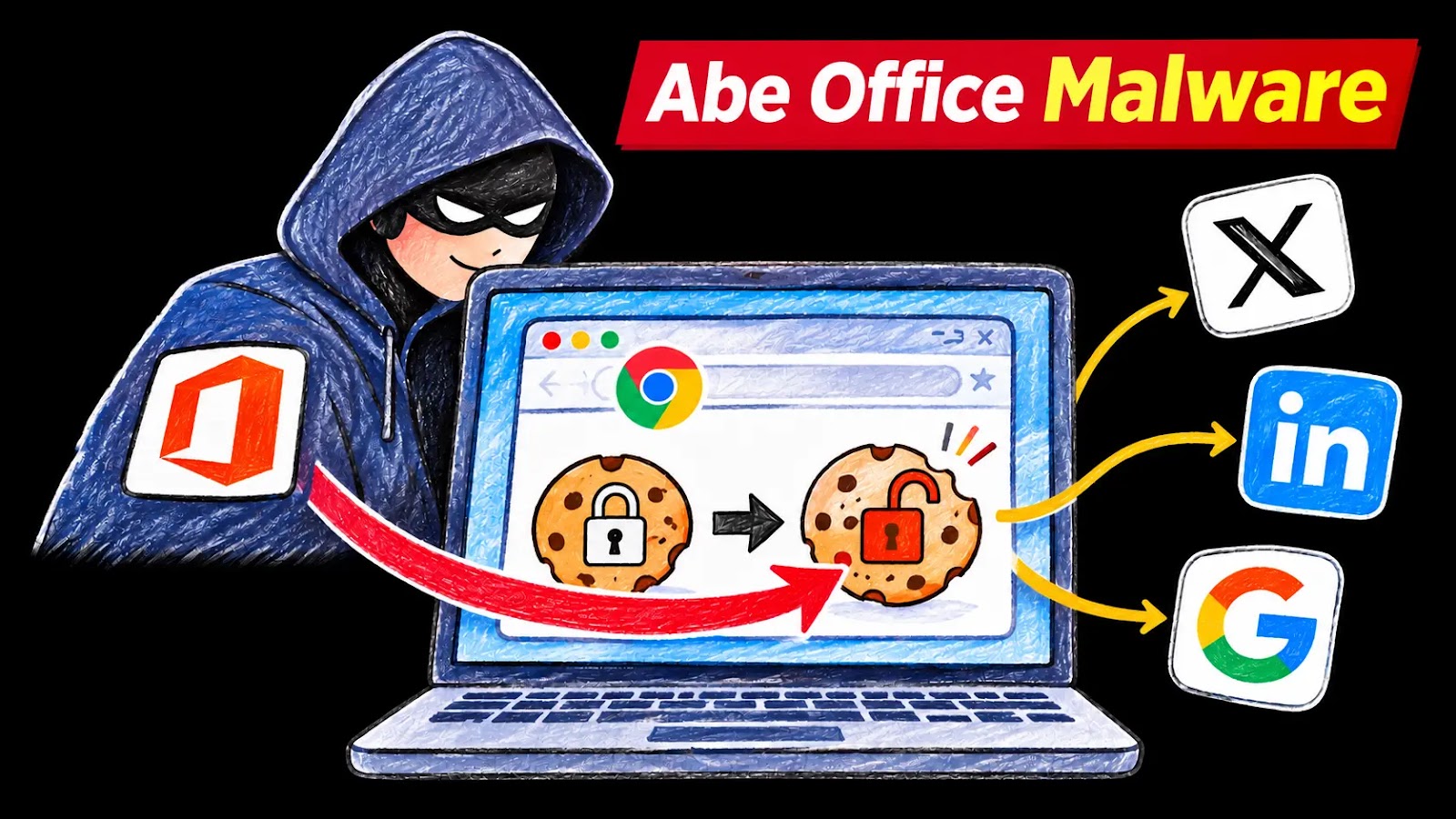
In a recent cybersecurity analysis, a newly identified remote-access trojan, known as "Abe Office workstation helper," has emerged as a significant concern for users and organizations alike. This sophisticated malware not only masquerades as a legitimate application but also integrates advanced hidden-browser control capabilities. Furthermore, it is equipped with specialized tools designed to circumvent Chrome’s App-Bound Encryption — a security feature aimed at safeguarding user data.
Instead of attempting to break cryptographic measures outright, this browser stealer employs a more nuanced approach. It injects a helper component into the Chrome browser, from which it can request decryption services within the trusted browser process. This dual-layer tactic complicates detection efforts and enhances the malware’s stealthiness.
The analysis attributing the malware to MalwareHunterTeam highlights a specific executable file named AbeAgent.exe. The investigation was conducted using Claude Code on a REMnux virtual machine, underscoring the meticulous efforts taken by researchers to understand the operational dynamics of this trojan.
During sandbox testing, interactive activities by the operator were noted, although researchers did not detect any execution of the cookie-stealing functionalities. This indicates a potential limitation in the malware’s active engagement or a tactical decision to conceal its operations further. The AbeAgent.exe file carries a code-signing certificate issued under the name of Kimberley Hankinson and was digitally signed on November 4, 2026. While such signatures are typically meant to guarantee the integrity of software and confirm the identity of the signer, it is important to note that they do not validate the authenticity or legitimacy of the application itself.
Upon execution, the loader of AbeAgent.exe self-replicates into a designated user profile directory, specifically at %USERPROFILE%\AbeOffice\. Additionally, it initiates processes to remove the Mark of the Web and establishes persistence via a registry value called "Abe Office Sync" along with a scheduled task. This persistent influence means that the malware can relaunch itself each time the user starts their system.
Three notable encrypted add-ons empower its operations: AbeCapability.dll handles remote-access trojan functions, AbeHvcn.dll provides hidden desktop access and other injection techniques, and AbeBrowserShim.dll is tasked with requesting the decryption of browser keys. Although the loader demands an unlocking key from its server for operation, researchers managed to derive this key using an embedded default password, AbeOffice-ChangeMe, which also governs network encryption, allowing analysts to decrypt captured communications.
Google has previously acknowledged browser injection methods as remaining vulnerabilities, although they also note that such tactics tend to increase the likelihood of detection. The Abe Office malware exploits this knowledge, executing an off-screen browser that injects the AbeBrowserShim.dll component and prompts Chrome’s elevation service for decryption of its App-Bound key. This added layer of complexity further illustrates the trojan’s cunning design.
The data collection routines associated with the trojan, internally tagged as “DC Styler,” are particularly unsettling as they are designed to target a variety of sensitive information types, including passwords, cookies, browser extensions, and payment card details across multiple web browsers, including Chrome, Edge, Brave, Opera, and Firefox. Notably, the trojan’s App-Bound bypass techniques are specifically aimed at supported browser implementations without factoring in Firefox’s distinct protective architecture.
Embedded within its intricacies is the hVNC component, which enables the malware to replicate Chrome and Edge user profiles, storing them at C:\ProgramData\AbeOffice\SystemCache\. This feature allows the malware’s operators to interact with existing sessions from affected machines clandestinely. During extended observation within the sandbox environment, operators were seen opening both browsers and navigating to their respective password management pages. However, it is vital to note that no saved passwords were discovered in the profiles during this testing.
The primary command-and-control server associated with the trojan has been noted as 2.26.230[.]54:9090, with an additional secondary server, 87.199.195[.]141, serving as a matching download point. This infrastructure is linked to a sizeable number of files, with VirusTotal identifying 133 related files. However, the interconnection does not imply that all files share identical functionalities, emphasizing the need for careful examination by cybersecurity professionals.
For organizations aiming to defend against this emerging threat, vigilance is paramount. Investigating AbeOffice directories and persistent artifacts, alongside monitoring for connections to the identified servers, is crucial. Given its methods of off-screen launching, using parameters like --window-position=-32000,-32000, defenders are urged to correlate suspicious parent processes with local remote debugging events.
In the event of confirmed infections, it is imperative to isolate the affected endpoint, revoke browser sessions, and reset important credentials using a clean device. As the delivery mechanisms for this malware remain uncertain, the relationship between associated bootstrap loaders and archive packages is not yet fully understood. Observations of the trojan’s activities suggest a focus on credential theft, but comprehensive attribution and detailed mapping of its infection chain are yet to be established.
Indicators of Compromise
Security professionals are urged to consider various indicators of compromise related to AbeAgent.exe and its components. These include specific SHA256 values linked directly to the malware’s executable files, serving as critical data points for forensic analysis and threat detection.
As the cyber threat landscape continues to evolve, the appearance of sophisticated malware such as the Abe Office trojan underscores the need for enhanced cybersecurity measures and proactive defense strategies. Keeping abreast of emerging threats and employing state-of-the-art security technologies will be vital in mitigating risks and protecting sensitive data.