
Major Evolution of NodeStealer Malware: A Broad-Spectrum Spyware Platform
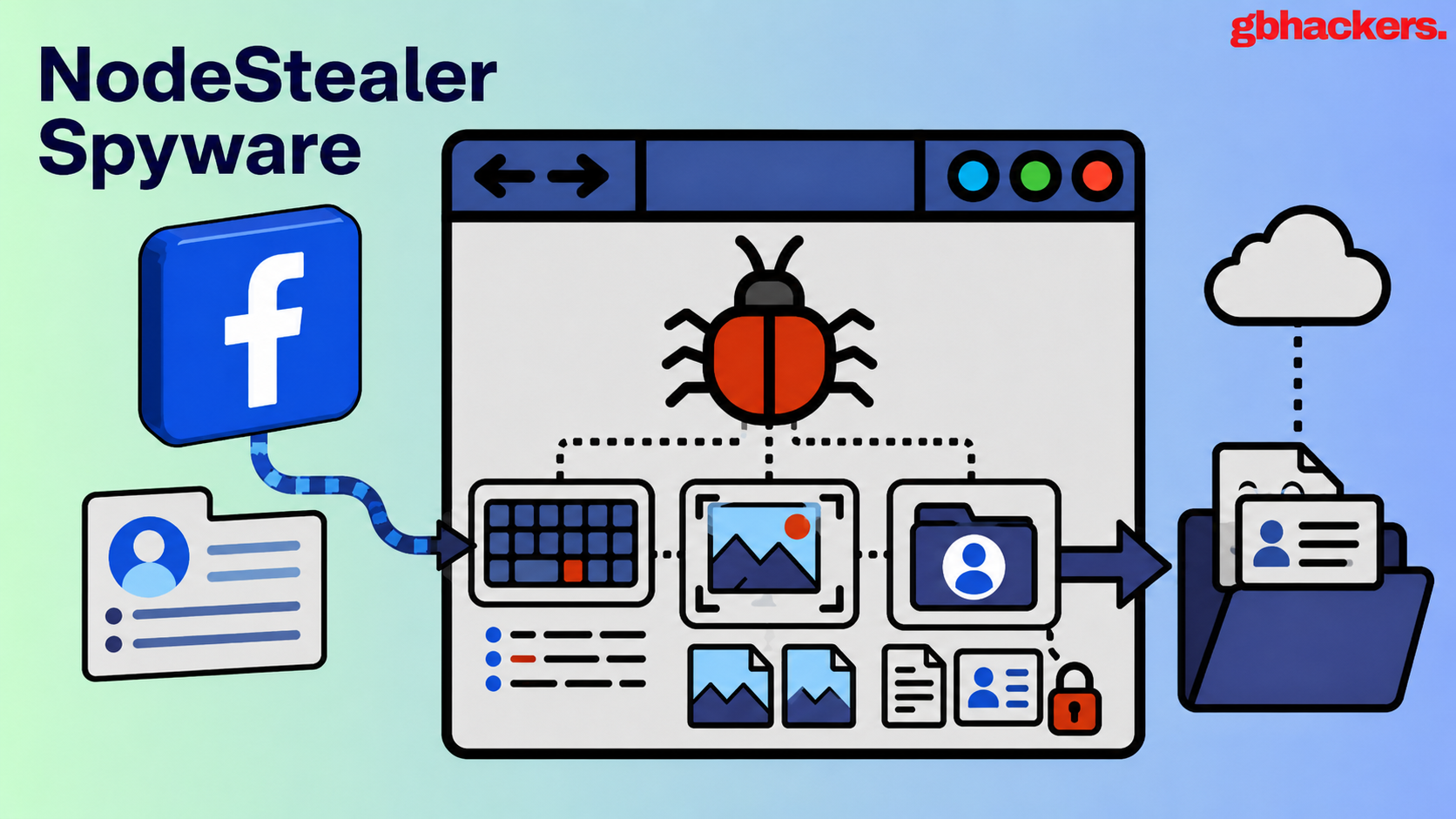
In August 2026, security researchers alerted the tech community to a significant upgrade of the Python-based NodeStealer malware, marking its transformation from a Facebook-specific infostealer to a robust spyware platform. This new iteration is not confined to merely pilfering user credentials; it can now log keystrokes, monitor clipboard activities, capture screenshots, and harvest extensive information from Facebook profiles. As cyber threats evolve, this upgrade underlines the pressing need for enhanced cybersecurity measures.
Initially, NodeStealer emerged as a JavaScript-based threat primarily targeting Facebook accounts. However, its capabilities expanded notably in 2023 when researchers identified a Python version that broadened its focus beyond Facebook. This version began collecting browser credentials and session cookies from major browsers such as Chrome, Edge, Brave, Opera, and Firefox. The malware’s adaptability has made it a more versatile tool for cybercriminals.
The latest variant diversifies its approach by employing a split Telegram command-and-control (C2) architecture. This design separates general credential theft from the exfiltration of Facebook-specific data, which allows for better organization and management of stolen information. Earlier iterations utilized deceptive Facebook messages and malicious attachments, specifically aimed at enticing business-page administrators to fall into their traps.
The new enhancements signify a shift towards persistent surveillance functionalities. Utilizing the pynput Python library, the malware records victims’ keystrokes and saves them in a temporary file labeled as keylog({ip}).txt. To ensure continuous data exfiltration, a background thread transmits this file to the attackers’ primary Telegram bot every 120 seconds, systematically clearing its contents afterward. By maintaining uninterrupted logging, NodeStealer can capture sensitive information such as passwords, personal messages, payment details, and any data typed on the keyboard.
In addition to keystroke logging, clipboard monitoring further amplifies the malware’s data-gathering efficacy. Employing the pyperclip library, the malware records any copied plain text and transmits it alongside the victim’s public IP address. This allows attackers to associate the extracted information with specific compromised devices, enhancing their operational effectiveness.
The malware also takes advantage of the pyautogui library to capture screenshots both when it activates and right before it completes its data collection tasks. This feature can expose critical information, including active user sessions, financial dashboards, private chats, and one-time authentication prompts, greatly enhancing the potential damage to compromised accounts.
Notably, the most consequential transformation of NodeStealer lies not just in its technical capabilities but in its shift from focusing solely on Facebook accounts to extensively profiling the individuals who manage those accounts. Earlier versions primarily queried only two endpoints of the Facebook Graph API to gather business and advertising account details. In stark contrast, the latest version can access over 20 endpoints that cover a wider range of data, including personal identification, social connections, content, login data, and even signals related to account security.
Security researchers from Netskope have indicated that this campaign primarily targets organizations in Asia and North America, with the financial services sector being one of the most affected. The malware’s capacity to collect a rich array of personal details—including names, email addresses, birthdays, genders, education histories, work experiences, locations, profile images, friends, followed accounts, and various Facebook activity metrics—significantly increases the potential consequences of a breach.
The high value of this data can empower threat actors to craft tailored business email compromise lures, impersonate executives or brand administrators, and even conduct account takeover attempts across different services where users might reuse credentials or recovery information. The NodeStealer malware had previously reached another level in 2024 by targeting Facebook Ads Manager data and information stored in browsers related to payment methods.
Moreover, the upgraded version has notably departed from earlier models that relied on a single Telegram bot for data exfiltration. The new variant operates with two distinct bot tokens: one receives ZIP archives containing browser passwords, credentials, and cookie databases, while the other collects Facebook-specific data. This dual-bot approach allows for operational specialization and enhances resilience against potential disruptions should one of the bots be identified or disabled.
Research has identified a compiled .pyc file associated with the malware that exhibits characteristics indicative of advanced programming techniques. The migration to AI-assisted development is suggested by a method named save_additional_info, which systematically queries the new Graph API endpoints with repetitive, uniformly structured calls. The presence of decorative emoji labels, a feature absent in older NodeStealer versions, suggests that AI tools may have accelerated or assisted in the creation of these new functionalities.
Given these evolving threats, cybersecurity defenders are urged to monitor for suspicious Python executions, Telegram Bot API traffic, and unexpected access to browser SQLite databases. Strengthening protections for Facebook Business and Ads Manager administrators through multifactor authentication (MFA), least-privilege access, and session monitoring is also recommended.
As NodeStealer continues to adapt and grow more sophisticated, organizations must remain vigilant and proactive in their cybersecurity efforts to mitigate the risks posed by such advanced malware.