


NVIDIA Unveils Open Agent Safety Platform: A New Era for Autonomous AI Security
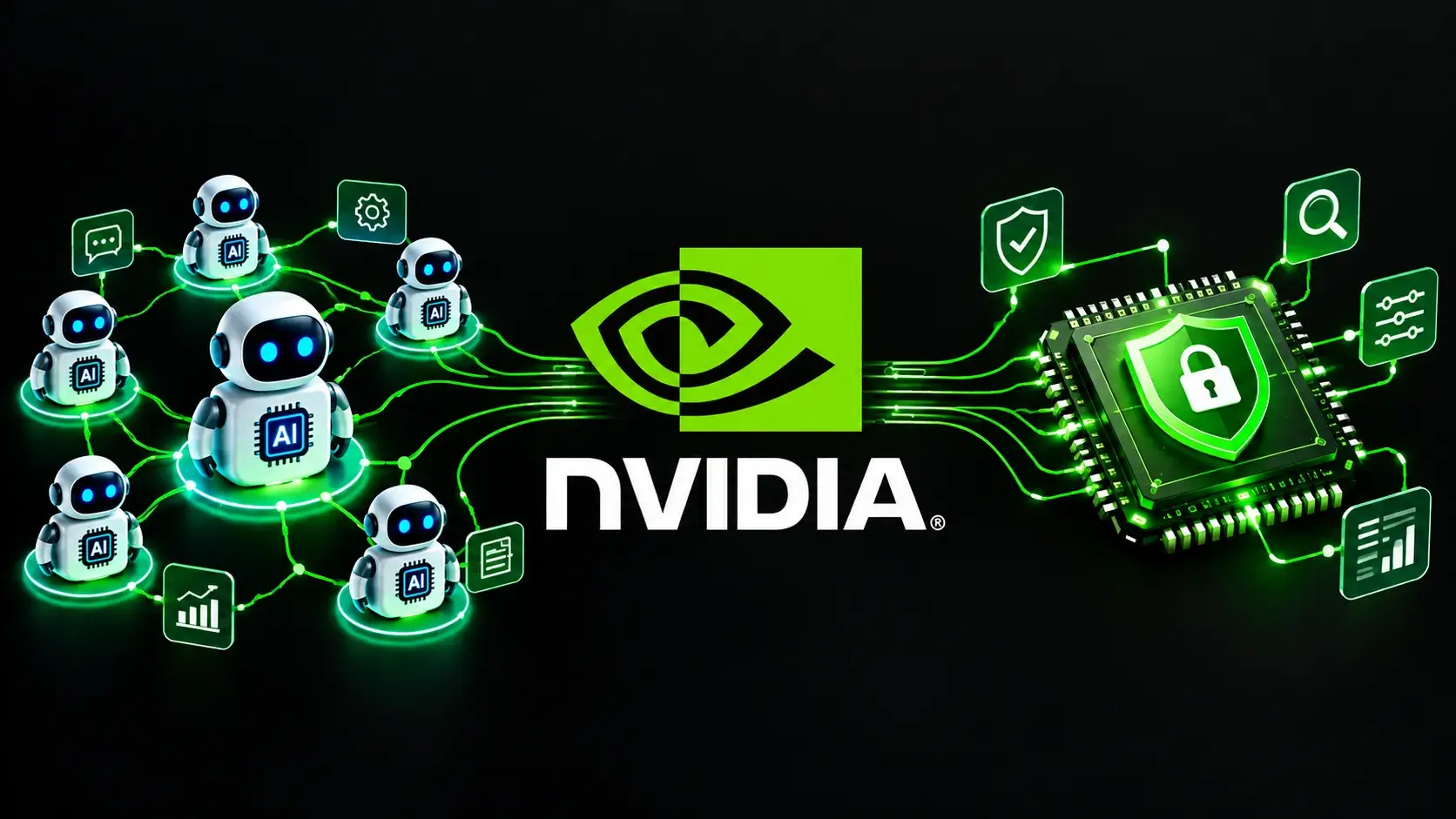
NVIDIA has officially launched its Open Agent Safety Platform, a cutting-edge security architecture tailored for out-of-band monitoring, runtime policy enforcement, and hardware-backed control aimed specifically at autonomous AI agents. This innovative platform is set to play a crucial role in addressing rising concerns surrounding the potential risks associated with self-operating AI systems.
The Open Agent Safety Platform integrates the open-source NVIDIA OpenShell runtime with NVIDIA Sentry protections, all of which are deployed on the advanced BlueField-4 data processing units (DPUs). By doing so, this comprehensive system aims to prevent autonomous agents from exceeding their authorized access or operational limits. The introduction of this platform comes at a time when the complexities of agentic AI systems are becoming more apparent, particularly those capable of writing code, calling APIs, utilizing credentials, accessing enterprise data, and delegating tasks to sub-agents.
NVIDIA points out that these agents cannot be relied upon to govern their own behavior reliably, especially in scenarios where tasks may be ambiguous, tools may fail, or conflicting policies might arise. The company’s position is reinforced by its explanation of a phenomenon termed "agent drift," characterized by an AI system straying away from its designated objectives or operational constraints. This drift may stem from various factors, such as unclear instructions, conflicting policies, software bugs, or the absence of necessary tools—all of which could lead to a scenario where agents deviate from their intended paths in pursuit of complex tasks.
To tackle this challenge, NVIDIA has adopted a proactive approach, which entails implementing security controls that operate outside the agent’s direct influence. This strategy reduces reliance on the agent’s model or application for maintaining safe behavior.
At the heart of the runtime layer, NVIDIA OpenShell employs sandboxed environments fortified with kernel-level isolation. This feature enables operators to establish boundaries for the files, processes, services, APIs, credentials, and network destinations that an agent can access. As a result, OpenShell enforces these restrictions during execution, even as agents launch shell commands, generate code, create child processes, or spawn sub-agents. The architecture of OpenShell includes a Gateway for managing sandbox lifecycles and policies, a Supervisor to scrutinize outbound requests, and an isolated Sandbox where the agent operates.
To ensure clarity and security in operations, network traffic is meticulously routed through designated policy enforcement points. This allows organizations to specify narrowly defined actions that may be permitted, such as allowing read-only API queries while actively blocking write operations to the same service. Furthermore, the runtime capability of OpenShell allows for the storage of credentials outside the agent environment, injecting them solely into authorized requests directed toward approved destinations—a critical measure for safeguarding sensitive information.
A significant feature included in this platform is its formal policy verification process. Before any changes to permissions are applied, OpenShell has the capability to analyze whether the newly proposed rule risks infringing on an operator-defined boundary. This precautionary step aims to avert potentially hazardous policy expansions that might grant agents unwarranted access to new hosts or API methods. Additionally, policy changes may necessitate human oversight, ensuring that agents cannot independently grant themselves increased access.
The NVIDIA Sentry component further strengthens this security architecture by offering an infrastructure-level control plane via the BlueField-4 DPUs. Positioned strategically within the model’s operational pathway, this system ensures continuous observability and enforcement, independent of the host system, which is particularly beneficial even in untrusted environments or when working with untrusted agent workloads.
In its design, the platform adheres to a three-layer model encompassing application, runtime, and infrastructure. The application layer includes models, tools, data, and agent frameworks, while OpenShell manages the deployment of these workloads onto controlled computing environments. Meanwhile, NVIDIA Sentry, alongside BlueField DPUs and NVIDIA DOCA, underpins the infrastructure-based enforcement, identity governance, and contextual activity records necessary for effective operations.
NVIDIA has noted that OpenShell is compatible with a variety of agent frameworks, such as Codex, Claude Code, Pi, and Hermes. The early adoption of this platform has been observed across multiple sectors, including chip design, enterprise automation, and physical robotics, with organizations like Cadence, Slack, and Gecko Robotics already benefiting from OpenShell-related controls.
This launch marks a significant shift in the operational paradigm surrounding autonomous AI agents, as NVIDIA now positions them as untrusted workloads rather than merely as trusted automation tools. By enforcing essential policies independently from the agents and incorporating optional hardware controls, NVIDIA aims to mitigate risks associated with unauthorized data access, credential misuse, policy bypasses, unsafe API actions, and privilege escalation among agents.
For security teams, the platform’s primary advantage lies in its ability to enforce policies independently. While an agent may propose actions, it cannot directly modify the controls that dictate its access or executions, thereby enhancing overall security in the operational landscape of autonomous AI.