
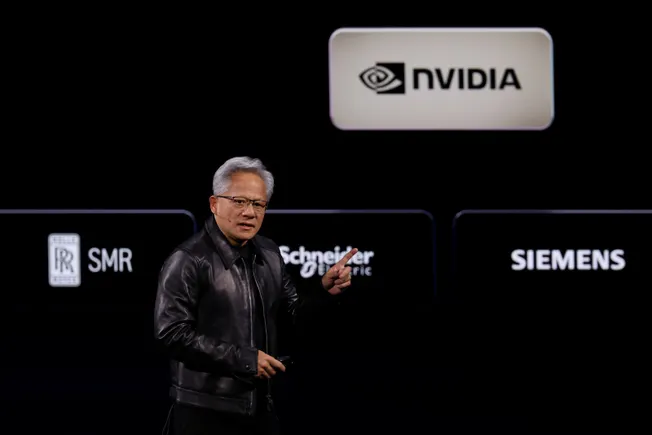


NEWS ANALYSIS: Nvidia’s Expanding Ecosystem in AI Infrastructure
With news emerging that Jensen Huang has reinstated as Nvidia’s CEO after an 11-day absence, the tech industry is watching closely. His return comes as Nvidia shifts its focus from merely selling GPUs to creating a comprehensive ecosystem of hardware, software, and infrastructure aimed at supporting increasingly demanding Artificial Intelligence (AI) workloads. This strategic pivot raises pertinent questions for enterprises regarding how much of their AI technology stack they should entrust to Nvidia.
The Nvidia Board reinstated Huang as the company grapples with its evolving role in the technology landscape. Under Huang’s leadership, Nvidia has consistently sought to position itself as an essential player in the development and operation of AI systems, moving beyond the traditional confines of GPU manufacturing. As the company continues to expand its ecosystem, Chief Information Officers (CIOs) and IT leaders must balance the convenience of integrated platforms against the risks of vendor dependence and control over their technology environments.
Recent developments within Nvidia demonstrate its commitment to this new direction. For instance, the company began shipping its new Vera Rubin computing platform in November 2023. Additionally, in an effort to broaden its cloud services, Nvidia expanded its collaboration with Oracle to deliver the Vera Rubin platform at a multi-gigawatt scale, further emphasizing the company’s intention to build out its infrastructure capabilities.
Nvidia’s latest financial results substantiate the growing significance of its AI infrastructure business. The company reported remarkable revenue figures for the third quarter of fiscal 2027, reaching $115.8 billion—an extraordinary 103% increase year-over-year. The majority of this revenue, approximately $107.6 billion, was generated from data centers, underscoring the increasing demand for robust AI computing capabilities among enterprises.
The continual evolution of Nvidia’s cloud offerings, particularly through partnerships with cloud providers, indicates an ongoing expansion of its ecosystem strategy. The collaboration with Oracle to scale Vera Rubin on Oracle Cloud Infrastructure marks a substantial leap towards optimizing model training, inference, and the resource-intensive tasks that AI agents perform. As David Wang, COO of Tetrate—an Nvidia partner—pointed out, Huang’s focus on building comprehensive ecosystems has long been a hallmark of Nvidia’s strategy. Whether in gaming or enterprise AI, the goal has been clear: provide developers with tools that enhance capability and efficiency.
Nonetheless, this evolving ecosystem raises critical concerns about vendor lock-in. While the depth and breadth of Nvidia’s offerings may appear beneficial at first glance, enterprises must be vigilant about the implications of becoming too dependent on its technologies. The relatively open approach Nvidia takes toward software development may mitigate some control concerns, but the potential for increased reliance remains.
The company’s recent initiatives towards agent safety further illustrate how its strategy is branching into software security. Nvidia introduced an OpenShell reference architecture designed to integrate various components—including Vera Rubin infrastructure, BlueField-4 Data Processing Units (DPUs), OpenShell runtime software, and the Nvidia Sentry security framework. This architecture aims to enhance the security and governance of AI agents, a vital concern for many organizations.
By contributing OpenShell to the Cloud Native Computing Foundation (CNCF), Nvidia is taking steps toward establishing a shared infrastructure for agent sandboxing. However, as Emily Hartstone from the Hartstone Institute pointed out, standardizing agent containment does not address the pressing question of how businesses govern these agents’ actions. The nuances of permission and authority for AI agents remain a challenge that enterprises must navigate carefully.
The distinction between containing an agent and authorizing its actions carries significant implications for how organizations evaluate their infrastructure vendors. As enterprises grapple with the complexities of AI governance, defining specific permissions, limits, and exceptions becomes essential. Proper documentation of each agent’s actions, alongside the authority it relied on and the rules that guided its decisions, will be crucial for accountability.
This evolving relationship with agents means that businesses need to assess their infrastructure not just on containment but also on how it handles identity, action-level authorization, and accountability across all applications and environments utilized by AI agents.
While Nvidia’s comprehensive technology platform may offer a more integrated and streamlined foundation for building AI applications, the growing emphasis on interoperability and independent governance should not be overlooked. Huang’s reinstatement positions him to lead Nvidia as it forays beyond its traditional role into the realms of software and infrastructure, but the path ahead is laden with considerations for enterprises aiming to safeguard their technology autonomy. As the industry watches this dynamic unfold, it remains clear that organizations must be judicious in their partnerships and stay vigilant to retain control over their AI implementations.
In summary, as Nvidia continues to develop its integrated AI technologies, enterprises are faced with the dual challenge of leveraging its capabilities while maintaining their independence and governance over the technology stacks they adopt. As more organizations engage with Nvidia’s offerings, one question looms large: how can they navigate this new landscape while ensuring they remain in control of their own destinies?