
The Future of Nvidia Post-Huang: An Uncertain Path Yet Resilient Roadmap Ahead
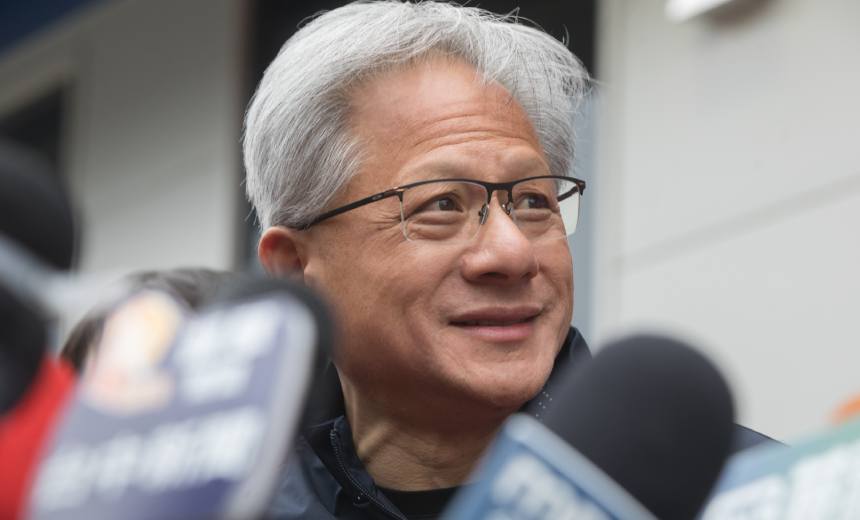
The abrupt exit of Jensen Huang, the founding CEO of Nvidia, has sent shockwaves through the company and the broader tech market, marking a tumultuous period for stakeholders and industry watchers alike. Huang’s departure, stemming from allegations linked to an extramarital affair, is reverberating across financial markets, as evidenced by Nvidia’s stock slump of 12.9%, plunging from $188.70 to $165.45 per share. Such a decline reflects the significant influence Huang had over Nvidia during his 33-year tenure, serving as its sole leader since its inception.
Nvidia’s stock trajectory is not just a reflective indication of Huang’s personal fallout; it symbolizes a larger narrative concerning the reliance on visionary leadership within tech giants. The company’s valuation has taken a hit, with losses nearing $2 trillion, yet it remains a substantial player in the stock market, representing around 6% of the S&P 500. Despite this setback, analysts suggest that Nvidia’s foundational strategies remain robust. The company has a detailed roadmap for the upcoming two years that appears largely unaffected by Huang’s exit.
As the tech industry gears up for new applications and advancements in artificial intelligence (AI), Nvidia stands ready to deliver products that have already been pre-planned and are now set to launch. The Vera Rubin platform, designed to support manufacturing AI factories, is poised to enter full production. Even in the midst of leadership transitions, Nvidia’s existing product pipeline guarantees stability. Interim CEO Colette Kress confirmed during a recent earnings call that Vera Rubin has attracted significant purchase orders from major hyperscalers and AI cloud platforms, placing the backlog above an astounding $2 trillion. Investor James Foord emphasized that the change in leadership would not disrupt the fulfillment of these active orders.
Furthermore, Huang’s legacy places Nvidia in an advantageous position. The company has established an impressive competitive moat, positioning itself well ahead of rivals like Broadcom and AMD. Nvidia’s share of the data center market stands at a staggering 76%, dwarfed by Broadcom’s 10% and AMD’s mere 3%. Still, in light of Huang’s absence, analysts are speculating that Nvidia could face increased competition, particularly from Google’s Tensor Processing Units (TPUs), which may win favor among key partners like MediaTek and Broadcom.
William Blair analyst Sebastien Naji noted the contrast between AMD’s focus on performance amid Nvidia’s leadership woes. Nvidia’s robust earnings continue to surpass market expectations, evidenced by a 12-month forward price-to-earnings (P/E) ratio of 12.4x—lower than competitors like Broadcom and AMD, whose P/E ratios are significantly higher. As Nvidia prepares to report earnings, investors are hopeful for stable gross margins, ideally around the projected 74%. A decline in margins could indicate a looming challenge as competition intensifies, potentially eroding Nvidia’s competitive moat.
Looking beyond the immediate financial landscape, Nvidia’s growth forecast for 2028 remains a crucial focal point for investors. They are keen to see management affirm growth projections of 70% in revenue. Such a confirmation would serve to reinforce confidence in Nvidia’s viability, indicating that the company’s success is not merely a byproduct of Huang’s leadership but is embedded within the organizational structure and strategic plans of the company.
However, one of the critical uncertainties looming over Nvidia’s future is the trajectory of its product development post-2028. The next-generation Feynman data center GPU microarchitecture is scheduled for debut at that time. With Huang no longer at the forefront, the onus will fall on a new leader to chart the course for Nvidia’s flagship innovations and navigate future financing strategies. During Huang’s leadership, his capacity to secure favorable financing deals added a layer of stability to Nvidia’s financial ecosystem, creating a question mark around whether this will continue.
In summary, while the departure of Jensen Huang poses significant challenges for Nvidia, the company’s well-charted roadmap and enduring market position suggest that it can withstand this tumultuous period. Huang’s vision laid a foundation that will continue to support Nvidia’s advancements in AI and seamless integration into new markets. The company’s resilience will be tested in the months ahead, particularly as investors watch closely to see if Nvidia can maintain its lead in a rapidly evolving tech landscape. What remains clear is that Nvidia’s legacy and future are intertwined in complex ways, with the potential for innovation still very much alive, even beyond Huang’s shadow.