
Daybreak Cyber Partner Program Expands Application of GPT-5.5 for Cybersecurity Solutions
June 22, 2026 | By Michael Novinson
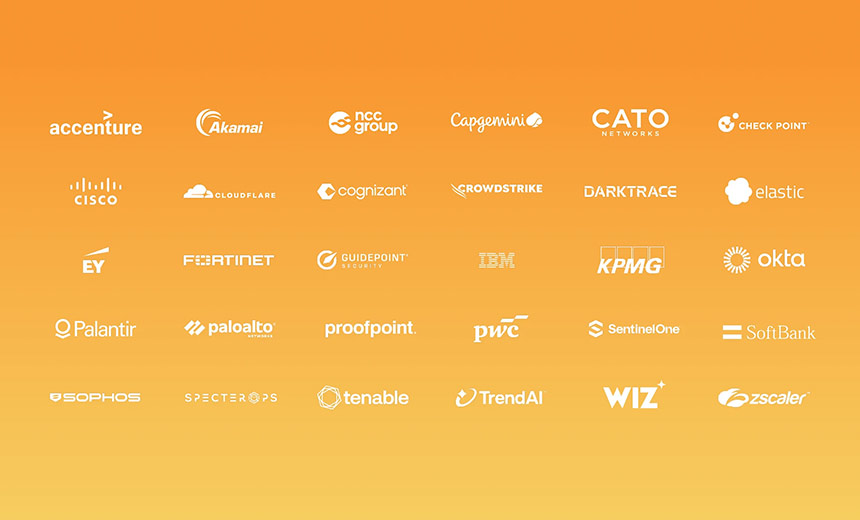
OpenAI is embarking on a significant expansion of its frontier models by granting access to 30 cybersecurity vendors and service providers, enabling them to integrate the advanced capabilities of GPT-5.5 into their products and services. This initiative, known as the Daybreak Cyber Partner Program, marks a pivotal step in enhancing the cybersecurity landscape.
The primary objective of the Daybreak Cyber Partner Program is to allow security vendors, consulting firms, and managed service providers to seamlessly incorporate OpenAI’s cutting-edge cyber capabilities into existing products that clients already utilize. The participating vendors aim to leverage the latest AI models to improve key cybersecurity functions, including vulnerability prioritization, accelerating incident response, enriching threat intelligence, automating attack-path analysis, and providing comprehensive context around security risks.
According to OpenAI, "Participating partners can use GPT-5.5 with Trusted Access for Cyber—our primary model for most defensive cybersecurity workflows—in the security products and services they provide to customers." This arrangement ensures that clients can benefit from the model’s robust defensive capabilities, thereby enhancing their software resilience, while also keeping direct access to the model firmly in the hands of the participating partners.
OpenAI’s Daybreak initiative is geared toward empowering cybersecurity defenders to move beyond simple vulnerability detection and toward automated remediation and patching at scale. The integration of advanced AI models, security tooling, trusted industry partners, and open-source initiatives aims to enable organizations to patch software more swiftly and augment cyber resilience across enterprises and critical infrastructure.
As OpenAI elaborated, "Models can navigate extensive codebases, reason through attack paths, validate hypotheses, and identify security issues that might otherwise remain concealed. Defenders absolutely require access to these capabilities and need instruments to rectify the vulnerabilities we can now uncover—before adversaries do."
This expansion of capabilities comes shortly after a similar action from OpenAI’s competitor, Anthropic, which recently extended access to its Claude Mythos Preview to approximately 150 new organizations situated in over 15 countries. This move meant that U.S.-based vendors like Okta and Rubrik could utilize Mythos for the first time, intensifying the competitive landscape for cybersecurity AI solutions.
Transitioning from Internal Use to External Application
Historically, OpenAI had limited the access of GPT-5.5 to internal use by vendors. The transition to embedding such advanced capabilities within customer-facing security products represents a notable first in the industry, allowing security vendors to deliver state-of-the-art capabilities to clients rather than merely exploring AI’s potential behind closed doors. In April, OpenAI had previously unveiled a list of program partners concentrated in the financial services sector for Trusted Access for Cyber.
OpenAI plans to work closely with its program partners to further enhance safeguards, monitoring, and abuse-prevention standards, thereby ensuring the responsible deployment of these newfound capabilities across the security ecosystem. Recently, OpenAI announced the participation of 19 cybersecurity product vendors and eight global systems integrators in the Daybreak initiative. These vendors are exploring various applications of GPT-5.5.
For example, NCC Group intends to conduct research on GPT-5.5 applications for cyber resilience and vulnerability detection. Concurrently, Cato Networks seeks to explore AI-driven vulnerability discovery, prioritization, and agentic defense capabilities.
Furthermore, Check Point Software has indicated plans to embed OpenAI’s cyber capabilities directly into its customer-facing security products and services. Darktrace aims to enhance its behavioral AI models by integrating them with OpenAI’s contextual reasoning capabilities, thus providing better connections between technical events and business impact.
Proofpoint intends to utilize GPT-5.5 in managed security workflows to bolster threat investigation, alert enrichment, and incident response. SpecterOps plans to apply OpenAI’s capabilities to critical areas such as attack-path analysis, identity security, and reverse engineering research.
Moreover, Tenable will investigate the integration of OpenAI models into exposure management workflows to assist organizations in prioritizing cyber risk. TrendAI also plans to embed OpenAI capabilities into its managed security services, vulnerability research, and threat intelligence programs. Looking ahead, OpenAI expresses its commitment to expanding the Daybreak Cyber Partner Program to include more organizations in the future.
OpenAI underscores the importance of collaboration with security partners and practitioners, asserting that their frontier models can significantly enhance defensive tools and that these capabilities can be disseminated more broadly and expeditiously. The overarching goal is to transition from merely identifying vulnerabilities to creating a world characterized by safer software and greater cyber resilience.
This eagerly anticipated initiative heralds a new era in cybersecurity, configuring the ongoing battle against cyber threats and laying the groundwork for a more secure digital environment.