
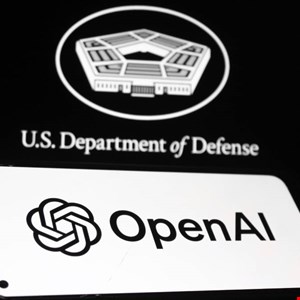
OpenAI Charts New Course in AI-Driven Cyber Defense
In a significant move toward enhancing cybersecurity across various levels of government and industry, OpenAI has unveiled a comprehensive roadmap aimed at "democratizing AI-powered cyber defense." Central to this initiative is the expansion of its Trusted Access for Cyber (TAC) program, which OpenAI intends to extend to government entities at every level, including federal, state, and local sectors.
The details of this ambitious plan were articulated in a document titled Cybersecurity in the Intelligence Age, released by OpenAI’s Global Affairs team on April 30. This followed closely on the heels of the company’s launch of GPT5.4-Cyber, a large language model (LLM) specifically tailored for cybersecurity defenders. This new model is poised to aid organizations in navigating the increasingly complex landscape of cyber threats.
A core commitment outlined in the roadmap is to enhance access to the TAC program for cyber defenders operating within government frameworks. This spans a wide range of critical areas, from national security missions and threat responses to public health systems, emergency management, and the safeguarding of local critical infrastructure. The breadth of this initiative illustrates OpenAI’s recognition of the multifaceted nature of cybersecurity needs across different sectors.
While OpenAI has yet to disclose the specific governments that will participate in the TAC program, the introduction of the action plan notably mentions "the US and its allies." This phrasing implies that agencies within the United States government could likely be among the first recipients of the program’s benefits, positioning OpenAI as a key player in national cybersecurity strategies.
The Context of Expanding Collaborations
This movement towards expanding collaborations with government entities takes place amid a backdrop of heightened tensions within the artificial intelligence landscape. Notably, OpenAI’s competitor, Anthropic, is currently embroiled in a standoff with the Trump administration, which labeled the company as a "supply chain risk" in March. This designation arose after Anthropic refused to grant the US military unrestricted access to its Claude AI models. In response, Anthropic launched advanced initiatives such as Claude Mythos Preview, a new LLM purported to autonomously identify and resolve cybersecurity vulnerabilities, alongside Project Glasswing, which uses LLMs to bolster software security.
OpenAI’s decision to ramp up government engagement comes at a time when institutions are keenly aware of the vulnerabilities introduced by emerging technologies. With cybersecurity being increasingly recognized as a top concern for national safety, OpenAI aims to streamline and refine cyber threat models in collaboration with governments. The organization also emphasizes the importance of enhancing real-time intelligence sharing while prioritizing impactful defensive applications for AI in critical infrastructure.
The TAC program will not only focus on government entities but will also broaden its reach to include various industry stakeholders. OpenAI has committed to integrating additional participants in its TAC program, which includes:
- Industry actors whose defensive measures can safeguard millions of downstream users, prioritizing sectors such as financial services.
- Major cybersecurity platforms, which play an essential role in the overall cybersecurity ecosystem.
- Cloud hyperscalers, whose infrastructure underpins many online services.
- Infrastructure providers and operators engaged in critical functions.
- Local technology operators, including smaller entities like hospitals, school districts, and municipalities.
- Cyber defenders within the software supply chain who are crucial for maintaining security standards.
OpenAI’s pledge to progressively enhance the TAC program over time indicates a long-term commitment to fostering a collaborative atmosphere for cybersecurity defense.
Further reinforcing its position, OpenAI has also made commitments to bolster its internal cybersecurity frameworks. This includes measures such as red-teaming its AI models to identify and address vulnerabilities, improving detection strategies for potential misuse, and refining safety mechanisms to prevent abuse. These steps underscore a proactive approach to ensuring the integrity of AI technologies in the cybersecurity domain.
In summary, OpenAI’s roadmap marks a pivotal shift in the realm of AI-powered cybersecurity, proposing an inclusive and expansive approach to combining efforts between the government and industry. As cyber threats continue to evolve, such cooperative initiatives are essential to safeguard both infrastructure and individual users in an increasingly digital world.