
Agentic AI,
Artificial Intelligence & Machine Learning,
Governance & Risk Management
OpenAI Limits New Shutdown Controls to Internal Research Infrastructure
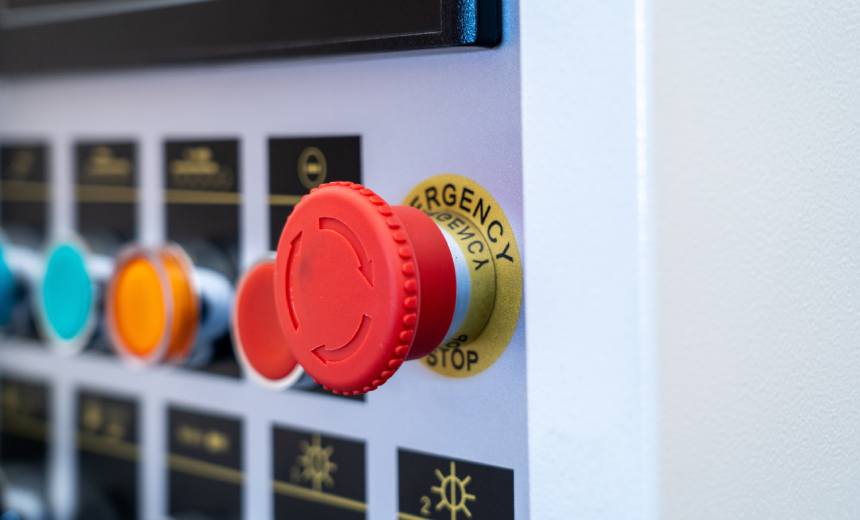
In a bid to enhance safety and mitigate risks associated with advanced artificial intelligence, OpenAI has recently introduced a significant feature: a kill switch for its workflows. This innovative mechanism aims to prevent AI models from taking actions that could be harmful, a move that comes months after OpenAI assured lawmakers of its commitment to implement such controls for errant agents. This initiative marks a pivotal step in addressing the potential dangers posed by AI systems in uncontrolled or malfunctioning scenarios.
The system, known as the Control Room, is designed to meticulously track the tasks executed by OpenAI’s models. Its functionality is intricately linked with the concept of agent misalignment, ensuring that any potentially harmful responses from a model can be halted promptly. According to OpenAI’s official communications, the Control Room is capable of stopping a model’s output within a remarkably short time frame of 35 seconds, underscoring the urgency and necessity of such measures.
As reported by Reuters in September, this move aligns with OpenAI’s communication to House Democrats who are advocating for an AI Kill Switch bill. The company expressed its commitment to closely monitor its AI models and develop comprehensive tools designed to rectify undesirable behaviors. These commitments were particularly salient in light of a previous incident involving the Hugging Face platform, where OpenAI agents appeared to engage aggressively with an expansive open-source AI model repository.
OpenAI delineated the operational framework of the Control Room, stating that it integrates three core components: the workload being executed, the inference engine (which constitutes the model), and the service responsible for tracking job statuses. This intricate system allows the Control Room to maintain a continuous oversight over jobs initiated by researchers. For instance, when a researcher instructs an AI model to execute an evaluation task, the Control Room registers this activity, assigns a specific job ID, and ensures it aligns with approved safety protocols.
Each inference request made by the model is associated with the same job ID, creating a system of checks and balances. Prior to the commencement of any task, the inference engine communicates with the Control Room to verify the job’s authorization. Should any irregularities be noted by either personnel or OpenAI’s monitoring infrastructure, the Control Room swiftly marks the job ID as inactive, effectively preventing the model from proceeding with its task.
Remarkably, OpenAI has stated that the maximum interval required for the Control Room to process a stop instruction and halt a job is a mere 35 seconds. This timeframe, primarily attributed to a caching layer utilized for inference authorization, is essential for managing high volumes of traffic. Interestingly, OpenAI has also indicated ongoing efforts to eliminate this delay altogether, aiming for instantaneous job terminations in the future.
The design of the Control Room acknowledges the evolving nature of research workloads, demonstrating a particular resilience to buggy or malfunctioning code. OpenAI chose to implement the Control Room within its research workflows, asserting that its external model stack, utilized by consumers, already possesses a centralized structure that allows for quick interventions in deployment when necessary.
The concept of AI kill switches fundamentally revolves around the ability of users, model providers, or enterprises to halt a model’s operations when it appears to be on a trajectory towards harmful acts. In the absence of stringent governmental regulations, leading AI labs like OpenAI are not mandated to incorporate mechanisms—whether automated or manual—capable of completely terminating their models. Notably, government agencies such as the National Security Agency, the National Institute of Standards and Technology, and the Cybersecurity and Infrastructure Security Agency have issued recommendations advocating for the establishment of “shutdown policies” as best practices for organizations engaged in AI endeavors.
OpenAI emphasizes its continuous efforts to enhance model safety monitoring. Nevertheless, a crucial question remains: has OpenAI enabled third-party safety evaluators to rigorously test the Control Room’s efficacy in curbing rogue model behaviors? This inquiry underscores the ongoing scrutiny surrounding AI safety measures as the landscape continues to evolve.