
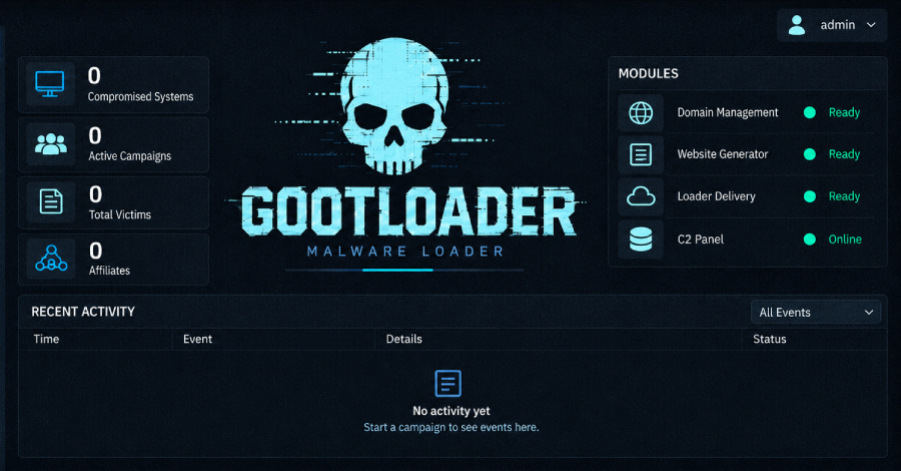


International Police Operation Dismantles Major Malware Networks
In a substantial international effort, law enforcement agencies have successfully dismantled the networks behind three notorious malware tools—Gootloader, CastleRAT, and StealC. This operation has highlighted the urgent need for cybersecurity awareness, as criminals have exploited these tools to infiltrate computers, steal passwords, and execute ransomware attacks across the globe.
According to the Federal Criminal Police Office of Germany (BKA), the operation led to the seizure of approximately 6.4 million stolen logins from more than 40,000 victims. This massive data breach underscores the severity of the threat posed by these malware systems, which have affected individuals and organizations worldwide.
Overview of the Malware Tools
Gootloader serves as a loader, meaning that once it infects a computer, it can download additional, potentially more harmful malware, particularly ransomware. The criminal network has been cunning in its tactics, spreading Gootloader through fraudulent legal documents hosted on compromised websites, predominantly WordPress sites. By utilizing search engine optimization (SEO) poisoning, perpetrators have ensured these malicious sites rank high in search results, thereby attracting unsuspecting victims who inadvertently download the malware.
Since its emergence in 2018, Gootloader has reportedly infected at least 25,000 computers globally, as stated by the U.S. Justice Department. The ramifications of these infections have been significant, with the malware implicated in ransomware attacks against at least 44 victims in the United States, leading to losses estimated at around $28.8 million. However, German authorities have provided an even more alarming figure, suggesting that millions of computers worldwide have been compromised since Gootloader’s first appearance.
Alongside Gootloader, the operation also targeted CastleRAT, a remote access trojan (RAT) that allows attackers to control infected computers remotely. Law enforcement seized 120 servers and 39 domains associated with CastleRAT in this operation. Its presence has been documented since 2025, indicating it has been a persistent threat in the cyber landscape.
StealC, another dangerous malware that exfiltrates usernames and passwords from compromised systems, was also a key focus of the operation. Law enforcement agencies took action against its infrastructure after an earlier crackdown in June, when authorities targeted these cybercriminal networks. Unfortunately, the operators of StealC had the foresight to adapt and restore parts of their system to evade detection by investigators, posing an ongoing challenge for law enforcement.
Operation Endgame
This takedown formed part of Operation Endgame, a broader international campaign aimed at crippling cybercrime networks utilizing malware to infiltrate victims’ computers. The collaboration yielded the seizure of a total of 235 servers and 257 domains across all three malware platforms. Specifically, for Gootloader, authorities took down 14 servers and 218 domains, while also working to remove malware from 681 compromised websites.
With court authorization, U.S. agencies, in partnership with international counterparts, successfully eliminated Gootloader from over 100 servers, including those running compromised WordPress sites. Such strategic collaborations highlight the global commitment to combating cybercrime and enhancing cybersecurity measures.
While no arrests were reported in this recent operation, investigations continue, particularly focused on Gootloader’s primary suspect, as reported by Dutch police.
Guidance for Victims and Site Owners
In response to the growing concerns surrounding these malware threats, Dutch authorities have introduced a resource known as "Check your hack," where individuals can submit their email addresses to determine whether their information has been compromised. Should a match occur, they receive guidance on removing malware. Police have also clarified that they will never send unsolicited emails containing links, emphasizing the need for vigilance among users.
Security measures are more critical than ever. The Shadowserver Foundation is working closely with internet service providers and computer security incident response teams (CSIRTs) to identify and inform infected computer owners. In Germany, the Federal Office for Information Security (BSI) is helping notify potential victims. Likewise, the Danish National Special Crime Unit (NSK) took part in cleaning 681 websites, apprehending backdoor access left by attackers who gained entry via stolen passwords.
Recommendations for Enhanced Security
Authorities are advising WordPress site owners to undertake several key precautions to mitigate risks, including:
- Changing all administrator passwords to unique and complex combinations.
- Enabling multi-factor authentication (MFA) to bolster security.
- Regularly updating WordPress, its themes, and plugins to minimize vulnerabilities.
- Clearing out any unrecognized accounts and ensuring no backdoor code remains on the site.
- Limiting access to the login page based on device IP addresses.
As malware threats evolve, maintaining robust cybersecurity practices is paramount for both individuals and organizations. By taking proactive steps, users can help safeguard their sensitive information against cybercriminal activities.