
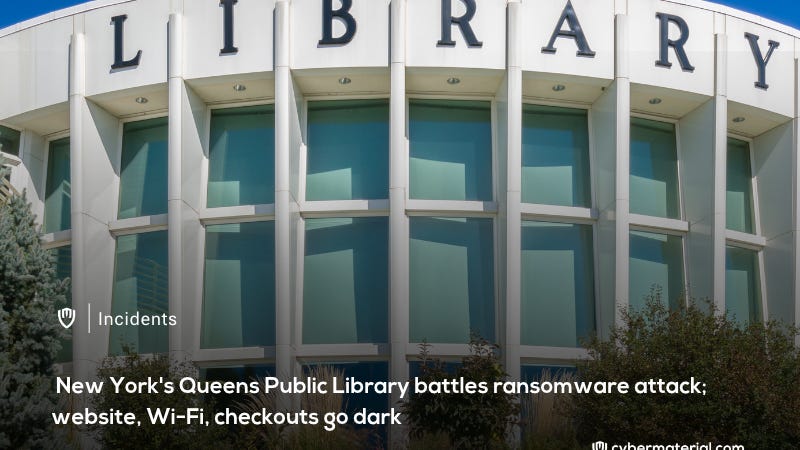


Queens Public Library Faces Ransomware Attack Disrupting Services
On Wednesday, the Queens Public Library (QPL) in New York City reported a severe ransomware attack that has significantly impacted its digital infrastructure and various services. The breach has led to the disabling of the library system’s website, on-site computers, checkout and return machines, public Wi-Fi network, mobile application, and digital media platforms. Notably, while renewal services are currently unavailable, patrons will not incur any late fees, as QPL eliminated daily fines back in October 2021.
Despite the disruption, all three branches of the library system remain physically open to visitors, including the primary location in Jamaica, Queens. However, QPL has cautioned that restoring its network and systems could take an extensive amount of time. Patrons are advised that some of the virtual and in-person programs may be affected during this period. To stay informed, library users are recommended to contact their local branches directly or to follow the library’s social media channels for timely updates.
As of now, no known ransomware group has taken responsibility for this attack. Experts in cybersecurity point out that publicly funded institutions like libraries typically yield low financial returns for cybercriminals, as these organizations often lack the substantial resources to pay hefty ransoms. This incident aligns with a troubling trend wherein ransomware groups are targeting libraries and cultural institutions despite the minimal profit potential.
The recent event at QPL evoked memories of a related incident earlier this year when the British Library faced a ransomware attack orchestrated by the Rhysida group, who demanded a ransom of 20 Bitcoin. Opting not to comply with the ransom demand, the British Library decided instead to allocate millions from its reserves to reconstruct its IT infrastructure. Although this decision garnered considerable acclaim, it also resulted in a protracted and costly recovery process. According to the British Library’s annual report for 2025/26, published in July, they do not anticipate the complete restoration of electronic resource purchasing and access to legal deposit content until the end of 2026.
At QPL, the IT department is actively engaging in efforts to resolve the situation, although no specific timeline for restoration has yet been established. The library administration has extended its apologies for the inconvenience caused and has committed to keeping patrons updated via official channels. This incident underscores the persistent vulnerability that public institutions face against ransomware attacks, even when the financial incentives for attackers seem low.
Libraries and similar organizations are caught in a challenging dilemma regarding cybersecurity investments and incident response strategies. They must navigate the difficult decisions of whether to pay ransoms or devote resources to potentially lengthy recovery processes. The ongoing threats posed by ransomware have sparked a broader conversation about the importance of cybersecurity measures for public entities that serve the community.
The situation at QPL illustrates not only the immediate impact of digital attacks on public services but also raises questions about the long-term implications for institutional resilience. As technology continues to evolve, so do the methods employed by cybercriminals, making it imperative for organizations to remain vigilant. QPL’s experience serves as a cautionary tale, prompting other public institutions to reassess their security protocols and preparedness against such risks.
In conclusion, the ransomware attack on the Queens Public Library highlights a growing concern about digital security vulnerabilities faced by public institutions. As recovery efforts are underway, the library remains dedicated to supporting its patrons while navigating the complexities associated with such cyber incidents. The case serves as an important reminder of the critical need for improved cybersecurity measures and strategies to be implemented across the board, ensuring that libraries and similar institutions can continue to provide valuable services to the community without fear of disruptive attacks.
The community, patrons, and public officials alike will be watching closely as QPL works to recover from this setback and to bolster its defenses against potential future threats.