
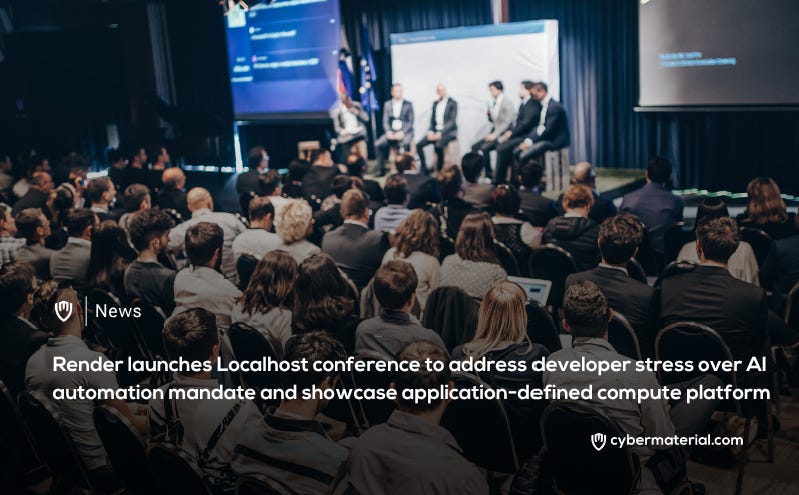
Render’s Localhost Conference: A Step into the Future of AI-Powered Applications
In a bid to address the burgeoning landscape of artificial intelligence, cloud infrastructure company Render held its inaugural Localhost developer conference in San Francisco. This event specifically targeted engineers engaged in the development of AI-driven applications, drawing an audience grappling with the rapid evolution of AI tools and terminology. Attendees expressed a mix of enthusiasm and apprehension regarding the swift pace of change in the tech industry, highlighting the pressing need for education and adaptation in the face of new developments.
Among the attendees was a recent computer engineering graduate who articulated a common concern: the frequency of new concepts such as "harness engineering" and "loop engineering." This constant influx of jargon complicates efforts to build in-depth expertise, leaving many developers feeling overwhelmed. The conference provided a platform for such engineers to share their experiences and challenges, fostering a collective understanding of the hurdles they face in adapting to the fast-paced world of AI.
Render’s founder and CEO, Anurag Goel, took to the stage to share impressive company metrics: the platform has welcomed 400,000 developers each month, launched 10 million live services, and handles a staggering 200 billion monthly requests. Despite these impressive figures, Goel pointed out that Render faces a challenge in reshaping perceptions. Many enterprise customers still lean toward more established cloud providers such as Amazon Web Services (AWS), Microsoft Azure, and Google Cloud, often overlooking lesser-known alternatives like Render.
Goel posited that AI applications signify a profound shift from traditional infrastructure paradigms. Unlike conventional applications that operate with static resource requirements, AI systems are inherently dynamic, automatically provisioning their infrastructure based on real-time needs. For instance, a research agent might require minimal resources for a straightforward query, yet demand an extensive setup, like a headless browser with 128 GB of RAM, for another. Such variability makes it extremely difficult to anticipate resource needs, as a single request could launch hundreds, if not thousands, of tasks—each with its own resource requirements.
According to Goel, existing serverless platforms struggle to adapt to these dynamic requirements due to inherent limitations around execution time, memory, storage, and application size. These constraints render traditional serverless solutions unsuitable for the flexible resource allocation demanded by AI workloads, which are often subject to unpredictable runtime demands.
In response to these challenges, Render proposed an innovative solution termed "application-defined compute." This concept empowers applications to specify their infrastructure needs at runtime, as opposed to relying on pre-provisioned resources. This shift aims to offer the flexibility that AI applications require while implementing necessary guardrails to ensure stability and security. Render positions this capability as a defining characteristic for developers focused on AI-native applications that necessitate agile resource allocation beyond the limitations imposed by conventional cloud platforms.
As the conference progressed, discussions highlighted the broader implications of AI technologies for various sectors, including healthcare, finance, and education. Participants exchanged insights on best practices, shared success stories, and debated the ethical considerations surrounding AI development, all of which underscored the need for responsible innovation in the field.
In conclusion, Render’s Localhost developer conference represented a crucial moment for engineers navigating the complexities of AI application development. It not only showcased Render’s innovative approaches to cloud infrastructure but also served as a gathering point for the broader developer community. As discussions about sustainable practices, resource provisioning, and innovative engineering solutions continue, the event reinforced the notion that the future of AI is not just about technology; it’s about fostering a community capable of embracing change and overcoming the challenges inherent in this rapidly evolving landscape.
For those interested in diving deeper into Render’s insights and future innovations, more information can be found on their official website and various tech news outlets. Render’s commitment to redefining infrastructure in the era of artificial intelligence may well provide the tools necessary to empower the next generation of developers navigating the complexities and possibilities of this dynamic field.