


Artificial Intelligence & Machine Learning,
Cybercrime,
Fraud Management & Cybercrime
FBI Arrests Engineer at Firm Tied to Bugging of an Executive Conference Room
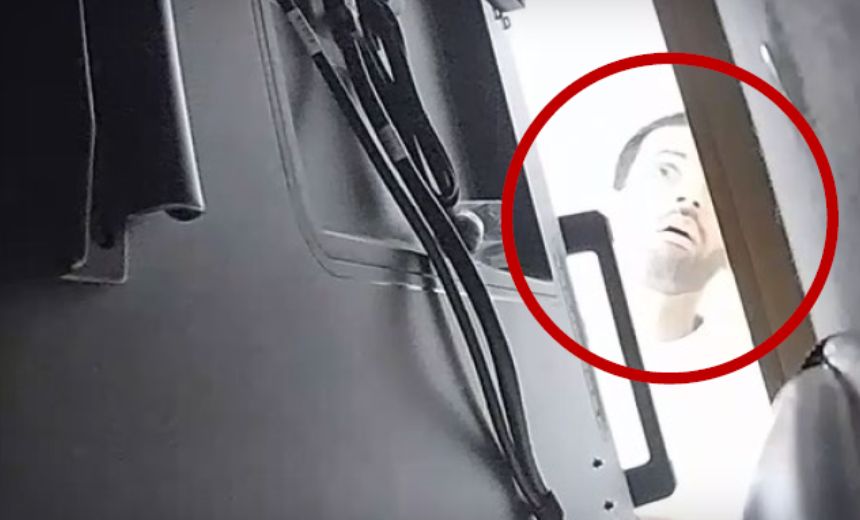
In an incident that has captured the attention of both the tech industry and law enforcement, a Saudi national employed by OpenAI, a prominent artificial intelligence firm based in San Francisco, has been accused of secretly installing a bugging device in an executive conference room. The FBI has stated that its investigation has not uncovered any evidence suggesting that sensitive data or proprietary information related to AI models were compromised during this shocking breach.
Abdulrahman Alfozan, 35, was arrested by the FBI on a Friday, and he remains in federal custody as the legal proceedings unfold in California. According to the U.S. Department of Justice, Alfozan faces serious charges that include “use of an electronic, mechanical or other device to intercept oral communications.” The legal ramifications of these charges could lead to a maximum penalty of five years in prison, along with a substantial fine not exceeding $250,000.
Alfozan made his initial court appearance in San Francisco on Tuesday, where U.S. Attorney Craig Missakian emphasized the gravity of the situation, labeling it a “matter of national security.” While the criminal complaint filed does not explicitly name OpenAI, federal prosecutors have confirmed that the company is indeed the victim of this espionage attempt.
The breach was discovered when OpenAI detected a sophisticated audio recording device hidden within one of its conference rooms. In a social media statement issued on Tuesday, OpenAI confirmed the incident: “We discovered a sophisticated recording device that was hidden inside one of our offices. We referred the matter to the FBI, and we’re grateful to the agents and prosecutors who moved quickly to make an arrest.” The company has committed to cooperating fully with the ongoing FBI investigation.
Furthermore, OpenAI has stated, “At this time, we have no indications of this individual inappropriately accessing or exfiltrating model weights, source code or customer data. The employee was terminated.” Alfozan began his tenure at OpenAI in July 2025, following an educational background in the United States, where he attained legal permanent resident status in September 2020.
The complaint goes into considerable detail regarding the timeline of Alfozan’s alleged activities. Following the discovery of the hidden camera in OpenAI’s main conference room, the FBI’s report mentions footage captured from a camera installed with OpenAI’s consent, showing Alfozan approaching the area on October 5 to check the device that had been stealthily concealed.
From September 28 to October 5, Alfozan allegedly utilized a recording device to bug the executive conference room, where sensitive discussions occurring in these meetings often involve confidential technical information, proprietary research, product plans, and strategic decisions. OpenAI clarified that these meetings contain nonpublic information regarding the company’s operational progress and collaborations with government entities.
Notably, the surveillance technology employed was an unassuming device—a Chinese-manufactured Seeed Xiao ESP32-S3 Sense, which is a thumb-sized development board equipped with a detachable camera sensor, digital microphone, and microSD storage. Interestingly, the device was hidden cleverly within a roll of toilet paper and plugged into a USB port on the back of a television located in the conference room.
This device retails at approximately $40 but appeared to have been modified to encrypt the data it captured. The FBI’s analysis indicated that the firmware utilized in the device had been compiled shortly before its planned use on September 28, implying a degree of premeditation on Alfozan’s part.
In addition to the direct evidence of recording attempts, federal authorities revealed details of Alfozan’s queries made to an unspecified productivity agent—potentially OpenAI’s AI-driven chatbot—concerning the number of large meeting rooms at the company and specifics related to attendees and schedules. Even more revealing, an AI chatbot account linked to Alfozan’s spouse showcased inquiries regarding how to construct a continuous audio recorder and customize its features, thereby indicating a level of involvement that appears to exaggerate the effectiveness of AI technology in facilitating the alleged espionage.
Experts have weighed in on the case, describing the attempted espionage as lacking sophistication. Political scientist Thomas Rid expressed astonishment on social media regarding the amateurish tactics and emphasized that high-value targets in the AI sector are attracting heightened interest from various intelligence factions. “This incident illustrates just how low the bar might be for modern spying attempts,” he commented. Meanwhile, hardware security analyst “MG” dismissed the efforts as rudimentary, pointing out the use of off-the-shelf technology such as the ESP32 chip and ironically noting, “AI is increasing people’s confidence way more than it increases their capabilities.”
The case has ignited discussions not only about security in the tech industry but also about the emergent role of AI technology in potential criminal activities, further raising questions about the balance between innovation and the vulnerabilities it may expose. As this investigation continues, it underscores the ongoing challenges faced by firms like OpenAI in safeguarding their sensitive information amidst an ever-evolving technological landscape.