
Artificial Intelligence & Machine Learning,
Next-Generation Technologies & Secure Development,
Regulation
Watchdogs Say Public Accountability Suffers When AI Oversight Stays Hidden
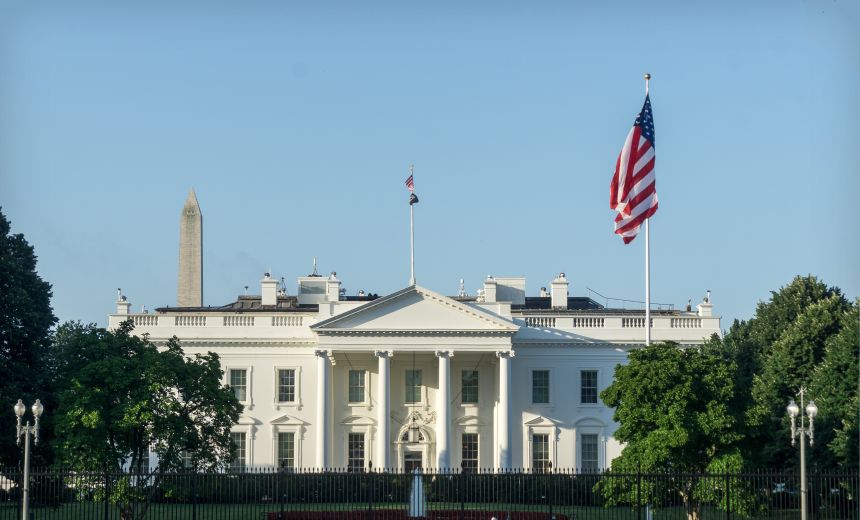
A recently unveiled voluntary artificial intelligence safety framework from the White House aimed to clarify how the government plans to scrutinize AI companies. However, the White House’s decision to keep this framework under wraps has drawn significant criticism from technology watchdogs and lawmakers alike, who argue that a lack of transparency equates to a lack of oversight.
As reported by Axios, the White House opted not to disclose the framework, which is expected to outline the types of AI systems that will be subject to government review prior to their public release, along with the methodologies that will be applied during the evaluation process. While parts of this framework have leaked, reports from the Washington Post indicate that the government plans to focus its federal scrutiny on testing closed AI models while exempting open-weight models from this review.
Chris Mackenzie, who serves as the vice president for communications at Americans for Responsible Innovation, expressed his concerns during an interview, emphasizing that the decision to withhold the framework’s specifics undermines its very purpose. “If only the AI companies know the rules, then there is no accountability,” he stated. Mackenzie underlined the necessity for public oversight, likening the situation to other industries that operate under public scrutiny. “Oversight of AI should also be public, and the rulebook needs to be transparent,” he insisted.
Furthermore, he indicated that the framework should publicly clarify how the administration plans to address AI model safety reviews, particularly in light of the ad hoc reviews that the government has been carrying out on emerging models, most notably Anthropic’s Fable 5 and Mythos 5. The ad hoc nature of these reviews has led to uncertainty regarding which models are permitted for release and which are subjected to export bans. The government has allowed OpenAI to distribute its GPT-5.6 model to a vetted group of users, yet similar leniency has not been extended to Anthropic’s models, which face strict export controls.
In a recent meeting, technology giants—including OpenAI, Anthropic, Meta, and Google—were summoned by the White House to discuss this secretive framework. However, criticism of the opacity surrounding the framework’s development did not go unnoticed. The Information Technology and Innovation Foundation (ITIF) condemned the covert process, arguing that the lack of public scrutiny hampers smaller developers, open-source projects, security researchers, and allied nations. They warned that the absence of clear rules could lead to confusion and uncertainty in the long term, allowing established companies to dominate the market while stifling innovation among emerging players.
ITIF Associate Director of AI Policy, Michelle Lopes Maldonado, elaborated on this concern, stating in an email, “If the specific cyber benchmarks must remain classified, the administration should still publish the scope, criteria, and timelines. Predictability is essential for U.S. developers to move quickly. Secrecy entrenches incumbents more than it ensures safety or democratizes innovation.” The lack of a clearly defined statute governing AI systems has left a regulatory vacuum in the United States, although numerous bills have been introduced in Congress in attempts to address this gap.
Rep. Lori Trahan, D-Mass., who introduced the Frontier Risk Oversight, National Transparency, Independent Evaluation and Reporting Act, took to social media platform X to express her discontent over the framework’s lack of public accessibility. “This is disappointing,” she stated, highlighting the critical intersection of national security and public accountability inherent in AI governance. “AI governance belongs in a civilian agency, where it can be seen and questioned, not buried within the national security apparatus,” she asserted, warning that secrecy does not equate to safety.
The administration’s efforts to formulate safety and review frameworks have gained urgency in the wake of several notable security incidents attributed to AI models, alongside rising concerns about the global competitive landscape, particularly regarding Chinese open-weight models. “We are all facing a serious trust gap in AI,” Mackenzie added, further emphasizing the necessity of ensuring transparent regulatory practices to foster public confidence in these powerful technologies.