
The Evolving Landscape of Cybersecurity Threats: A Look into the Silent Ransom Group
In the realm of cybersecurity, ransomware attacks have traditionally adhered to a specific methodology. Typically, hackers infiltrate a network, deploy harmful malware, encrypt systems, and subsequently demand a payment in exchange for a decryption key. However, recent developments reveal a shift in tactics by cybercriminals that is not only troubling but also significantly more dangerous.
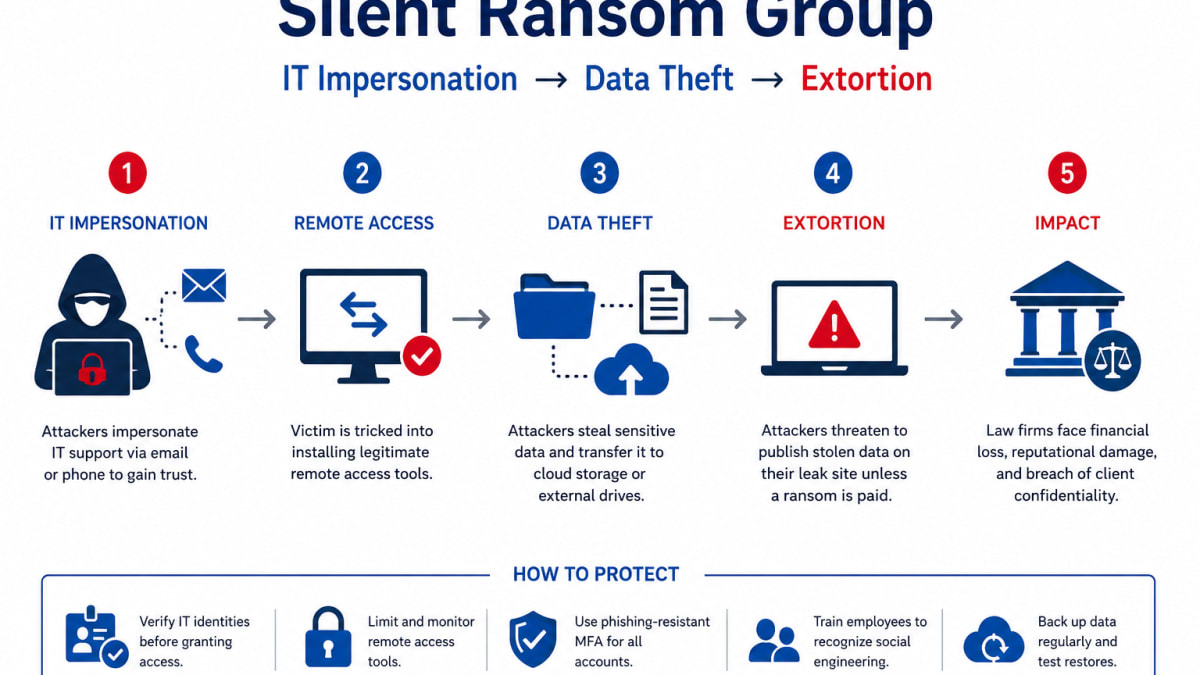
A group known as the Silent Ransom Group, which is alternatively identified as Luna Moth, Chatty Spider, and UNC3753, has emerged as a prominent threat targeting U.S. law firms. What distinguishes this group’s approach from traditional ransomware attacks is their minimal reliance on malware. Instead of utilizing technical exploits to seize control, Silent Ransom Group has resorted to what many cybersecurity experts deem a more efficient and manipulative method: exploiting human psychology.
The effectiveness of this group lies not in sophisticated technology but in the manipulation of individuals. Rather than breaching firewalls or deploying complex ransomware payloads, the attackers employ social engineering to convince employees to grant them access to sensitive systems. This methodology represents a paradigm shift in how cyber threats can manifest, focusing on the vulnerabilities inherent in human behavior rather than sheer technical prowess.
The onset of an attack typically begins with a cunningly crafted phishing email or a cleverly orchestrated phone call. The perpetrator often impersonates internal IT support, claiming that there is suspicious activity detected on the employee’s machine that necessitates immediate action. To resolve this purported issue, the attacker requests remote access, exploiting the employee’s trust in internal support channels. This initial step is crucial, as the goal of the attacker is to foster a sense of trust, creating a façade that encourages employees to act against their better judgment.
Silent Ransom Group’s operations highlight a glaring vulnerability in today’s cybersecurity infrastructure: the human element. Even organizations with robust technical defenses can find themselves at risk if their employees are not adequately trained to recognize and respond to these types of attacks. The group’s approach capitalizes on the fact that individuals can be the weakest link in cybersecurity networks, making user education and awareness training paramount.
Interestingly, the motivations behind these attacks are not solely financial. While monetary gain is undoubtedly a factor, the psychological manipulation involved also serves to sow discord and chaos within organizations. By gaining access to sensitive information, the group can leverage this to further their agendas, which may include extortion or data theft. This multifaceted threat poses challenges not just to the financial stability of the targeted firms but also to their reputations and trust with clients.
As the Silent Ransom Group continues to exploit vulnerabilities through social engineering, the importance of developing comprehensive security protocols has never been more apparent. Organizations are urged to adopt a holistic approach to cybersecurity that encompasses not only technology but also the education of personnel. Implementing regular training sessions that focus on recognizing phishing attempts, understanding social engineering tactics, and fostering a culture of skepticism towards unexpected requests can significantly mitigate risks.
Moreover, IT departments must enhance their monitoring systems to identify suspicious activities proactively. By fostering an environment where employees are encouraged to question unusual requests and report potential threats without fear of reprisal, organizations can build a stronger line of defense against these sophisticated attacks.
In conclusion, the emergence of the Silent Ransom Group serves as a poignant reminder of the ever-evolving nature of cyber threats. As cybercriminals adapt their tactics, organizations must also evolve their defenses. Recognizing the vulnerabilities within human behavior and equipping employees with the tools to resist manipulation are essential steps in safeguarding sensitive information. The battle against cyber threats is an ongoing one, and staying vigilant remains the best defense against those who seek to exploit the digital landscape.