
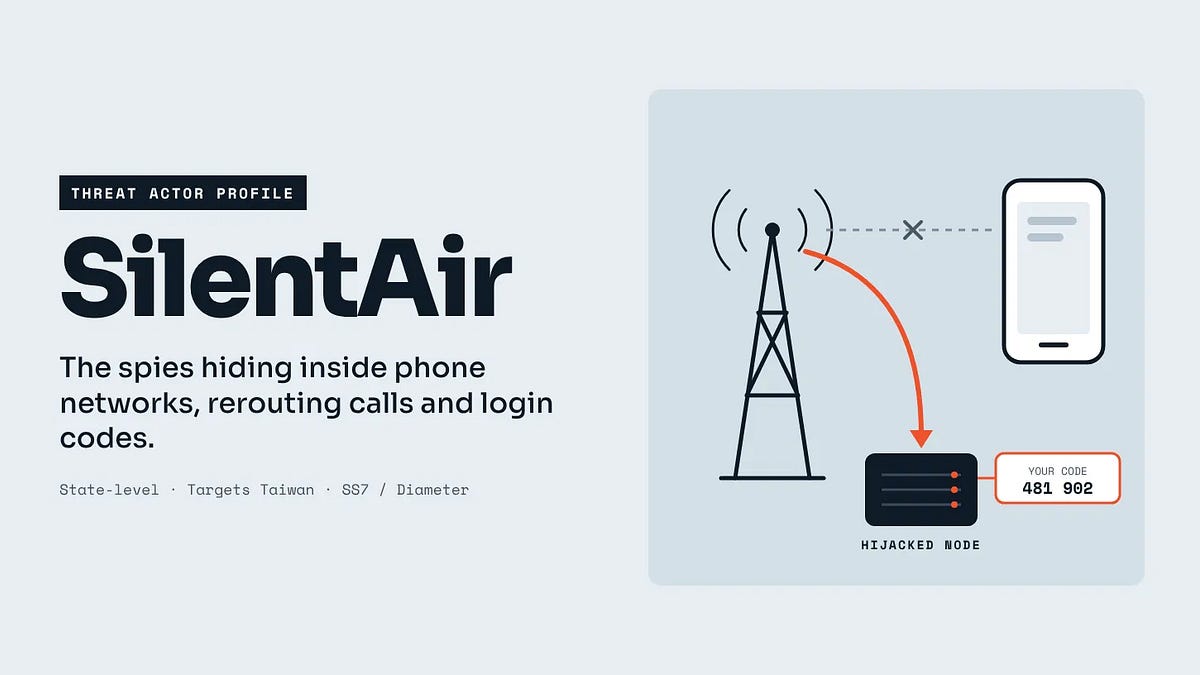
SilentAir: A New Facet of Espionage in Telecommunications
In the ever-evolving landscape of cybersecurity threats, a recently uncovered group, known as SilentAir, has emerged with alarming capabilities. Unlike typical cybercriminals who infiltrate personal computers, SilentAir operates on a more insidious level, embedding itself directly within the core equipment of mobile telecommunications operators. This unique position allows the group to exploit the very infrastructure that millions of users rely on for daily communication, which includes intercepting calls and rerouting text messages, especially those containing critical one-time login codes that are increasingly common in online security protocols.
The exposure of SilentAir was notably announced on November 11, 2026, by Enea, a renowned cybersecurity firm based in Stockholm, Sweden. Enea’s investigation reveals that SilentAir’s primary target is Taiwan, a region of growing geopolitical tension. The group’s ability to hide within trusted carrier equipment makes it particularly challenging to detect, categorizing it as one of the most elusive threat actors identified in recent years.
Enea’s assessments suggest that SilentAir is a state-sponsored actor, rather than merely a criminal outfit or a commercial surveillance organization. This assertion, however, comes with a caveat: while Enea links SilentAir to China, it does so with low confidence. What this implies is a significant level of uncertainty surrounding the origins and motivations behind SilentAir’s operations, reflecting the complex and often opaque nature of international cyber espionage.
The timeline of SilentAir’s activities is equally revealing. Enea has tracked the group’s digital footprints since early 2025 but has since uncovered suspicious activities that appear to date back even further. This level of historical surveillance raises critical questions about the potential duration of SilentAir’s operations and its impact on global telecommunications security.
SilentAir’s chosen name is emblematic of its operational tactics. The term "Silent" underscores the group’s stealthy approach, marked by an intensive reliance on silent text messages that can evade detection by conventional security measures. The second part of the name, "Air," is derived from an Old Irish word meaning "in front of" or "before," which interestingly also contributes to the Irish term for "East." This geographic reference could suggest a focus on regions that lie to the east of Ireland, perhaps metaphorical for the group’s target audience or operational environment.
The implications of SilentAir’s activities extend beyond mere communications disruption; they touch upon national security, privacy, and the integrity of global communication infrastructures. As telecommunications become increasingly intertwined with everyday life—from banking to personal communications—the stakes are raised considerably when a group can manipulate this infrastructure undetected.
Experts in cybersecurity emphasize the need for heightened vigilance among telecommunications operators and consumers alike. The potential risks posed by such espionage groups necessitate robust security measures and constant monitoring of network activities. Organizations must implement multi-factor authentication and enhance encryption protocols to safeguard sensitive information against intrusion.
Additionally, international discourse surrounding cybersecurity laws and cooperative measures among nations is essential in tackling such challenges. As SilentAir illustrates, the threat landscape is not merely one of isolated actors; it encompasses state actors who can operate with impunity, leveraging sophisticated techniques that traditional cybersecurity measures may not fully address.
In summary, the emergence of SilentAir highlights a pressing and complex challenge in the world of telecommunications security. With state-sponsored actors demonstrating unprecedented capabilities to infiltrate core networks, both governments and private entities must collaboratively innovate and reinforce their defensive strategies to safeguard the integrity of global communication systems. The unfolding narrative of SilentAir is a stark reminder that in the digital age, the lines between national security and personal privacy are increasingly blurred, making robust and adaptive security measures not just advisable but imperative in safeguarding against an array of advanced threats.