
In-Depth Analysis of SolarMarker: A Persistent Threat in Cybersecurity
Overview of SolarMarker Malware
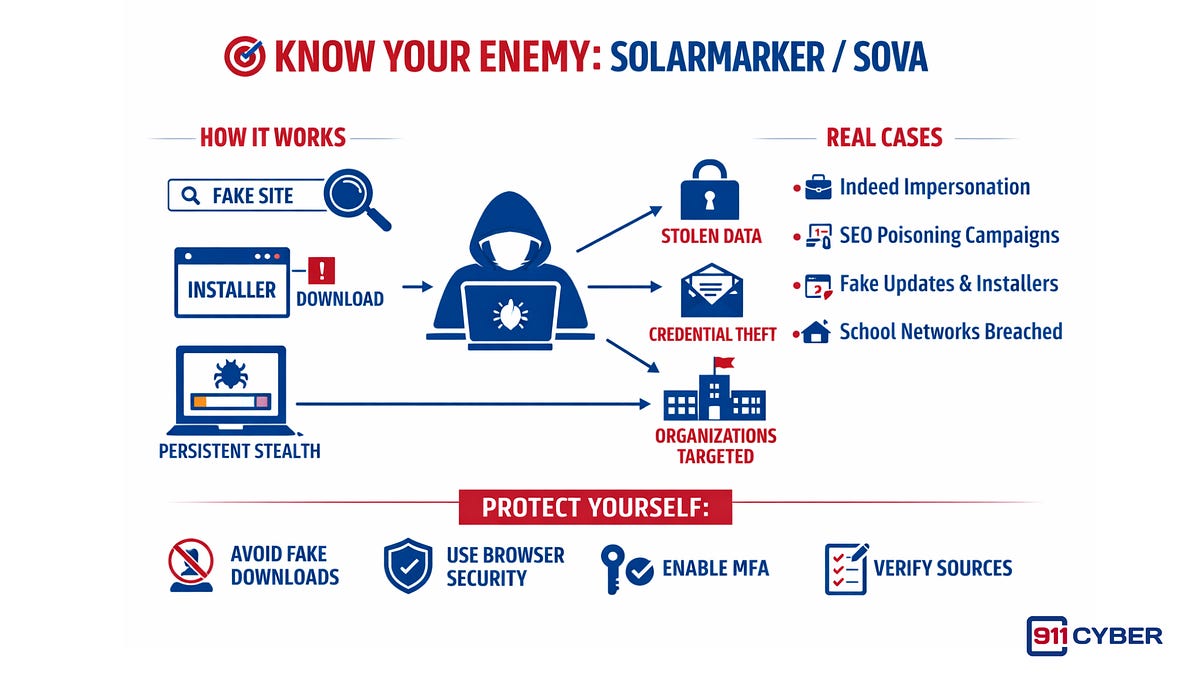
SolarMarker, also known as SOVA, has been identified as a sophisticated type of malware aimed at stealing sensitive information including user credentials, browser data, and various important files. Its design emphasizes stealth and persistence, making it particularly dangerous in the realm of cyber threats. This malware often facilitates larger-scale attacks, such as account takeovers or ransomware incidents, highlighting its potential for serious damage to both individuals and organizations.
The Rise of SEO Poisoning
Since its emergence in 2020, SolarMarker operators have implemented a technique known as SEO poisoning, which involves manipulating search engine results to prominently feature malicious sites. This strategy exploits the search habits of users seeking common tools and documents, thereby tricking them into downloading infected installers. By using this tactics, cybercriminals enhance the reach of their malware, making it a significant threat as more unsuspecting users fall victim to these deceptive schemes.
Job Site Impersonation for Targeted Attacks
In 2026, the methods employed by SolarMarker attackers expanded to include impersonation of job platforms, particularly Indeed. By luring potential victims under the guise of legitimate job searches, the attackers prompted the downloading of malicious files that would subsequently install SolarMarker along with other harmful payloads. This tactic not only showcases the malware’s evolving strategy but also illustrates how cybercriminals are adept at blending social engineering with technical expertise to ensnare their targets.
Targeting Enterprises and Educational Institutions
The scale of SolarMarker’s threat has been underscored by its targeting of various organizations, including school districts. Reports have indicated that these institutions were compromised, with the malware exfiltrating sensitive data over extended periods before being discovered. The timeframe within which SolarMarker can operate undetected further emphasizes its advanced capabilities and the necessity for robust cybersecurity measures in vulnerable sectors like education and enterprise.
Deceptive Software Installations
Additionally, users have been led to download trojanized installers or counterfeit browser updates, particularly for popular applications like Chrome. These misleading downloads result in a full system compromise, allowing cybercriminals to gain unauthorized control over the user’s device. Such tactics inflict significant damage and highlight the need for users to remain vigilant when downloading software from the internet, particularly when updates and tools claim to come from well-known platforms.
Long-Term Persistence and Challenges in Detection
One of the hallmarks of SolarMarker is its ability to maintain long-term access to infected devices. Security researchers have documented various methods employed by the malware to achieve this persistence, including the use of startup mechanisms and concealed PowerShell execution. These techniques complicate detection efforts, as they operate quietly in the background, often evading the scrutiny of security systems designed to catch anomalies.
Concluding Thoughts
The landscape of cybersecurity continues to evolve, and threats like SolarMarker illustrate the ongoing challenges faced by individuals and organizations alike. As malware developers refine their techniques, including the use of SEO poisoning, impersonation tactics, and long-lasting infiltration methods, it becomes increasingly critical for users to adopt safer online practices. Implementing stringent security protocols, staying informed about the latest threats, and educating users on the dangers of social engineering can aid in mitigating risk in this digital age.
In summary, SolarMarker represents a multifaceted threat that amalgamates software vulnerability with psychological manipulation, underscoring the pressing need for comprehensive cybersecurity measures across all sectors. As attackers grow increasingly sophisticated in their strategies, vigilance, adaptability, and technological defenses will be paramount in combating this persistence in the wild.