
The Transformative Impact of Artificial Intelligence on Software Development
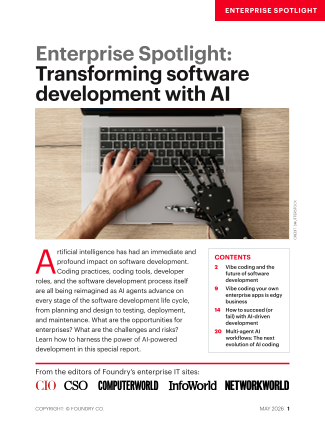
Artificial intelligence (AI) has ushered in a new era in the field of software development, significantly altering various facets of the industry. Its influence is both immediate and profound, affecting coding practices, tools, developer roles, and the entire software development process. As AI technologies mature, they are reshaping every phase of the software development life cycle, spanning from the initial stages of planning and design to the critical processes of testing, deployment, and ongoing maintenance.
The emergence of AI-driven tools has been one of the most transformative aspects of this shift. Traditionally, software developers have spent countless hours writing code, debugging, and performing testing routines. However, with the advent of AI, many of these tasks can now be automated. AI agents can analyze vast amounts of data and learn patterns, which enables them to assist developers in generating code snippets or identifying potential bugs before they turn into more significant issues. Consequently, developers are now able to focus on more strategic components of their projects rather than becoming bogged down by repetitive tasks.
In addition to the automation of coding tasks, AI has given rise to new coding tools that significantly enhance productivity. Integrated Development Environments (IDEs) are now equipped with AI functionalities that suggest code completions, identify errors in real-time, and even facilitate the implementation of best coding practices. This support not only accelerates the coding process but also augments the quality of the final product by minimizing human error.
The roles of developers themselves are evolving in response to these advancements. As AI takes over routine coding tasks, developers are increasingly required to cultivate new skills related to AI and machine learning. Understanding how to effectively work with AI tools, interpret their outputs, and leverage them for decision-making is becoming essential. This indicates a shift in educational requirements for upcoming software developers, paving the way for a workforce more aligned with the demands of a technologically advanced landscape.
Moreover, the entire software development process is undergoing significant reimagining. With AI integration, traditional methodologies such as Agile and DevOps are adapting to incorporate AI-powered analytics that can predict project outcomes and streamline workflows. For instance, during the planning phase, AI can analyze historical data and provide insights that inform better decision-making. Throughout the design phase, it can assist in creating user interfaces that cater to user preferences by analyzing behavioral data.
Testing has also benefited from AI advancements. Automated testing frameworks powered by AI can execute test cases faster and with more accuracy than manual testing. They can simulate various usage scenarios and identify potential weaknesses, allowing teams to address issues long before the software is deployed. This results in a more stable product and contributes to higher customer satisfaction, as users experience fewer glitches and bugs.
Deployment is no longer just a final step in the process but a continuous deployment cycle facilitated by AI tools. Continuous integration and delivery (CI/CD) pipelines leverage AI to ensure that software is released smoothly and efficiently. By analyzing data in real time, these tools can optimize the deployment process, reduce downtime, and enhance overall system performance.
Finally, maintenance—an often-overlooked phase of the software life cycle—is becoming more manageable through AI. Predictive analytics can identify when software is likely to need updates or fixes, allowing teams to be proactive rather than reactive. This is particularly important in industries where software reliability is critical, such as finance and healthcare.
For those interested in exploring the full potential of AI-enabled development, the latest issue of the Enterprise Spotlight by the editors of CIO, Computerworld, CSO, InfoWorld, and Network World is now available for download. This issue delves into strategies for harnessing AI within the realm of software development, providing valuable insights for organizations striving to stay ahead in this rapidly evolving field.
In conclusion, the impact of artificial intelligence on software development cannot be overstated. As AI technologies continue to evolve, they are fundamentally reforming how software is created, maintained, and optimized. By embracing these changes, developers and organizations can leverage AI’s capabilities to not only enhance productivity but also deliver better software solutions in a competitive market.