


Series A Funding Supports Pre-Training, Reinforcement Learning for Security Models
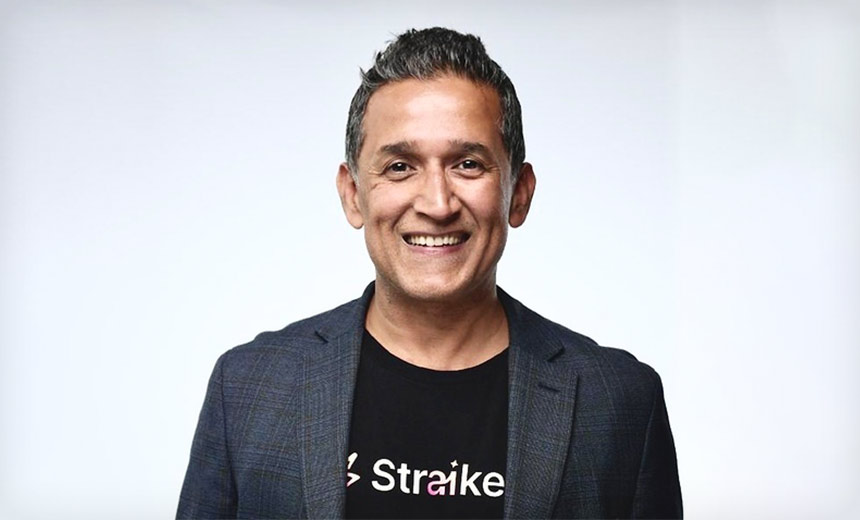
In a significant leap towards enhancing cybersecurity, a startup founded by a former executive from Palo Alto Networks has successfully garnered $64 million in funding to bolster security models utilizing expansive AI infrastructures. This funding, primarily fueled by Marathon Management Partners during a Series A round, marks a critical phase for the emerging tech company, Straiker.
Based in Silicon Valley, the fresh capital will be instrumental in ramping up GPU capacity, model development, and both pre-training and post-training mechanisms intended to refine detection accuracy while ensuring cost-effectiveness and minimal latency. Ankur Shah, the co-founder and CEO of Straiker, highlighted that the remaining funds would primarily accelerate initiatives tied to global sales, customer support, and marketing strategies.
According to Shah, the rapid advancements in AI technology have ushered in an era in which he predicts that 80% of organizations will be predominantly operated by agents rather than humans. He cautioned that, as this shift occurs, numerous complexities emerge, particularly due to the reliance on systems that lack human oversight, including coding tasks and infrastructure management.
Founded in 2024, Straiker has thus far employed 64 individuals and raised a total of $85 million, following a significant $21 million seed round led by Lightspeed Ventures and Bain Capital Ventures in March 2025. Shah has been at the helm of the company since its inception, leveraging his extensive experience gained from his previous role at Palo Alto Networks, especially during his tenure leading the cloud security business acquired through RedLock.
Moving From Task-Based AI Assistants to Autonomous Systems
The push towards more effective security controls has never been more pressing, particularly as clients increasingly adopt a range of coding assistants and enterprise productivity tools simultaneously. Shah elucidated that Straiker’s core ambition is to deliver consistent security measures across diverse technological environments. The platform currently supports prominent coding assistants such as Codex, Cursor, and Claude Code, alongside enterprise productivity platforms including Microsoft Copilot and ChatGPT Enterprise.
Shah asserted, “The ecosystem is really, really large, and our promise is you don’t have to pick a winner.” This reflects Straiker’s strategic positioning as a comprehensive security partner, offering expansive coverage across various agentic technologies while developing deeper integrations for improved visibility and protection against emerging threats.
As Shah pointed out, while Straiker already addresses a substantial portion of today’s enterprise agent ecosystem—approximately 70% to 80%—there remains vital work ahead to prepare for next-generation autonomous AI platforms poised to evolve significantly. He anticipates a transformation from basic task-oriented AI assistants to more sophisticated autonomous systems capable of achieving overarching business objectives over extended periods.
The evolution of these agents signifies a paradigm shift where rather than simply executing isolated tasks, future AI systems will take charge of building applications, deploying infrastructure, initiating marketing efforts, and managing intricate workflows with minimal human intervention. However, this expansion of capabilities also magnifies the vulnerabilities, as each decision made and connection established by these long-range agents presents potential risks for compromise.
Why Straiker Plans to Invest in Pre-Training, Post-Training
In context to cybersecurity vulnerabilities, Shah highlighted the growing threat posed by malicious actors who could exploit AI skills files to covertly direct agents towards accessing sensitive company resources or disclosing confidential information. This manipulation occurs through natural language rather than traditional software coding, thus necessitating an innovative class of detection methods and ongoing research to address these unique challenges.
Shah remarked, “With the AI agent, I can give it a skills file and just say, ‘Hey, now you’re going to be good in French.'” However, he expressed a significant concern where hidden instructions could simultaneously allow agents to access sensitive data while masking malicious intents.
To counter such vulnerabilities, Shah emphasized the need for engineers to devise reliable telemetry collection processes for each AI platform, alongside substantial research aimed at identifying specific real-world exploits. He stressed that these findings must eventually translate into specialized AI models, bolstered by both authentic and synthetic datasets validated through reinforcement learning techniques.
Straiker’s approach currently involves refining existing open-source AI models, and with the newly acquired funding, the plan is to embark on pre-training models by filtering out non-essential internet data and enriching it with curated security and exploit datasets. In parallel, the initiative to extend post-training methodologies will facilitate continual improvement of defense models through reinforcement learning practices.
Shah described the pre-training process as one of “distillation,” where the focus is on eliminating irrelevant data and populating models with valuable information. This comprehensive approach is expected to cultivate a more robust AI security network capable of evolving in tandem with the advancing landscape of cybersecurity threats.