
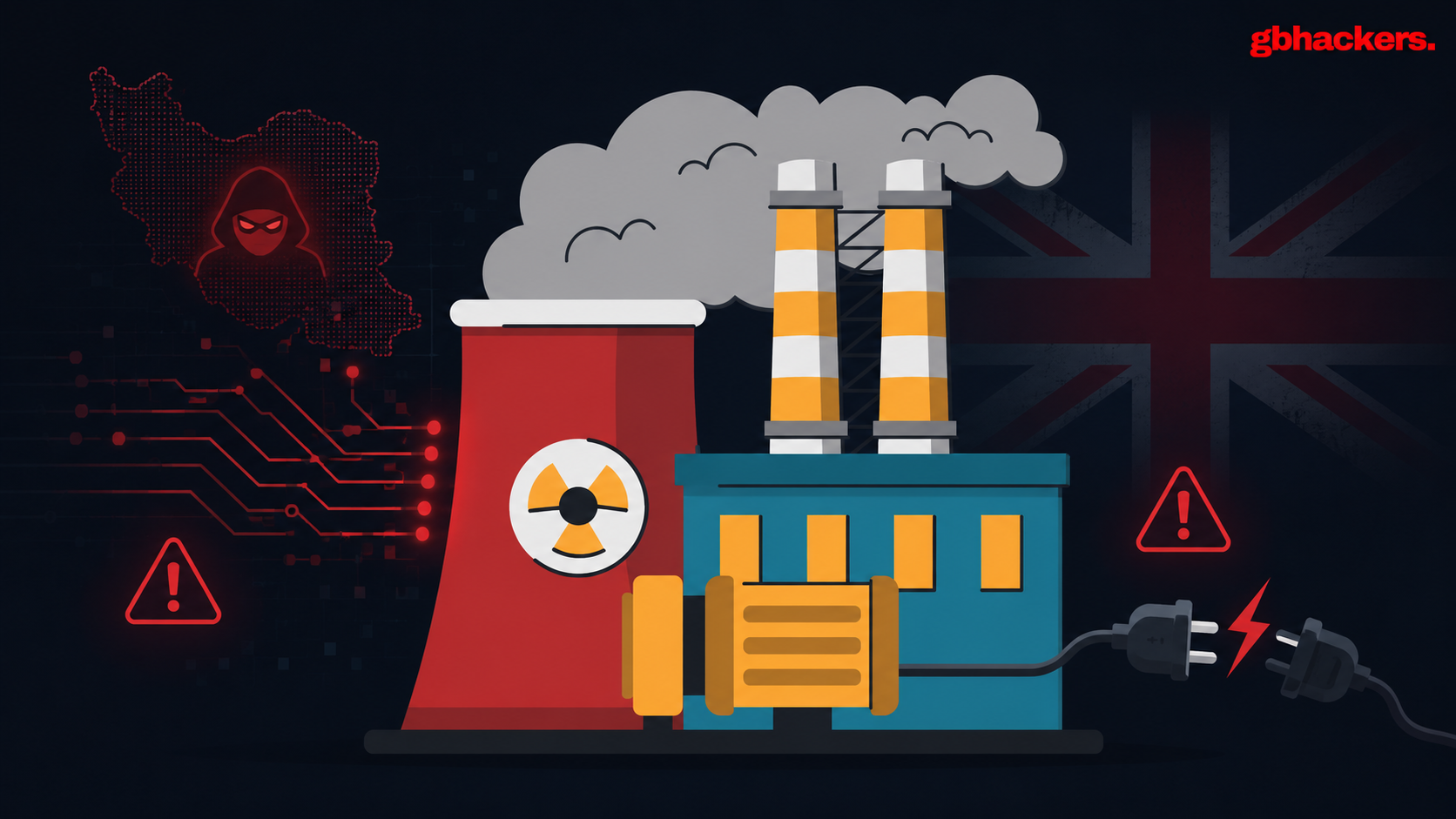


In July 2026, a small power generation facility in the United Kingdom experienced a cyber incident that resulted in its operations being suspended for approximately four days. Although media reports have associated the activity with hackers believed to have ties to Iran, both the UK government and the National Cyber Security Centre (NCSC) have refrained from officially attributing the event to Iran or to any specific cyber threat group.
The public became aware of the situation on August 22, when The Telegraph reported the disturbances affecting a British energy facility allegedly linked to Iranian actors. Following this coverage, multiple news outlets, including the Financial Times and Reuters, clarified that the outage involved a relatively small generator rather than a major power station. The Department for Energy Security and Net Zero confirmed the cyber incident, stating that it involved a "small-scale energy generator," although they did not disclose the operator or specific site involved.
Michael Shanks, the UK Energy Minister, emphasized that the affected asset was “tiny” in comparison to conventional power stations, underlining that no consumers experienced any power outages, the broader electricity grid remained unaffected, and national energy security was not at risk. Despite the incident’s limited implications for the larger grid, officials kept energy-sector executives informed and coordinated further with the NCSC and other regulatory bodies in the aftermath of the incident.
The four-day duration of the facility’s downtime is a critical aspect of the incident, highlighting the substantial operational consequences that can arise from a prolonged shutdown at a physical generation site. However, the public disclosures have not clarified the nature of the disruption, leaving questions as to whether it stemmed from direct interference with operational technology, a compromise of management systems, or a precautionary shutdown during incident counters.
In industrial environments, resuming operations typically demands more than simply cutting off malicious access. Operators might need to conduct thorough validations of controller logic, engineering workstations, safety controls, and network settings before safely returning equipment to service. Researchers from ThreatMon reported that the affected facility was likely a gas-fired peaking plant with a capacity of about 15 megawatts. Such facilities are designed to provide additional power during periods of heightened demand.
Moreover, while the incident raises serious questions about cybersecurity practices, no authoritative technical reports have yet clarified how the breach occurred. There remains no public approval of phishing attempts, credential theft, vulnerability exploitation, malware deployment, or lateral movements into operational technology networks. The identity of the affected facility, the vendors of its industrial control systems, and whether internet-facing systems were involved remain undisclosed. Consequently, incident-specific indicators of compromise have not been released, raising concerns about the reliability of claims circulating in secondary reports regarding the incident.
These details are crucial, particularly since the incident coincided with a growing concern regarding Iranian-affiliated targeting of internet-exposed industrial environments in the United States. In a related note, on July 22, the Cybersecurity and Infrastructure Security Agency (CISA) and its partners issued updates to their cybersecurity advisory, warning that Iranian-affiliated actors were increasingly targeting programmable logic controllers across various critical infrastructure sectors.
The advisory indicated that the range of potentially vulnerable systems now includes those manufactured by notable vendors such as Rockwell Automation/Allen-Bradley, Schneider Electric, and Siemens. Detection guidance for malicious modifications to reusable PLC code modules was also included. Although Iranian-affiliated actors were observed targeting operational technology devices during this timeframe, no definitive connection to the cyber incident impacting the UK facility has been confirmed, nor has there been any overlap in infrastructure or patterns of behavior.
Despite the lack of a direct, technical linkage between the two situations, the UK incident highlights a broader issue concerning operational technology (OT) security. Smaller facilities can prove operationally vulnerable even when the overall energy supply remains intact. These distributed generation sites often depend on remote administration, industrial engineering systems, third-party connections, and digitally controlled processes, which can lead to serious vulnerabilities when measures for asset visibility, authentication, and recovery are insufficient.
The key takeaway for UK security professionals is that the risks associated with cyber incidents extend beyond the biggest power stations. Emphasizing cyber resilience in this context is essential, as smaller, distributed assets play pivotal roles in supporting the infrastructure that underpins national energy security.