
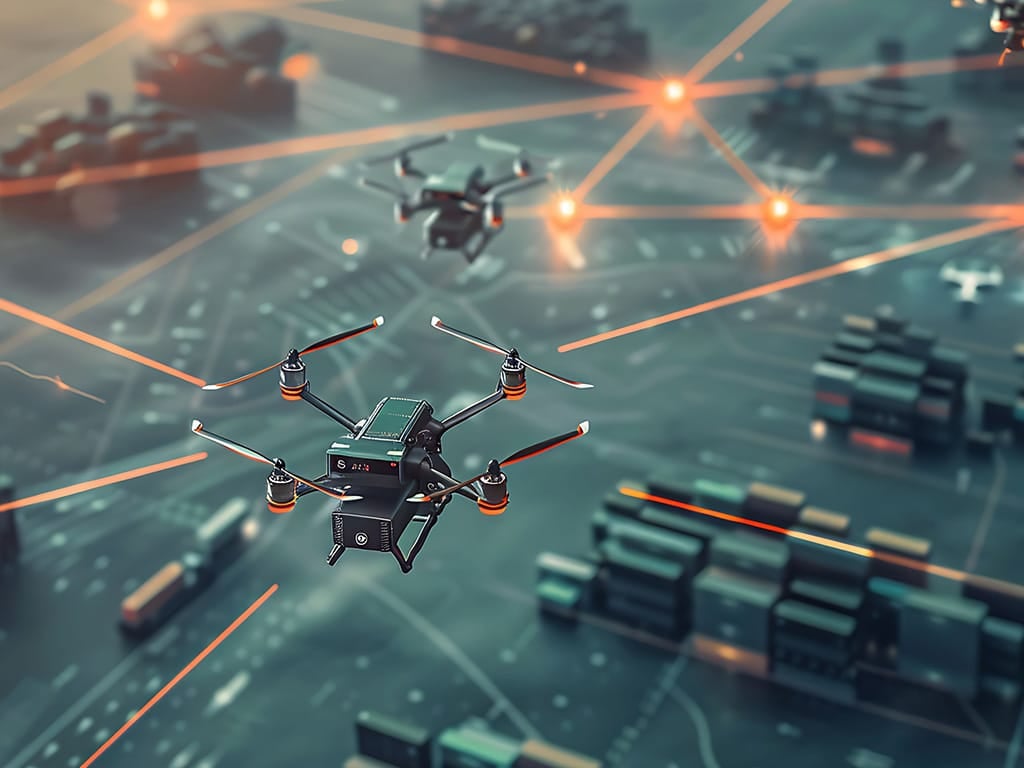


Unmanned technology, specifically in the form of drones and autonomous vehicles, is rapidly evolving and finding applications in both civilian and military sectors. The military, in particular, is driving the development of these technologies, setting the standard for future civilian applications. One key area of focus in the military arena is the integration of drones into groups or “swarms,” which require advanced software to coordinate and synchronize their actions, especially in high-intensity combat situations.
When it comes to developing software to support swarm technology for military purposes, several requirements need to be met to ensure functionality, security, resilience, and high autonomy. These requirements include reliability, security, modularity, performance, autonomous decision-making, swarm coordination, adaptation to changes, scenario-based management, communication interfaces, data processing, AI algorithms, resistance to electronic warfare, energy efficiency, support, and maintenance.
The SWARM protocol was developed to address these challenges by providing stable and adaptive communication between drones, ensuring their coordination and autonomy even under active electronic warfare countermeasures. The protocol operates in various modes like Standard, Combat, Silence, and Protection Mode, each designed for specific scenarios and requirements.
One of the key features of the SWARM protocol is its adaptive encryption mechanisms, which automatically select the level of data protection based on current conditions, switching between encryption methods to balance data transmission speed and security. The protocol also supports dynamic network topology, multi-channel transmission, context-aware routing, incident detection and response protocols, disaster recovery system, packet accounting system, drone synchronization, autonomy, self-organization, and coordination in combat situations.
In the global landscape, countries like the United States, China, Ukraine, and Russia are leading the way in the development and application of swarm drone technologies. Joint military exercises and international cooperation play a significant role in testing and integrating these technologies, showcasing the importance of collaboration in advancing drone swarm capabilities.
As swarm drone technologies continue to evolve, challenges arise in their effective use and countermeasures. Comprehensive solutions like the SWARM protocol are crucial in addressing these challenges and setting the direction for future developments. The protocol not only enhances military capabilities but also opens new possibilities for civilian applications, shaping the future of autonomous drone operations and electronic warfare.
In conclusion, the SWARM protocol represents a significant advancement in unmanned technology, with the potential to revolutionize military operations and technological competitiveness. Its development and integration into military strategies will play a pivotal role in shaping the future of drone technologies on a global scale.