
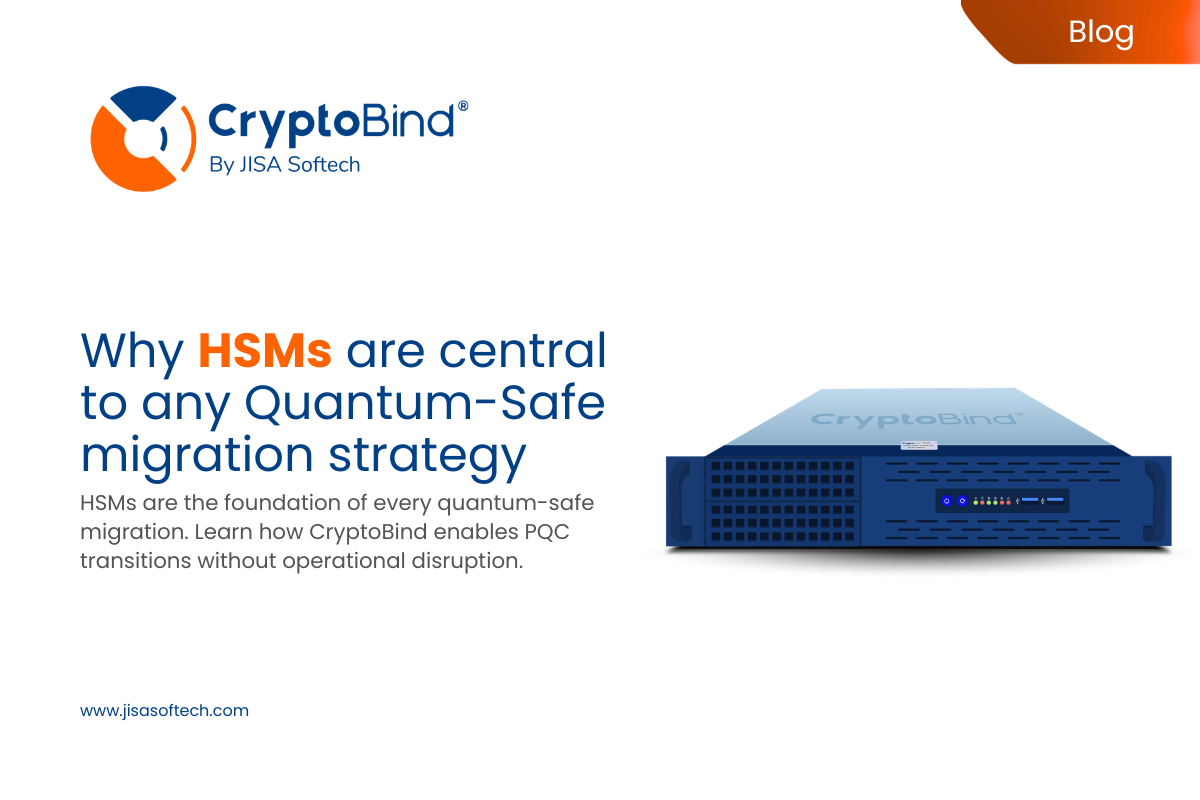


NIST’s Post-Quantum Cryptographic Standards Set a New Era for Enterprise Security
In August 2024, a significant milestone was achieved in the realm of cybersecurity when the National Institute of Standards and Technology (NIST) officially finalized its inaugural set of post-quantum cryptographic standards. These standards include the ML-KEM, ML-DSA, and SLH-DSA, and they represent a transformative moment for enterprise security. Despite the clarity these new regulations provide, the threat landscape has not dissipated; in fact, it remains perilous. Organizations today face a high level of exposure to various cyber threats, particularly from adversaries implementing what is known as "harvest now, decrypt later" (HNDL) attacks. This alarming tactic involves capturing encrypted data now, only to decrypt it later when sufficiently powerful quantum computers become accessible.
However, adopting quantum-safe algorithms is not a straightforward transition for Chief Information Security Officers (CISOs) and cryptographic architects. It is an ongoing operational necessity that requires thoughtful planning and execution. Presently, many organizations find themselves grappling with not only identifying suitable post-quantum algorithms but also navigating the complexities of migrating a diverse and distributed cryptographic ecosystem. This is where the role of Hardware Security Modules (HSMs) becomes essential.
The Structural Fidelity of HSMs in Post-Quantum Cryptography Migration
A Hardware Security Module (HSM) is a specialized device designed to create, store, and manage cryptographic keys within a secure hardware environment. Unlike software-based Key Management Systems, HSMs have unique attributes essential for a smooth transition to post-quantum algorithms. The first of these advantages is algorithm agility without exposing the cryptographic keys to vulnerabilities; the private keys remain confined within the hardware bounds, ensuring they never exist in plaintext form in memory.
When it comes to migrating to quantum-safe cryptography, HSMs provide three significant benefits that software alternatives cannot match:
-
Algorithm Agility Without Key Exposure
Organizations face the requirement to support multiple cryptographic algorithms simultaneously, including traditional algorithms like RSA and Elliptic Curve Cryptography (ECC) alongside new post-quantum standards. CryptoBind HSMs are engineered specifically for this scenario. Their firmware architecture enables the use of hybrid key pairs, allowing both classical and post-quantum algorithms to function concurrently within the same device. This capability permits organizations to validate PQC operations in live settings while preserving their existing infrastructure, thereby negating the conflict between security and operational continuity. -
Centralized Key Lifecycle Management at Scale
One of the most formidable challenges organizations encounter during PQC migration is managing the complexity of key lifecycles. Post-quantum algorithms often involve larger key sizes and distinct performance characteristics compared to classical algorithms. Effectively overseeing this complexity across thousands of certificates, Transport Layer Security (TLS) sessions, code-signing workflows, and encrypted volumes necessitates a centralized governance approach. CryptoBind HSMs address this need by providing a unified key management framework that conceals algorithm complexity from dependent applications. Security teams can manage post-quantum keys—rotating, retiring, and provisioning—through a single, auditable interface without necessitating changes to existing application logic. This foundational decoupling means that the speed of migration is no longer hindered by the timelines required for application re-engineering. - Tamper-Evident Audit Trails for Compliance and Governance
To align with critical regulatory requirements such as FIPS 140-3 and eIDAS 2.0, organizations must ensure they have robust measures in place to safeguard their cryptographic operations. CryptoBind HSMs maintain a cryptographically signed audit log that serves as a tamper-evident record for all key operations—covering generation, usage, export, and destruction. This provision is essential not solely for compliance audits but also for overall operational certainty. Security teams can trust, backed by hardware guarantees, that legacy keys have been purged and that post-quantum operations are correctly instantiated.
Operational Continuity Through a Case Study Framework
To illustrate the operational challenges of PQC migration, consider a financial organization managing a Public Key Infrastructure (PKI) that underpins authentication, transaction signing, and inter-bank communications. A complete overhaul to adopt post-quantum cryptography would require simultaneous changes across certificate authorities, Online Certificate Status Protocol (OCSP) responders, HSM firmware, and countless dependent application integrations. This scenario poses tremendous risks to operational stability.
When utilizing CryptoBind HSMs, the migration strategy is fundamentally altered. Acting as a cryptographic abstraction layer, the HSM provides a common API that shields lower-level systems from complexity. This design allows for the issuance and validation of hybrid certificates—such as those utilizing classical ECDSA with ML-DSA—without requiring adjustments to existing applications. While systems dependent on legacy technology may still be unable to sign using PQC signatures, the migration can commence immediately for endpoints capable of supporting post-quantum measures.
This phased migration model, facilitated by hybrid key pairs housed in HSMs, aligns seamlessly with the recommendations provided by NIST and BSI in their PQC migration guidelines. It alleviates the dilemma of choosing between operational continuity and quantum readiness.
An Insight Into CryptoBind’s PQC-Ready Architecture
While not all HSMs are equally capable of supporting post-quantum migration effectively, CryptoBind’s architecture has been meticulously designed with cryptocurrency agility from the outset, rather than as a retrofit. Key differentiating features of CryptoBind HSMs include:
- NIST PQC Algorithm Support: The capacity for simultaneous classical and post-quantum key generation.
- Hybrid Key Pair Generation: Streamlined support for lattice and hash-based operations tied to post-quantum algorithms, which often demand considerable computational resources.
- High-Throughput PQC Operations: Enhanced hardware acceleration to efficiently handle the computational overhead associated with lattice-based and hash-based operations.
- Zero-Disruption Firmware Updates: Capability for field-upgradable firmware, ensuring evolving algorithm support without necessitating hardware replacements.
- Unified API Compatibility: Support for various interfaces to facilitate integration with existing cryptographic middleware without the need for application-level changes.
A Strategic Imperative to Initiate Migration in the Hardware Layer
Regardless of how organizations approach PQC migration, one commonality remains: the existing key management infrastructure struggles to evolve at the pace of emerging threats. A strategy anchored in HSM infrastructure provides a stable, hardware-validated foundation from which all layers of the cryptographic framework can be progressively updated.
CryptoBind HSMs not only accommodate post-quantum algorithms but also operationalize a quantum-safe migration as a continuous, auditable, and non-disruptive process. This approach is essential for any enterprise security program aiming to execute large-scale upgrades in a realistic and effective manner.
In light of the impending quantum threat, organizations must craft timely migration strategies, starting with a robust approach to hardware. This foresight will be pivotal in ensuring organizations remain secure against the potential risks posed by quantum computing advancements.