
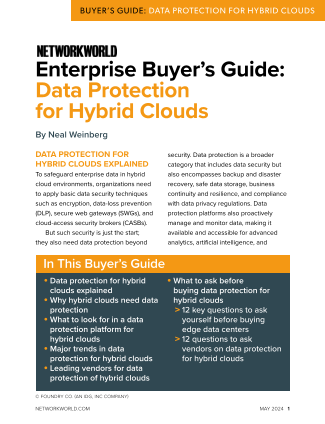
A comprehensive buyer’s guide has been released by Network World, aimed at assisting network and security IT professionals in navigating the complexities of data protection in a hybrid cloud setting. The guide delves into the challenges organizations encounter when safeguarding corporate data within a hybrid cloud environment, and offers insights on selecting the most suitable solution to address these issues.
In today’s digital landscape, businesses are increasingly relying on hybrid cloud environments to store and manage their data. This blend of on-premises and cloud infrastructure provides organizations with flexibility and scalability, but also introduces new security concerns. As data is being accessed and stored across multiple platforms, ensuring its protection becomes a critical priority for IT teams.
The buyer’s guide underscores the importance of understanding the unique challenges associated with data protection in a hybrid cloud environment. It highlights the need for organizations to implement robust security measures to safeguard sensitive information from potential threats and breaches. By identifying these challenges upfront, IT professionals can proactively address them and mitigate the risks associated with data loss or unauthorized access.
Moreover, the guide offers practical advice on selecting the right data protection solution for hybrid cloud environments. It provides a comprehensive overview of the various options available in the market, ranging from encryption and access controls to data backup and recovery solutions. By evaluating these solutions based on factors such as scalability, integration capabilities, and compliance requirements, organizations can make informed decisions that align with their specific needs and priorities.
One key aspect emphasized in the buyer’s guide is the importance of assessing the security posture of cloud service providers. With data being stored and processed in external cloud environments, organizations must ensure that their providers have adequate security measures in place to protect data from cyber threats and vulnerabilities. By conducting thorough due diligence and verifying the security practices of cloud providers, organizations can minimize the risk of data breaches and ensure the confidentiality and integrity of their data.
Furthermore, the guide highlights the evolving nature of hybrid cloud environments and the impact of emerging technologies on data protection strategies. With the proliferation of IoT devices, big data analytics, and artificial intelligence, organizations must adapt their security measures to keep pace with technological advancements. By staying abreast of industry trends and leveraging innovative solutions, IT teams can enhance their data protection capabilities and secure sensitive information effectively.
Overall, the buyer’s guide serves as a valuable resource for network and security IT professionals who are navigating the complexities of data protection in hybrid cloud environments. By offering insights, best practices, and practical recommendations, the guide equips organizations with the knowledge and tools needed to enhance their security posture and safeguard corporate data in today’s dynamic digital landscape.