
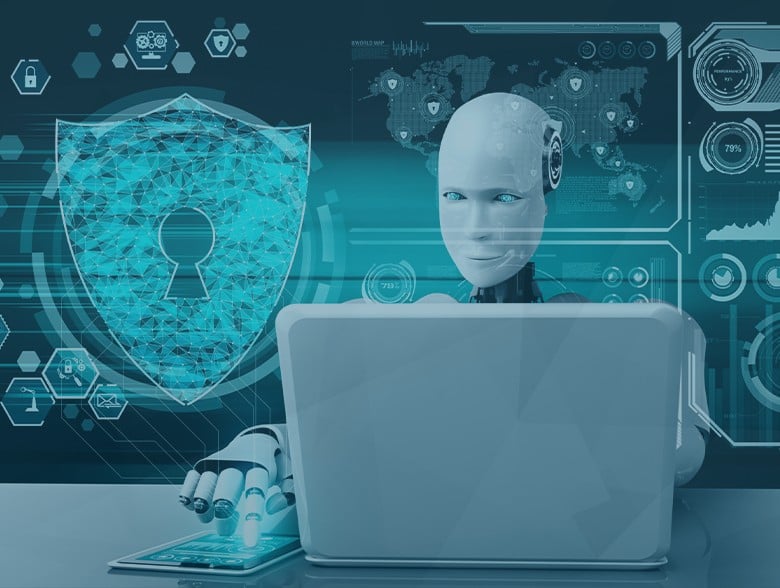


Artificial Intelligence (AI) and Cybersecurity have become increasingly important in today’s interconnected world. The development of AI offers opportunities for combating digital threats, but it also brings new challenges. It is crucial to understand how AI intersects with Cybersecurity both now and in the future.
AI is a branch of computer science that focuses on building machines capable of performing tasks that typically require human intelligence. Cybersecurity, on the other hand, aims to protect digital systems from attacks. These two fields have the potential to bring valuable insights to each other. AI can help detect and respond to cyber threats more quickly and efficiently, while Cybersecurity can train AI software using real-world data. Currently, AI is already being used in various ways in the field of Cybersecurity. Some examples include automating threat detection and response systems, as well as predicting network breaches based on historical patterns. These applications have resulted in stronger security infrastructures that can flexibly respond to ever-changing threats.
However, integrating AI into existing security frameworks also presents challenges. One issue is the potential for unpredictable false positives, where AI systems mistakenly identify harmless actions as threats. Another challenge is overreliance on old data when dealing with new types of attacks. Adversaries may also use adversarial AI to circumvent digital defenses by identifying weaknesses that an algorithm hasn’t been trained against. Despite these challenges, there is still enormous potential for enhancing current cybersecurity standards through advances in AI research and development. Future technologies might improve predictive capabilities and anomaly detection, making it harder for attacks to go unnoticed.
It is also crucial to consider the ethical implications of using AI in Cybersecurity. As technology advances, the possibility of unethical practices by malevolent actors manipulating AI for destructive purposes becomes a concern. This not only erodes trust levels but also breaches privacy boundaries. Establishing clear ethical principles for utilizing AI in cybersecurity matters is essential. This helps preserve digital assets while elevating a company’s reputation among consumers. Additionally, implementing government-enforced laws against the wrongful use of AI technology can discourage individuals or groups from attempting unethical practices.
Investing in high-quality, diversified data sources is another crucial factor in effectively utilizing AI in Cybersecurity. The accuracy of AI systems relies directly on the quality of the data they are trained on. Therefore, ensuring that data sources are reliable and diverse is vital. Furthermore, implementing rigorous data audit protocols helps avoid biased or flawed systems caused by inferior quality material. This approach guarantees more dependable results when combating evolving cyber threats and ensures superior resiliency when necessary.
In summary, the incorporation of AI into Cybersecurity brings both challenges and opportunities that require careful assessment to enhance security measures without compromising other factors such as privacy or ethics. While AI can offer more robust defense mechanisms, it also introduces risks such as adversarial AI and ethical dilemmas. Therefore, implementation strategies require constant analysis for optimal results. Continually adapting to evolving scenarios is essential during this digital age’s evolution phase. Continuous learning is the key to moving forward, empowering employees, equipping them with the tools they need to exploit the potential of AI securely, and amplifying their productivity. Furthering cyber-safety efforts is paramount in better protecting people from attacks by hackers aided by innovations in AI.
In conclusion, AI should be seen as a tool that amplifies, rather than replaces, human abilities. AI is at the crux of cybersecurity initiatives, and careful consideration of its integration is necessary. By understanding the potential risks and benefits and establishing ethical guidelines, we can harness the power of AI to enhance cybersecurity while preserving privacy and trust.