


Recent Trends in Cybersecurity: A Comprehensive Analysis
In a week rife with cybersecurity developments, expectations of the mundane—such as recycled malware and straightforward attacks—were shattered by unsettling trends. A public repository revealed a supply chain attack kit, while the emergence of a $5,000-a-month Remote Access Trojan (RAT) capable of duplicating browser identities raised alarms. Compounding these concerns is research indicating that AI agents can be misled into divulging sensitive credentials, suggesting a burgeoning crisis in digital security.
Emerging Threats and Advanced Techniques
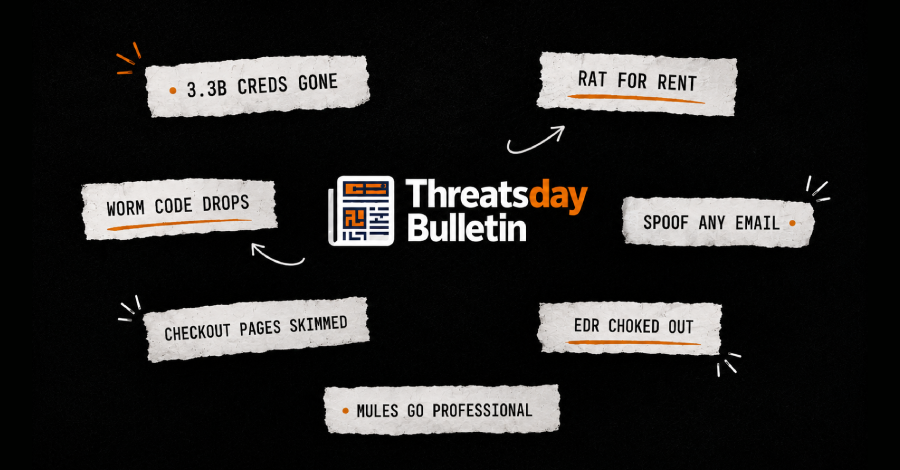
Cybercriminals are enhancing their operations, now resembling Software as a Service (SaaS) models. Mule networks are being utilized efficiently, with features like deepfake Know Your Customer (KYC) bypass now marketed as distinct advantages. Even endpoint security tools are found to be vulnerable due to inherent operating system settings that can be manipulated without the need for conventional exploits.
1. Exposure of Identity Records
A new analysis from Flashpoint disclosed that over 3.3 billion identity records were exposed last year. This staggering figure was a result of infostealers infecting more than 11.1 million devices. The research pointed towards a multitude of illicit marketplaces where over thirty different strains of infostealers, including notable names like Lumma and StealC, are actively sold. Key affected regions included India, Brazil, and the U.S.
2. Malware-as-a-Service RAT
A specific threat actor, known as “o1oo1,” has been promoting a sophisticated RAT called SilabRAT on darknet forums for $5,000 monthly subscriptions. Marketed as a malware-as-a-service (MaaS), SilabRAT is particularly focused on hoarding credentials and comes equipped with various functions to undermine existing security protocols. Its delivery via ClickFix campaigns illustrates how modern cyber threats have evolved in sophistication.
3. North Korean Cyber Intrusions
According to CrowdStrike, a North Korean group called Famous Chollima accounted for nearly half of all state-sponsored cyber operations within the tech sector over recent months. This group has been known to employ unconventional tactics, including infiltrating tech firms under false pretenses to gather sensitive information.
Law Enforcement and Cybersecurity Defense
The U.S. Department of Justice recently revealed the seizure of 13 internet domains that were masquerading as consulting firms targeting individuals with security clearances. This operation highlights the ongoing efforts by law enforcement to combat cybercrime, particularly where government employees may be enticed to divulge classified information for easy financial gain.
Law enforcement officials, including Assistant Attorney General John A. Eisenberg, warned that anyone approached online with offers of unexpectedly lucrative consulting work should remain vigilant. The allure of easy money, especially when combined with vague job descriptions, often conceals malicious intent aimed at exploiting confidential information.
Supply Chain Attacks and Vulnerabilities
A critical observation in this week’s cybersecurity landscape was the exposure of the Miasma credential-stealing framework on GitHub. Although intended for legitimate use, the code was made available via compromised developer accounts, showcasing a persistent supply chain attack vector that enables large-scale incursions into vulnerable systems. This toolkit has been assessed to pose significant threats across a variety of platforms, targeting widely-used code repositories.
Broadened Attack Vectors
Several innovative methodologies employed by cybercriminals were brought to light. A new loader known as GoFlateLoader has been discovered, capable of delivering multiple infostealers through cracked software and malicious traffic channels. Additionally, the tactic of "download pumping" has surfaced, where cyber attackers inflate the download counts of malicious packages to create a facade of legitimacy.
With the rise of AI and machine learning technologies, attackers are now exploiting vulnerabilities in these systems. Recent studies have demonstrated that AI agents are susceptible to phishing tactics that can trick them into revealing sensitive information, a game-changer in understanding how cybersecurity measures can be circumvented.
Conclusion: The Evolving Landscape
As cyber threats grow more intricate and well-organized, a critical lesson emerges: the reliance on conventional protective measures may no longer suffice. The perimeter that once defined security validity is no longer the sole concern; instead, the focus has shifted to what lies within—where trust is often taken for granted.
Organizations must reconsider their strategies. It’s essential to audit all access points regularly and treat every identity within the digital ecosystem as a potential vulnerability. Moreover, the increased use of browser extensions requires careful scrutiny, given their capacity to unintentionally relay sensitive information.
As the cybersecurity landscape continues to evolve, staying ahead of emerging threats requires vigilance, adaptability, and a thorough understanding of both the tools and tactics employed by cybercriminals. Friday will bring another opportunity to evaluate ongoing trends and improve defenses—vigilance remains paramount in this ever-changing environment.