


Cybersecurity Weekly Review: A Rise in Threats and Attack Vectors
In the ever-evolving landscape of cybersecurity, the latest reports indicate an alarming uptick in various malicious activities. This week’s analysis highlights notable incidents that showcase the susceptibility of both individuals and organizations to cyber threats. From game cheats masquerading as harmless applications to sophisticated phishing campaigns exploiting legitimate technologies, the complexity and severity of these threats are increasing.
Malicious Game Utilities Unveiling Spyware
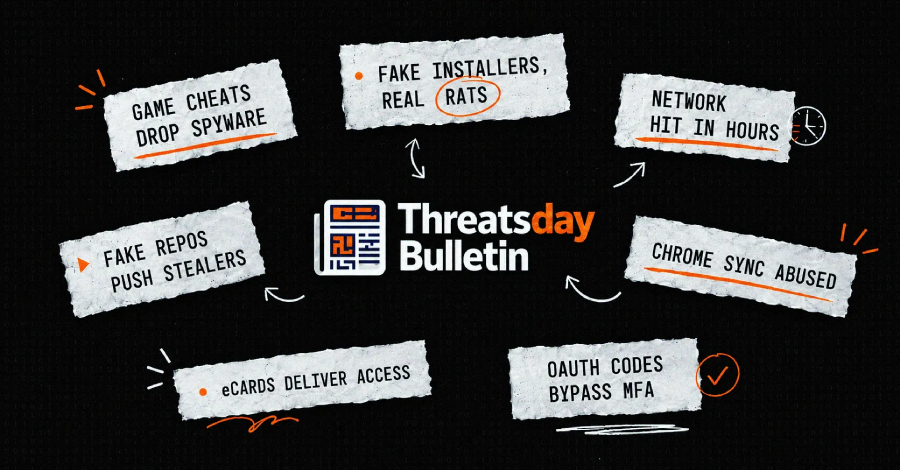
Cybersecurity researchers recently uncovered a series of malicious packages on NuGet, a popular repository for .NET command-line tools, which were disguised as game utilities and automation bots. Eleven packages, each functioning as a downloader, were identified as the first stage of a two-part attack. They are designed to fetch and execute a secondary Python payload, referred to as “pepesoft.exe,” from various platforms, including GitHub and Hugging Face. The payload employs AWS-style key materials for configuration and includes mechanisms to authenticate with Google Sheets. Furthermore, these malicious tools are capable of sending screenshots to a configured Telegram bot, illustrating the dangerous interplay of gaming and cyber espionage.
Fake Installers: A Cover for Remote Access Trojans
Meanwhile, a financially motivated threat actor, identified by the moniker UAT-11795, has been launching targeted attacks against users in the U.S. and Europe since mid-2025. This initiative leverages trojanized installers for popular software such as developer tools and communication platforms like Zoom and WebEx. By embedding a Python-based remote access tool (RAT) known as Starland RAT, along with a sophisticated PowerShell-based memory implant named WLDR agent, the attackers aim to harvest sensitive credentials and cryptocurrency assets. Cisco Talos reported that the attack trajectory typically begins with ClickFix lures, distributing harmful HTA scripts that initiate the installers. This complex web of attacks underlines the persistent risks posed by remote access threats in financial contexts.
Ransomware Strikes Prompt Immediate Response
In a separate incident, an IT services firm in South Asia experienced a devastating attack from a ransomware variant named Spirals, which appears to be a new entrant in the ransomware ecosystem. After breaching an IIS web server, attackers effectively compromised the organization’s network, culminating in the rapid deployment of ransomware across machines. Victims were threatened with data exposure and extortion demands delivered via a Tor portal, reflecting a trend where ransomware actors increasingly use aggressive tactics to compel victims into compliance.
Exploited Vulnerabilities Come Under Scrutiny
In a concerning development, the U.S. Cybersecurity and Infrastructure Security Agency (CISA) added two vulnerabilities to its Known Exploited Vulnerabilities catalog, namely CVE-2026-46817 and CVE-2023-4346. Both flaws, impacting Oracle E-Business Suite and KNX Protocol, respectively, necessitate immediate remediation by federal agencies due to reports of active exploitation. Such cautionary alerts emphasize the critical need for timely patch management in cybersecurity measures.
New Collaboration for Vulnerability Reporting
In light of these growing threats, CISA has also launched a collaborative initiative with organizations like the NSA and various international cyber security agencies to form a structured vulnerability disclosure program. The initiative aims to streamline communication between software manufacturers and security researchers, fostering a more efficient approach to identifying and addressing vulnerabilities. By promoting transparency and coordinated responses, stakeholders hope to enhance the resilience of software systems against emerging threats.
Law Enforcement Dismantles Large Scale Fraud Networks
Law enforcement agencies in the Netherlands have taken a significant step against organized crime by arresting a key figure believed to orchestrate a vast scam network that employed over 700 individuals across multiple fraudulent call centers. This intricate operation posed as financial advisors, bilking victims through convincing investment scams. Officers noted that the deceptive tactics employed involve establishing trust over an extended period, often leading victims to invest large sums under the impression of legitimate financial growth.
Additionally, Spanish police disrupted a cybercrime syndicate that had reportedly laundered approximately €140 million through various means including fake investment platforms. The operation included the creation of a complex network of bank accounts facilitated by “money mule” operations, illustrating the sophisticated infrastructures criminals employ to conceal their activities.
Sophisticated Evasion Techniques Detected
Bitdefender Labs shed light on three specific techniques by which malicious actors misuse Windows’ bind links to evade detection from endpoint security solutions. Utilizing built-in file-system virtualization, attackers can circumvent several of the defenses designed to thwart persistent threats. This discovery highlights the necessity of not only maintaining robust cybersecurity protocols but also of remaining vigilant regarding seemingly innocuous system features.
Conclusion: A Cautionary Reflection
The emerging trends underscore the vital lesson that the cybersecurity landscape continues to shift dramatically. Trust should not be granted lightly; all components—from repositories to software installations—must undergo rigorous scrutiny. Each seemingly trivial oversight can escalate into a full-blown security incident. As numerous vulnerabilities resurface, and new methods of exploitation come to light, proactive measures become paramount. Organizations must remain committed to tightening defaults, patching dated vulnerabilities, and vigilant monitoring of potential threats to safeguard their digital environments. Cybersecurity is not merely about defense; it is a commitment to ongoing vigilance, education, and adaptation in the face of evolving challenges.