


Massive Business Email Compromise Campaign Targets Microsoft 365, Exposes Vulnerabilities
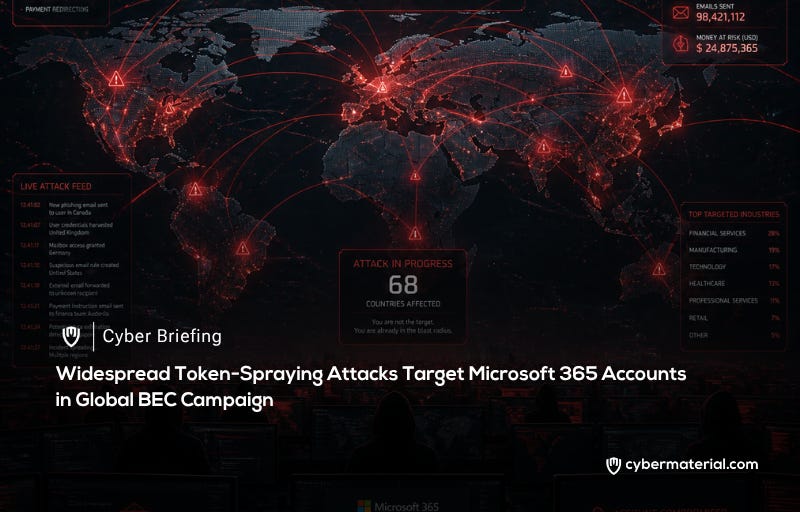
A significant threat has emerged in the cybersecurity landscape, with Huntress researchers unveiling a large-scale business email compromise (BEC) campaign specifically aimed at Microsoft 365 environments. The scale of this operation is alarming, with an astounding 200,000 automated login attempts documented across various corporate networks worldwide during a period from July to September 2024. The repercussions have been severe, as investigators confirmed 497 successful compromises affecting 79 different organizations.
The methodology employed in this campaign marks a notable shift in tactics, employing adversary-in-the-middle attacks focused on stealing session tokens rather than traditional password theft. This strategy allows attackers to bypass safeguards such as multi-factor authentication (MFA), which has become a standard security measure for many enterprises. By capturing session tokens, which are generated after users complete legitimate authentication processes—including those involving multi-factor methods—attackers gain unauthorized access to systems without the need for re-authentication.
The campaign’s effectiveness stems from its clever exploitation of the authentication workflow. Since the stolen tokens are created post-authentication, they provide attackers with significant leverage. The infiltration process involves utilizing fake sign-in pages and device-code phishing techniques to lure victims into submitting their credentials and generating valid session tokens. Subsequently, the attackers can replay these tokens from their own systems, effectively commandeering Microsoft 365 services without triggering further security protocols.
Once the intruders infiltrated compromised environments, they swiftly worked to establish persistence within the systems. In numerous documented incidents, attackers deleted existing MFA settings, subsequently registering their own phone numbers to the victim accounts. This cunning move ensures that simple password resets or any standard recovery methods would not eliminate their access. The persistence strategies deployed by the attackers included the creation of hidden email rules that rerouted communications from identifiable contacts, as well as modifications to Entra settings. By registering devices under their control as legitimate participants within the network, attackers set the stage for future unauthorized access to crucial resources.
The overarching aim of this campaign appears to be facilitating business email compromises designed to perpetrate financial fraud. Researchers noted instances where compromised mailboxes were leveraged to send phishing messages related to payroll, exploiting the credibility of legitimate email accounts to boost the chances of their success. While these specific attempts may not have resulted in immediate financial loss, they exemplify a broader strategy aimed at orchestrating financial fraud through sophisticated email compromise techniques.
In light of these alarming developments, Huntress has put forth a series of recommendations for organizations to enhance their cybersecurity posture and mitigate the risk associated with such token replay attacks. A primary recommendation involves implementing Conditional Access Policies that require multi-factor authentication for all users, cloud applications, and client app types without exception. Organizations that suspect they may have fallen victim to token replay attacks are advised to take immediate action by revoking all active sessions and resetting associated passwords.
Moreover, the recommended response steps extend to a thorough audit of Entra device registrations and MFA methods. Organizations should investigate unauthorized additions to these systems and review inbox rules for any suspicious alterations that may conceal communications from the attackers. These proactive measures aim to close vulnerabilities and restore security integrity, safeguarding sensitive information and organizational assets.
As this incident underscores the ongoing evolution of cyber threats, organizations across all sectors must remain vigilant and proactive in updating their cybersecurity frameworks to counteract such sophisticated attacks. Failure to adapt to the changing landscape could result in compromised data, damaging financial repercussions, and a potential loss of customer trust—outcomes that no organization can afford in today’s competitive market.
For further details on this emerging threat and additional security recommendations, Huntress emphasizes the importance of staying informed and prepared to defend against the ever-growing array of cyber threats targeting organizations globally.