
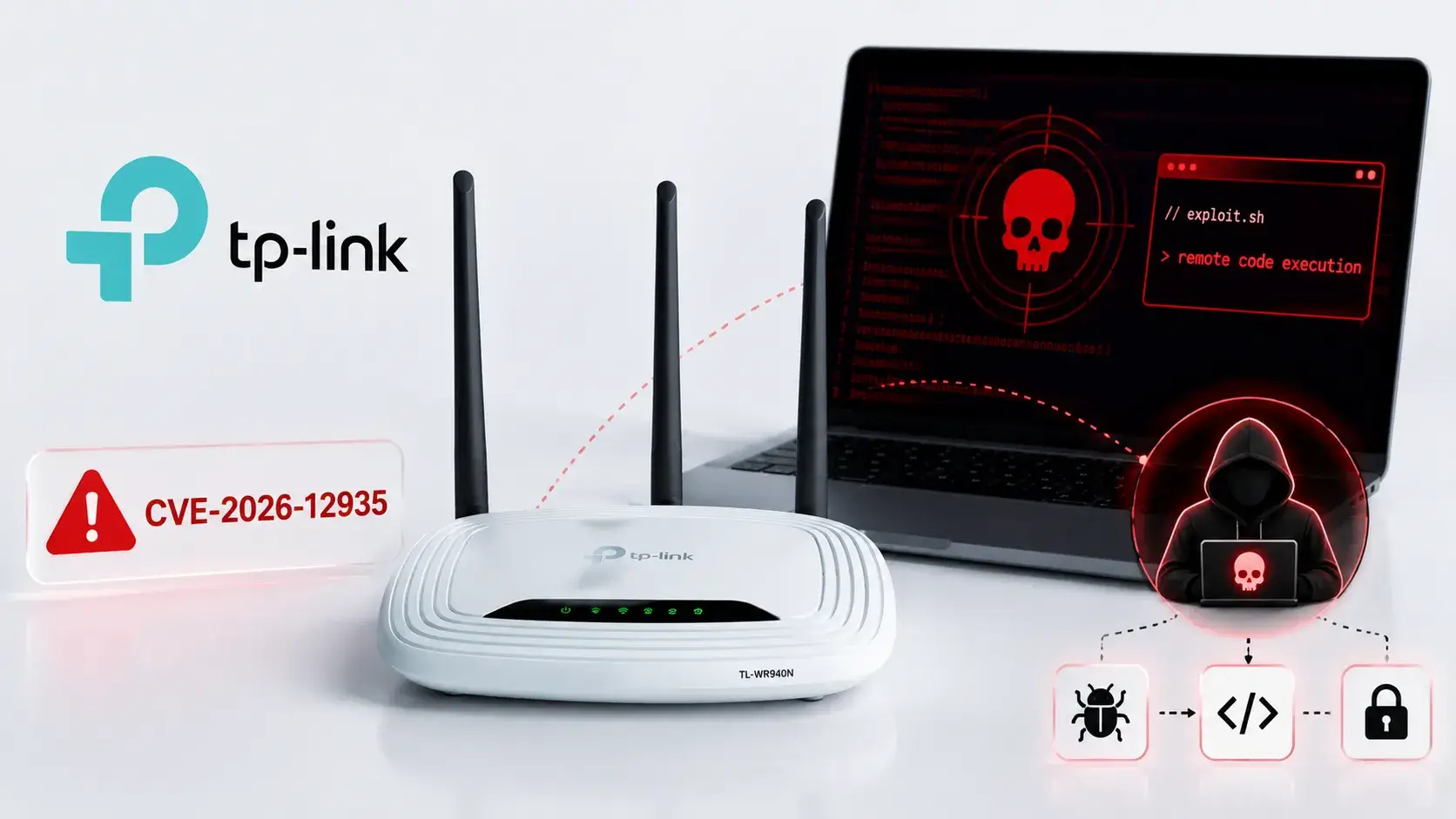
High-Severity Vulnerability Discovered in TP-Link TL-WR940N v6 Router
TP-Link has recently announced a significant security vulnerability impacting its popular TL-WR940N v6 wireless router. This vulnerability poses a serious risk as it allows unauthenticated remote attackers to execute arbitrary code, potentially granting them full control over the compromised device. The vulnerability is officially designated as CVE-2026-12935 and is rated with a high severity score of 8.7 on the CVSS v4.0 scale.
The Nature of the Vulnerability
According to TP-Link’s security advisory, the flaw in question is a stack-based buffer overflow associated with the router’s Real-Time Streaming Protocol (RTSP) connection-tracking feature. This specific vulnerability can be exploited when a client within the local network connects to an RTSP server controlled by an attacker. By sending carefully crafted RTSP messages, the malicious server can induce improper memory management within the affected kernel module of the router.
The implications of successfully exploiting this vulnerability are concerning. It can lead to a denial-of-service (DoS) condition, making the router temporarily unavailable. In more severe scenarios, it could allow for remote code execution. An attacker harnessing this capability would potentially compromise the router, enable changes to network settings, intercept traffic, deploy persistent malware, or use the compromised device as a stepping stone to launch attacks on additional systems connected to the local network.
Conditions for Exploitation
Importantly, the exploitation of this vulnerability does not require any form of authentication, making it even more alarming. However, user interaction is a prerequisite; a client device on the local network must first connect to the malicious RTSP service. This connection could occur if the user inadvertently clicks on a malicious streaming link, connects to a rogue media endpoint, or utilizes an application that interacts with the attacker-controlled RTSP server.
Technical Assessment
In providing a comprehensive view of the vulnerability, TP-Link assigned the following CVSS vector to CVE-2026-12935: CVSS:4.0/AV:N/AC:L/AT:N/PR:N/UI:P/VC:H/VI:H/VA:H/SC:N/SI:N/SA:N. This assignment reflects the concerning aspects of the vulnerability, such as its network-reachable attack vector, low complexity for attacks, lack of authentication requirements, and the significant potential negative impact on the router’s confidentiality, integrity, and availability.
Notably, this security flaw is specific to the TP-Link TL-WR940N model, version v6. In response to the discovery of this vulnerability, TP-Link has made corrective actions by releasing firmware updates identified as (EN)_V6_260528(EN), (US)_V6_260528(US), and (JP)_V6_260527(JP). Users of the affected router models are strongly encouraged to promptly download and install the relevant firmware from TP-Link’s regional support portal.
Recommendations for Users
It is imperative for both organizations and individual users who operate the affected routers to take proactive measures. Recommendations include limiting access to untrusted streaming services, closely monitoring connected devices for any unusual behavior, and securing the router’s administration interface with strong, unique passwords. These precautions can mitigate risks associated with potential exploitation.
TP-Link has acknowledged the responsible disclosure of this vulnerability by Ryo Shimada of Powder Keg Technologies, Inc. The company published its advisory on July 30, 2026, highlighting the urgency and significance of this matter.
As security continues to be a paramount concern in the age of rapid technological evolution, users are reminded to remain vigilant. Awareness of vulnerabilities such as the one posed by the TL-WR940N router is crucial in maintaining a secure network environment. Ensuring that all devices are regularly updated and that security best practices are followed can greatly reduce the chances of falling victim to exploitation efforts.