
Artificial Intelligence & Machine Learning,
Next-Generation Technologies & Secure Development,
Standards, Regulations & Compliance
Talks Will Focus on AI Risks, Crisis Communications and Technology Restrictions
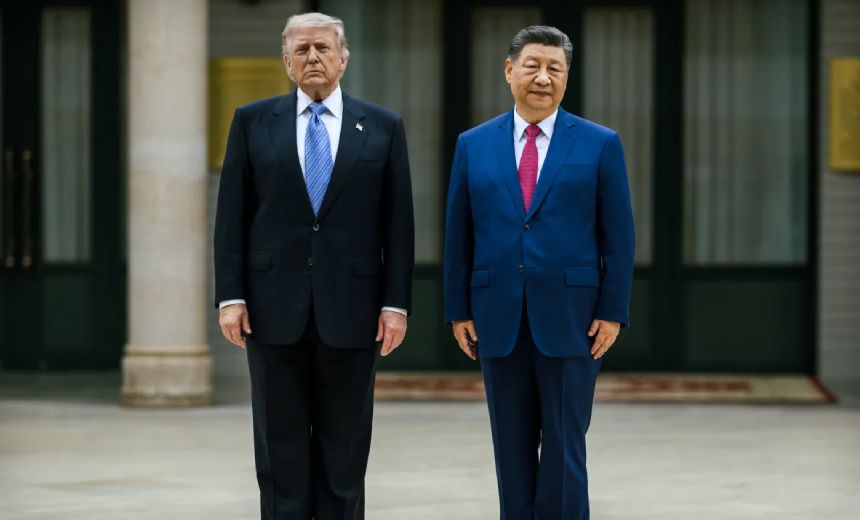
The upcoming meeting between Presidents Donald Trump and Xi Jinping in Washington, D.C., on Thursday is anticipated to place a significant emphasis on the theme of artificial intelligence (AI). However, many experts within the technology industry harbor doubts regarding the potential for any substantial changes to emerge from this high-profile event.
Both the United States and China find themselves in an intense competition, striving to develop larger AI models and enhance their data-center capacities. Just this week, Chinese tech giant Alibaba announced the release of a new AI processor, claiming it boasts capabilities three times greater than its predecessor. Additionally, the company outlined its ambitious plans for the Qwen models, targeting parameters ranging from five to ten trillion and aiming for over 20 gigawatts of global data-center capacity by 2032. These developments clearly indicate that Beijing is committed to maintaining its rapid pace in the AI race, showing no signs of slowing down.
Earlier in the week, U.S. Treasury Secretary Scott Bessent convened with Chinese Vice Premier He Lifeng in New York to initiate discussions surrounding AI and trade. During these discussions, Bessent proposed a “notification mechanism” designed to enable the two nations to inform each other about AI incidents that may impact national security. This proposal could serve as a foundation for ongoing dialogue between the U.S. and China regarding AI.
According to sources familiar with the situation, this mechanism is more akin to a direct line of communication between the two officials rather than a formally structured group of experts. Chinese state media acknowledged that discussions regarding AI took place but did not formally endorse Bessent’s proposition. Furthermore, he noted that both countries have formalized their dialogue on AI and agreed to reconvene in approximately two months in Shenzhen.
Experts like Kyle Chan, a fellow at the Brookings Institution’s John L. Thornton China Center, assert that a mutual deceleration of AI development between the U.S. and China seems highly unlikely. “Neither Trump nor Xi is particularly worried about existential risks posed by AI. In fact, both leaders appear intent on accelerating AI advancements within their own nations,” Chan remarked.
Retired Brig. Gen. Leslie Beavers, who previously served as the acting CIO of the Department of Defense, expressed skepticism regarding the summit’s ability to yield significant outcomes. “I would be genuinely surprised if we achieve any concrete steps, agreements, or commitments from this meeting,” Beavers commented, noting that China’s track record suggests it tends to disregard commitments unless they align with its strategic objectives. She anticipated the summit would result in general statements of success but little else.
Beavers speculated that any potential cooperation might occur in a more narrow and technical aspect, such as preventing access to frontier AI technologies by terrorist groups or other unauthorized third-party actors. Drawing upon a precedent set in 2024, where the U.S. and China agreed that decisions regarding nuclear weapons should rest in human hands rather than AI, she indicated that a similar approach could apply to AI as well.
According to Chan, a foundational step for both nations is to reach a shared understanding of their definitions of AI risk. Only then could they engage in regular expert meetings followed by incident reviews. He remarked, “Eventually, these communication channels could evolve into an emergency hotline in the event of a crisis.” In parallel, Beavers stressed that the U.S. must advance secure-by-design standards, regardless of China’s actions, suggesting a commission funded by Congress to collaborate with major AI labs to develop such standards.
AI, as Beavers emphasized, is still fundamentally software, yet it operates at computational speeds and volumes beyond human capabilities. This perspective captures the urgency for robust standards in an evolving technological landscape.
Opinions from industry analysts vary regarding the summit’s implications. Dario Maisto, principal analyst at Forrester, noted that even if this summit establishes a channel for communication between the two superpowers, it is improbable to alter semiconductor export controls or China’s pursuit of technological self-sufficiency.
Maisto described the meeting’s tone as more of a diplomatic overture rather than practical guidance for technology leaders. He predicted ongoing U.S. restrictions on advanced chips coupled with China’s relentless pursuit of tech independence. Multinational companies now face critical decisions regarding whether to create distinct operational frameworks for China versus other global markets or to maintain uniform platforms.
As Maisto pointed out, the pressing issue is not merely about summit outcomes but control over technology and resources. IT leaders are shifting toward a “digital sovereignty posture,” granting them autonomy from foreign jurisdiction while implementing changes incrementally.
The deepening chasm between U.S. and Chinese technology ecosystems is likely to compel global enterprises to utilize different chips, models, and cloud services tailored for various markets. Maisto stressed that technology buyers must consider control, flexibility, and resilience when making vendor and service choices.
In conclusion, regardless of the summit’s outcome, Beavers emphasized that technology leaders must remain vigilant, prepare for uncertainty, diversify their dependencies on chips and computing resources, and resist impulsive changes. “A well-thought-out plan must be in place,” she advised, “and it is crucial to adhere to that plan until clear indications suggest otherwise.”