


Election Security,
Fraud Management & Cybercrime,
Government
Courts, Audits and Federal Agencies Found No Evidence 2020 Votes Were Altered
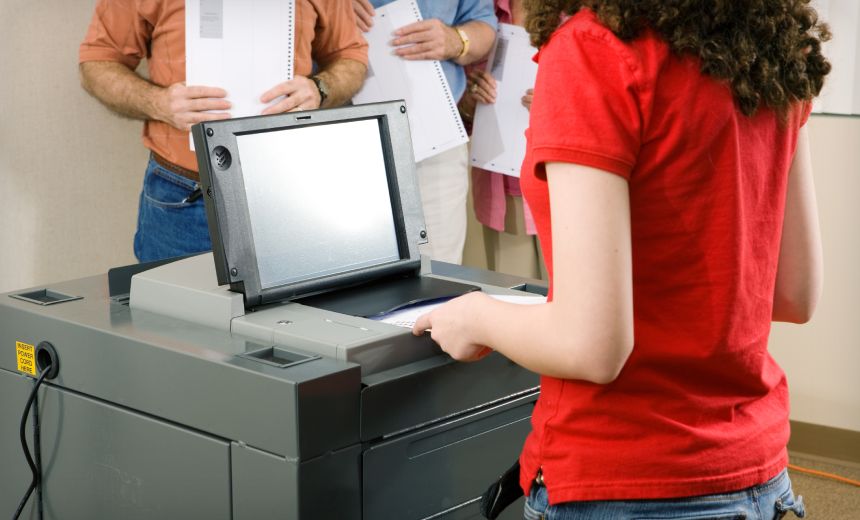
In a much-anticipated address set for Thursday evening, U.S. President Donald Trump is poised to share what he has termed “really, really big news” surrounding elections and the integrity of voting machines. This speech is expected to reignite claims that have already faced rejection from over 60 courts, various federal agencies, and multiple state-level investigations.
The address is scheduled to take place at 9 p.m. EDT in the East Room of the White House, a venue typically reserved for critically important presidential speeches. On Tuesday, Trump hinted that he would discuss issues relating to election machinery and voting integrity, asserting, “Without free and fair elections, you don’t have a country.”
Reports indicate that Trump may reveal newly-declassified intelligence related to purported vulnerabilities in voting machines and claims of foreign access to U.S. voter data. Reuters revealed that reviews commissioned by his administration found potential flaws that might necessitate software updates; however, these investigations did not uncover evidence suggesting that any voting system had been hacked or manipulated to change electoral outcomes.
While the White House has remained tight-lipped about the specifics of what Trump will discuss regarding election security, press secretary Karoline Leavitt stated, “The truth is, nobody knows yet what President Trump will ultimately say, which is why everyone should tune in.”
The scrutiny surrounding the 2020 presidential election remains one of the most intense in American history. Despite Trump’s claims, extensive investigations and court findings have determined that it was one of the most secure elections to date. The Cybersecurity and Infrastructure Security Agency (CISA), which was part of Trump’s own administration, released a statement alongside state and local election officials asserting that the 2020 election was “the most secure in American history,” confirming that there was no evidence that any voting system had deleted, lost, or changed votes. Shortly after this confirmation, CISA Director Christopher Krebs was dismissed by Trump for contradicting his allegations of fraud.
A declassified assessment from the National Intelligence Council in March 2021 indicated no signs that foreign actors attempted to influence or tamper with any part of the voting process in 2020. Then-Attorney General William Barr stated that the Department of Justice had found no evidence of fraud that could have impacted the election outcomes.
Federal judges, including those appointed by Trump, have dismissed over 60 lawsuits aimed at challenging the 2020 results due to a lack of evidence. Additionally, Fox News recently settled a defamation suit with Dominion Voting Systems for $787.5 million, stemming from unfounded allegations regarding stolen-election claims. A federal jury also ruled that Trump’s attorney, Rudy Giuliani, must pay $148 million to two election workers in Georgia whom he falsely accused of ballot manipulation.
Georgia has recounted its approximately 5 million presidential ballots three times, including a complete hand tally, with each review affirming the original results. Additionally, a Republican-commissioned audit in Arizona reaffirmed the accuracy of the Maricopa County ballots.
Security experts argue that the architecture of U.S. voting systems makes the possibility of remote hacking by foreign adversaries nearly impossible. Voting machines that record ballots operate without internet connectivity, and the central scanning systems are designed to be air-gapped, effectively isolating them from external networks. The decentralized nature of election administration across thousands of jurisdictions employing different equipment and procedures further complicates any potential large-scale attack.
Before deployment, voting systems are thoroughly tested in federally accredited laboratories, undergoing rigorous stress tests and software verifications according to voluntary federal guidelines managed by the U.S. Election Assistance Commission. States implement their own certification requirements, alongside accuracy testing, and employ tamper-evident seals and chain of custody measures.
Notably, nearly 95% of the ballots cast in 2020 included a paper trail, allowing officials to cross-verify machine counts against the physical ballots. Moreover, an increasing number of states have started performing risk-limiting audits, manually counting a random sample of paper ballots to validate electronic totals.
While concerns regarding the security of voting machines exist, advisory reports from CISA found no evidence of these vulnerabilities being exploited in any election. Geoff Hale, former head of CISA’s election security initiative and currently affiliated with the Center for Democracy and Technology, emphasized, “Voting systems, like all critical infrastructure, have vulnerabilities. However, the existence of a vulnerability does not prove that it has been exploited or altered any outcomes during an election.” He urged that complex claims of election security incidents should not be readily accepted without credible evidence.
This upcoming speech is significant, particularly following Trump’s recent dismissal of the three remaining commissioners of the Election Assistance Commission (EAC), leaving the body that certifies voting systems without a necessary quorum to carry out its functions. A White House official defended these changes, asserting that the president “reserves the right to remove individuals that may not be totally aligned with the important task of securing America’s elections and ensuring every legal vote is counted.”