
U.S. Government to Rebrand AI as ‘Super Intelligence’ Following Trump’s Statement at UN
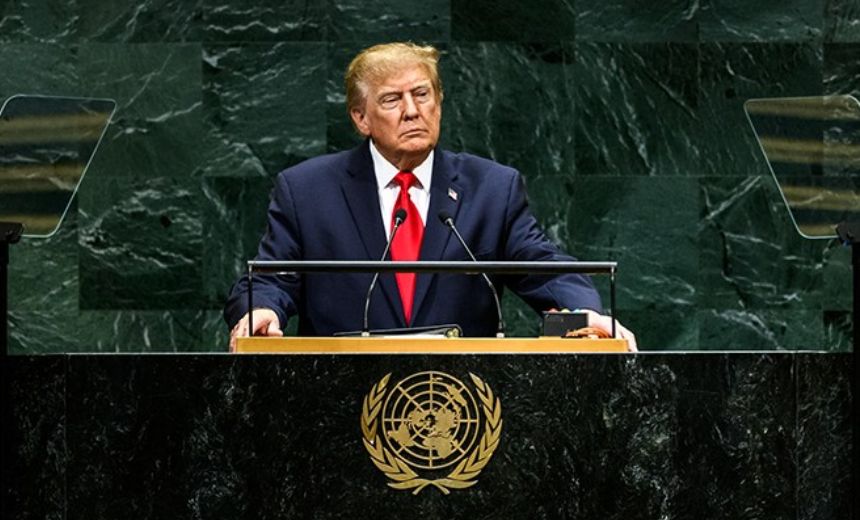
The discourse surrounding artificial intelligence (AI) is set for a significant shift, as U.S. President Donald Trump announced at the United Nations General Assembly that all artificial intelligence systems will now be referred to as "super intelligence." This surprising declaration came on September 22, 2026, sparking widespread discussion—although the terms "AI" and "super intelligence" are not inherently synonymous.
In his statement, President Trump expressed a firm rejection of what he described as a "globalist scheme" aimed at controlling AI technologies. He insisted that future U.S. government documents and, ideally, global communications should adopt the new terminology. He argued that the term "artificial" suggests a sense of inauthenticity, claiming that "super" serves as a more fitting descriptor for advanced AI systems.
Despite this ambitious push for rebranding, the actual adoption of the term remains uncertain. Trump himself noted that he is unsure whether the phrase will gain traction. Various AI laboratories, including leaders in the field like OpenAI and Anthropic, were approached for comments on whether they would embrace this new terminology. However, they did not respond by the time of the report’s deadline.
The term "super intelligence," while newly popularized in this context, has already established a place within AI terminology. It describes a future scenario wherein machines could exceed human intelligence, affecting all facets of life. Researchers typically terms this concept as "artificial superintelligence" or ASI. In contrast, current discussions in leading AI laboratories mostly revolve around "artificial general intelligence" (AGI), where systems are anticipated to perform at or above human levels in various tasks and adapt flexibly.
Despite the president’s declarations, many companies within the technology sector had already begun utilizing variations of the term "super intelligence." Notably, Ilya Sutskever, previously the chief scientist and co-founder of OpenAI, named his new venture Safe Superintelligence shortly after departing from the organization. Additionally, Meta has introduced its own AI division, known as Superintelligence Labs, led by chief AI officer Alexandr Wang.
The motivations behind the Trump administration’s shift towards the terminology of "super intelligence" remain somewhat ambiguous. The government has clearly adopted a friendlier stance towards the burgeoning AI industry, which began to manifest through an executive order released in June. This order called for voluntary safety evaluations of AI models, albeit with critiques highlighting that many important details were kept under wraps.
In a related context, the president has faced criticism for clashes with proponents of tighter AI regulations. Dario Amodei, CEO of Anthropic, was among those who advocated for more structured oversight of AI technologies. Just a week prior to his UN speech, Trump mentioned that the only controls needed for AI should come from "a strong and smart president," effectively arguing against external regulatory measures.
Significantly, the night before his address, Trump engaged with his followers on Truth Social, exploring various suggestions for what the rebranded technology should be called. He proposed alternatives such as "extreme" or "superior," leading to speculation about whether he was genuinely serious or simply drafting a more flamboyant label for advanced AI.
Reactions from industry insiders have varied, with many observers on social media expressing skepticism regarding the president’s new nomenclature. Amjad Masad, the CEO of Replit, humorously responded to the announcement in a post on X, suggesting a more playful distinction: "Your intelligence is fake. It’s artificial. Mine? It’s super. Super Intelligence. Aka SI."
In summary, the U.S. government’s decision to adopt "super intelligence" as a new term for AI signals an attempt to reshape the narrative around advanced technologies. Whether this rebranding will resonate with the global community or lead to substantive changes in the AI landscape remains to be seen. However, the announcement has already ignited a lively debate among experts and onlookers alike, illustrating the complexities and dynamics of a rapidly evolving technological sphere.