
Courts, Audits, and Federal Agencies Found No Evidence That 2020 Votes Were Altered
In a recent primetime address, former U.S. President Donald Trump raised serious allegations regarding the integrity of the 2020 election, claiming that China had executed a massive breach of American voter data. Despite Trump’s provocative assertions, his statements left out any evidence of alterations to votes, a claim that has been thoroughly investigated and dismissed by various courts and federal agencies.
Throughout his nearly half-hour speech, Trump pointed to declassified documents made available on the White House website, which he asserted highlighted five key areas of concern. He accused China of orchestrating the “largest compromise of election data in history,” asserting that the illicit acquisition of 220 million U.S. voter files had occurred during the 2020 election cycle. These files allegedly included sensitive information such as names, addresses, phone numbers, and party affiliations. Trump described this alleged incident as an “unprecedented election security nightmare” and accused members of what he termed the “deep state” of actively suppressing vital intelligence information on this matter from Congress and the general public.
However, experts and officials point out that voter registration data is often public in the U.S. and widely available for commercial purposes. They assert that mere access to this information does not allow for manipulation of votes or election outcomes. A previously declassified intelligence assessment from 2020 had also indicated that while China obtained voter registration data from several states, this was primarily for conducting public opinion analysis rather than malicious manipulation of the electoral process.
Ahead of Trump’s address, a White House official had already stated that the declassified materials were not likely to include any allegations about actual votes being changed or voting machines hacked—a notion that the former president has repeated for years without providing substantial evidence to support it. Documents from governmental assessments have indicated that while foreign powers like Russia and China possess the capability to conduct certain cyber activities, altering voting processes without detection seems implausible.
The assessment revealed that the 2020 election remains one of the most scrutinized in U.S. history, supported by numerous investigations and probes that unanimously concluded that it was executed with a high level of security. Trump’s own Cybersecurity and Infrastructure Security Agency (CISA) noted in a joint statement with state and local election officials that the 2020 election was "the most secure in American history." This claim was echoed by various federal judges—some appointed by Trump—who dismissed over 60 lawsuits contesting the 2020 election for lack of substantial evidence.
Moreover, further inquiries, such as those conducted in Georgia and Arizona, reaffirmed the election’s integrity. Georgia’s extensive recount of its approximately 5 million presidential ballots confirmed the original results after three separate counts, including a full hand tally of paper ballots. In Arizona, a review commissioned by local Republicans in Maricopa County substantiated the election outcome as well.
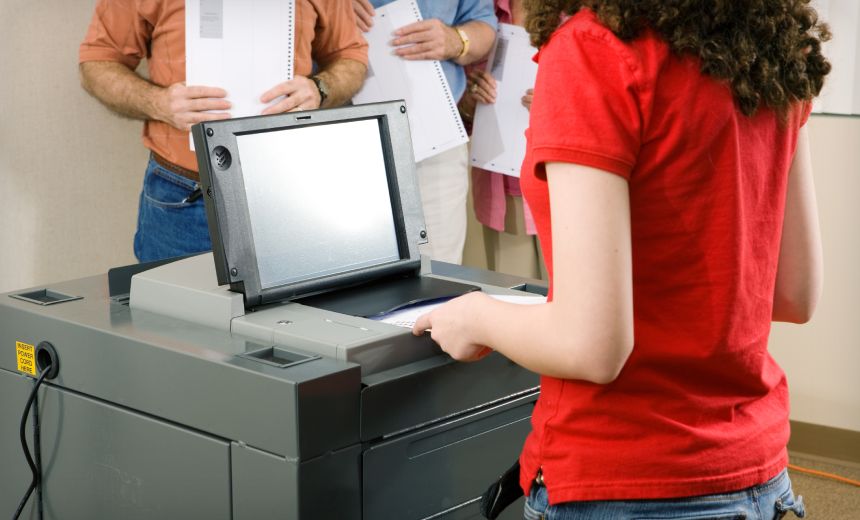
Experts in election security argue that the decentralized structure of U.S. voting systems effectively makes large-scale remote hacking nearly impossible. The electoral framework operates across thousands of jurisdictions, each employing varied equipment and procedures, which complicates any attempt by foreign adversaries to launch a coordinated attack. Without a unified national system to breach, malicious actors would need to compromise vast numbers of offline voting machines across multiple states without detection—an endeavor highly unlikely to succeed.
Federal protocols ensure that voting systems undergo rigorous testing before their deployment, incorporating stress tests and software checks in alignment with both federal guidelines and individual state requirements. Approximately 95% of ballots cast in 2020 included a paper record, allowing for the verification of machine tallies against actual physical ballots. Increasingly, states have begun to employ risk-limiting audits, which involve manually checking a statistical sample of paper ballots to confirm electronic vote counts.
While it is acknowledged that voting machines have inherent vulnerabilities, CISA’s advisory in 2022 stated there was no evidence suggesting any of these vulnerabilities had been exploited during an election. According to Geoff Hale, a former leader of CISA’s election security initiative, the existence of vulnerabilities does not inherently imply that they were exploited or that any alteration occurred in the election outcomes.
Trump’s recent speech comes on the heels of his decision to dismiss the remaining three commissioners of the Election Assistance Commission (EAC), leaving the agency without a quorum and unable to perform its regulatory functions. Defending his actions, a White House official expressed that the president retains the authority to remove individuals who may not align fully with the “important task of securing America’s elections and ensuring every legal vote is counted.”
In conclusion, while Trump’s statements have reignited some of the long-debunked claims surrounding election fraud, the evidence continues to support the conclusion that the 2020 election was conducted fairly and securely. The amalgamation of thorough inspections, multiple investigations, and robust security frameworks underscores the resilience of the U.S. electoral process, defying claims of widespread voter manipulation.