


Digital Identity,
Geo Focus: The United Kingdom,
Geo-Specific
New Prime Minister Drops Controversial Card, Branded ‘Un-British’ by Critics
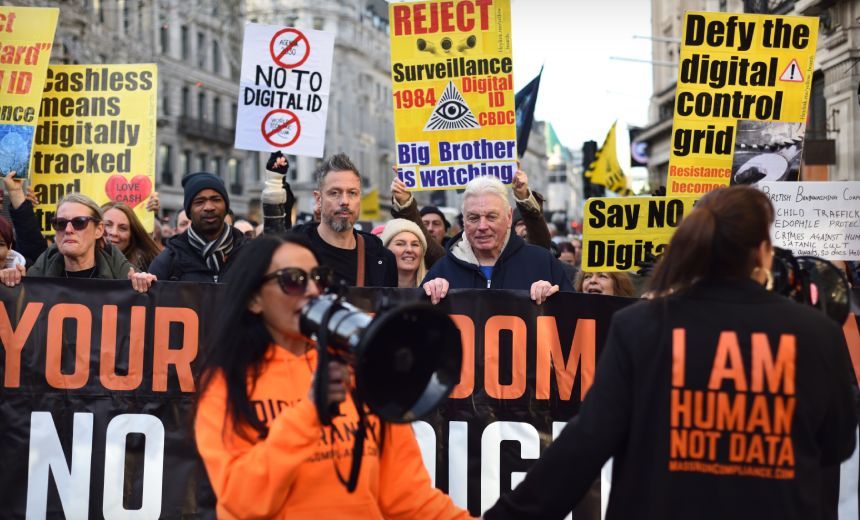
The recent decision by the United Kingdom’s new Prime Minister, Andy Burnham, to annul the plans for a government-issued digital identification card has stirred significant public and political discussion. Upon taking office, Burnham—who assumed the position after serving as the mayor of Greater Manchester—proclaimed that the funds initially earmarked for the digital ID program would be redirected to urgent needs, particularly those associated with the rising cost of living.
In a statement released to the media, a spokesperson for Burnham emphasized the shift in focus, stating, “Time and resources that were going to be spent on a national ID scheme will go instead to where it’s most needed, such as helping with the cost of living.” This declaration comes at a time when many residents are grappling with escalating prices for essential goods and services, most notably in the food and energy sectors. This move is seen as an immediate response to public demands for assistance as citizens feel the weight of financial burdens increasingly pressing upon them.
In his first address as Prime Minister, Burnham expressed a commitment to alleviating the pressures facing the populace. “I can do something to give people some breathing space now, some help with the cost of living. And I will set out some of those measures starting tomorrow, including how we pay for them,” he stated, indicating the urgency and significance of his administration’s new direction.
The Institute for Government, a non-partisan think tank, weighed in on Burnham’s decision to scrap the digital ID card initiative, labeling the cancellation as “unsurprising.” The organization noted that the program had been characterized by confusion and a lack of financial clarity and was likely informed by Burnham’s previous experience as a junior minister at the Home Office, where he managed the rollout of an earlier national ID card. “Now he has unsurprisingly decided, having inherited plans that were rushed, confused and uncosted, to kill the plans off again,” the Institute remarked.
The digital identification initiative, originally announced by former Prime Minister Keir Starmer in September 2025, aimed to modernize identification methods across the U.K. and had been touted as a major technological step forward. Starmer characterized it as an “enormous opportunity for the U.K.,” claiming it would enhance border security and streamline access to essential services for citizens. Individuals were to carry their ID on smartphones via a government-developed digital wallet, which would facilitate a range of applications—from accessing benefits to securing driving licenses. However, the ambitious project faced swift opposition.
Civil rights groups were quick to critique the so-called “BritCard.” Silkie Carlo, director of Big Brother Watch, condemned the proposal as “wholly unBritish,” warning of the potential risks of invasive state oversight and the collection of sensitive personal data that could become vulnerable to cyberattacks. The initiative was met with skepticism regarding its actual utility, with many experts questioning, “What is this a solution to?” Cybersecurity professor Alan Woodward raised alarms about the centralization of sensitive information, likening it to a neon sign reading “come and hack me.”
While the government projected the digital ID card’s implementation costs at approximately $2.4 billion over the next three years, the initiative remained clouded with uncertainty. Critics pointed out that its initial justification—mandating right-to-work checks—was poorly articulated, leading to questions regarding its intended impact. “It was never explained why shadow economy employers would be any more diligent checking digital IDs than the analogue papers they are supposed to check now,” noted the Institute for Government.
Moreover, the proposal lacked visibility within the Labour Party platform, which raised eyebrows among political watchers. The announcement occurred amidst a backdrop devoid of systematic policy consultation and public engagement, explained a parliamentary report titled “politically controversial program.” Ultimately, the announcement led to a U-turn by Starmer, who decided that the use of the digital card would be optional rather than mandatory. This retreat did little to assuage the growing distrust surrounding the initiative.
Historically, Britain has not employed a national ID card system since World War II, when wartime exigencies prompted such measures. In 1952, Winston Churchill famously abolished the national ID cards under the banner of “set the people free,” as public sentiment shifted toward views of unnecessary governmental oversight. The reintroduction of national ID cards by Tony Blair’s Labour government in 2006, designed to mitigate fraud and identity theft, met with significant public unease and skepticism.
As national sentiment regarding identity verification processes continues to evolve, and with the historical context in mind, Burnham’s decision to halt the digital ID card initiative seems reflective of a broader trend prioritizing personal freedoms and civil liberties. The future of digital identification in the U.K. remains uncertain, echoing debates within society about the balance between security and individual rights.