
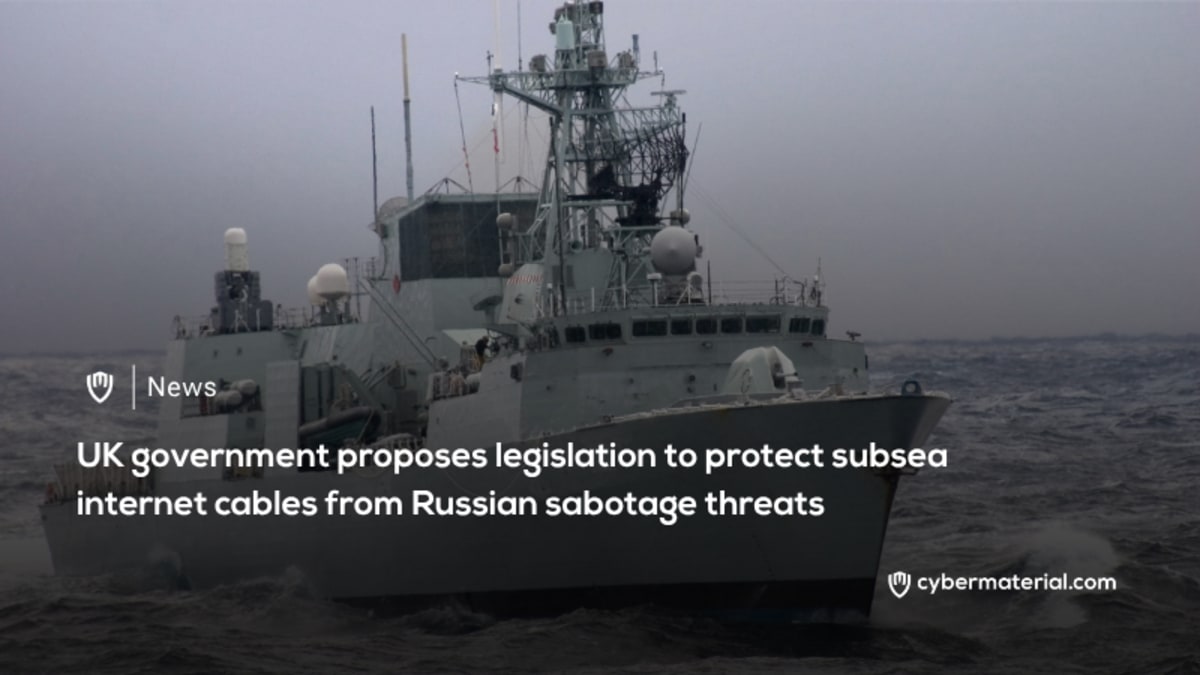
The British government has unveiled its intentions to bolster legal protections for undersea internet cables in response to heightened Russian naval activity in proximity to UK waters. Recent intelligence has revealed that in April, the Royal Navy and Royal Air Force were actively tracking Russian submarines engaged in clandestine reconnaissance of critical undersea infrastructure. Notably, reports indicated that Russia deployed an Akula-class attack submarine as a decoy, which allowed two specialized vessels from the Directorate of Deep Sea Research to explore key cable routes leading to the UK. This activity has raised alarms regarding potential sabotage during future conflicts.
The proposed measures, articulated by Baroness Liz Lloyd, the Minister for Digital Economy, include stiffer criminal penalties directed at ship owners and operators who engage in reckless behavior that results in damage to subsea cables. Cable operators will be mandated to adopt new security obligations, requiring them to take proactive steps to prevent, detect, and respond to security incidents in a timely and uniform manner. Furthermore, the government is set to obtain emergency powers that would compel businesses to implement better protective measures for their infrastructure whenever threats escalate.
Currently, the UK is connected to the global internet by a network of 64 undersea cables. Traditionally, repair vessels can reach breakages within an eight-day timeframe, and most interruptions result from activities such as fishing or dragging anchors, rather than from targeted sabotage. However, the UK’s parliament, through its Joint Committee on National Security Strategy, criticized the government last year for being overly cautious in safeguarding these vital connections, advocating for stronger protective actions.
Interestingly, the proposed measures focus on legal deterrents and regulatory requirements, rather than direct defensive capabilities. As part of a forward-looking security strategy, the Royal Navy has initiated the Atlantic Bastion program, which was launched last year with an initial funding of £14 million. This program intends to deploy autonomous vessels to monitor enemy submarines in the North Atlantic, although it remains in preliminary testing and development phases.
Moreover, the UK, along with the United States and Australia, have announced collaborative plans through their AUKUS partnership, aimed at developing advanced sensor and weapons payloads for uncrewed underwater vehicles. This strategic collaboration reflects a broader effort to enhance military capabilities in response to evolving security challenges.
Baroness Lloyd emphasized that while the UK already possesses robust protections for its undersea cables, the increasingly unpredictable security landscape necessitates ongoing adaptation and improvement. To this end, the government plans to release a white paper later this year that will detail the comprehensive changes being proposed. This document is expected to outline not only the legal adjustments required but also how these changes will be integrated across both maritime and telecommunications sectors.
The consultation process outlined by the government will play a crucial role in determining how these legal and operational modifications will be executed. Stakeholders from various sectors will be invited to contribute their insights, ensuring that the proposed changes are practical and effective in addressing the current threats. By emphasizing a collective approach to security, the government aims to foster greater collaboration among cable operators, national defense authorities, and international partners.
In summary, as geopolitical tensions escalate, the British government’s efforts to fortify the legal protections around undersea internet cables highlight the critical nature of these infrastructures in the digital age. The increasing activity by foreign naval forces, particularly Russia, underscores the urgency for nations to adapt their security frameworks. The forthcoming proposals and white paper will reflect a comprehensive strategy designed to safeguard the UK’s vital communication links against emerging threats in the maritime domain. As these measures unfold, the collaboration across various sectors will be pivotal in reinforcing the resilience and security of the UK’s digital infrastructure.