
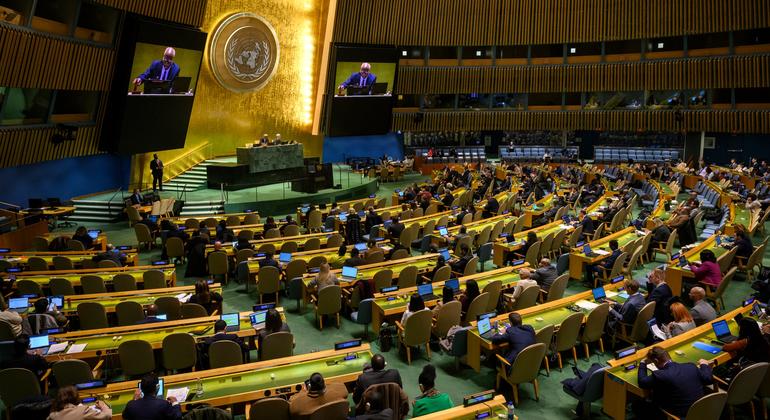


The adoption of the Convention against Cybercrime, a legally binding treaty, marks a historic achievement in the fight against cyber offenses. After five years of collaborative efforts by UN Member States, civil society, information security experts, academia, and the private sector, the treaty is seen as a significant milestone in promoting international cooperation to prevent and combat cybercrime.
UN Secretary-General António Guterres hailed the adoption of the Convention as a successful example of multilateralism prevailing during challenging times. The treaty, being the first international criminal justice treaty negotiated in over two decades, reflects the collective will of Member States to address the growing threat of cybercrime. It is designed to enhance collaboration in exchanging evidence, protecting victims, and preventing cyber offenses while upholding human rights online.
The significance of the Convention was emphasized by Philémon Yang, President of the General Assembly, who highlighted the importance of the new tool in protecting people from cyber threats in the digital age. The resolution containing the Convention was adopted by the 193-member General Assembly without a vote, showcasing unanimous support for strengthening international cooperation in combating cybercrime.
Ghada Waly, Executive Director of the UN Office on Drugs and Crime (UNODC), described the adoption of the treaty as a pivotal victory for multilateralism. She emphasized the critical role of the Convention in addressing various cyber offenses, including online child sexual abuse, sophisticated scams, and money laundering. The UN agency is committed to assisting nations in signing, ratifying, and implementing the treaty to safeguard their economies and digital environments from cyber threats.
The Convention against Cybercrime recognizes the substantial risks associated with the misuse of information and communications technologies and the unprecedented scale, speed, and scope at which criminal activities can be conducted online. It aims to protect States, enterprises, and individuals from offenses like terrorism, human trafficking, drug smuggling, and online financial crimes. The treaty also highlights the importance of justice, especially for vulnerable groups, and emphasizes the need for technical assistance, capacity-building, and collaboration among States and stakeholders.
With the Convention set to open for signature at a formal ceremony in Hanoi, Viet Nam in 2025, the international community is gearing up to implement this crucial tool in the fight against cybercrime. The treaty will enter into force once it is ratified by the 40th signatory, marking a significant step towards creating a safer cyberspace for all.