
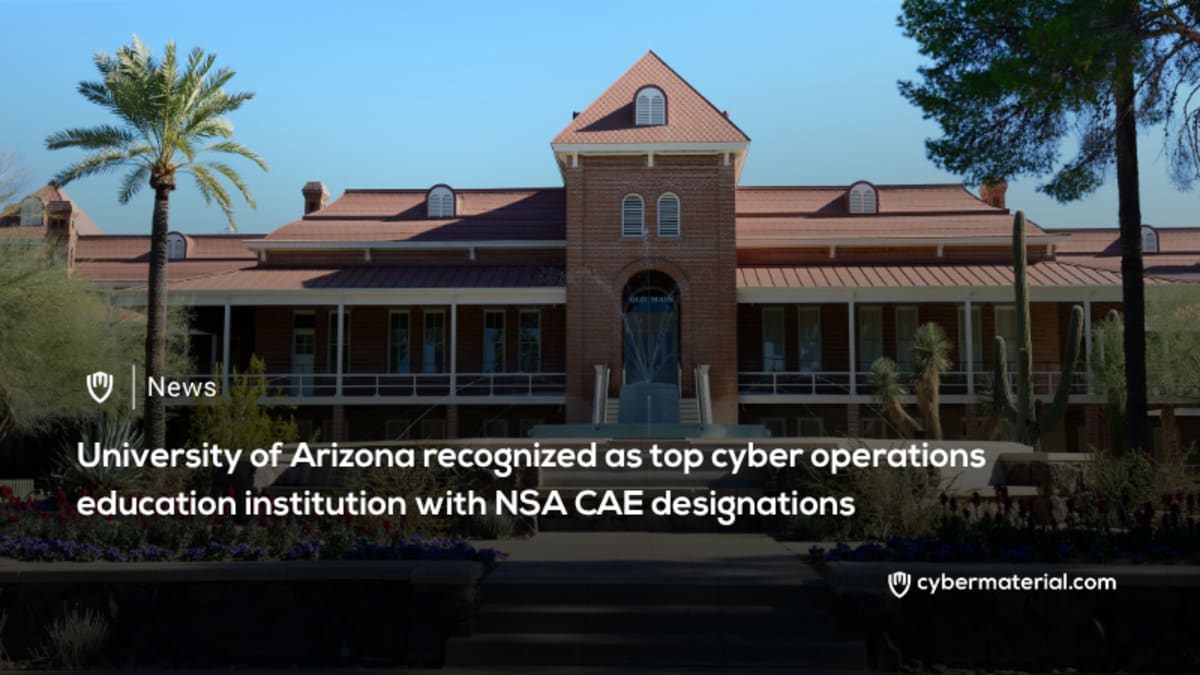
The University of Arizona has firmly established its reputation as a national leader in cybersecurity education, distinguishing itself by securing all three National Security Agency (NSA) Center of Academic Excellence designations in cyber defense, cyber operations, and cyber research. This notable achievement places the institution among a select group of only ten universities nationwide with such accolades. Furthermore, in a recent assessment by the Chronicle of Higher Education, the University of Arizona ranked second in the United States for military bachelor’s degrees, having awarded 147 of its 196 military-affiliated degrees in 2025 solely in the domain of cyber operations.
The university’s educational offerings in cybersecurity encompass several colleges. The Eller College of Management manages master’s degree programs while the College of Information Science oversees a prominent bachelor of applied science degree. Programs.com has recognized this program as the premier cybersecurity bachelor’s degree program in the entire country. The continuous enhancement of these programs reflects the university’s commitment to training proficient cyber professionals equipped for a rapidly evolving digital landscape.
Recently, the University of Arizona introduced a new Bachelor of Science in Cyber Operations, featuring specialized emphasis areas such as security and CyberAI. These innovative academic paths equip students with pivotal technical skills in essential areas like reverse engineering, network analysis, penetration testing, and various programming languages. This comprehensive curriculum is aligned with the U.S. Bureau of Labor Statistics, which anticipates an impressive 33% growth in employment opportunities for information security analysts by 2033.
One of the most distinguishing characteristics of these programs is the faculty’s composition. Many instructors hold active roles in various sectors, including the Department of War, national laboratories, and private industry. This ensures that students receive insights and knowledge grounded in current, real-world challenges associated with cybersecurity.
The diverse backgrounds of the students enrolled in these programs add to the richness of the educational environment. For instance, Veronika Kyles, who grew up near Fort Huachuca in Arizona, participated in the CyberPatriot competition during her middle school years. She successfully obtained her bachelor’s degree in cyber operations and secured an internship at the Cybersecurity and Infrastructure Security Agency’s National Risk Management Center. During her internship, she specialized in risk analysis for critical infrastructure, which included working on water sector industrial control systems—an experience that underscores the significance of cybersecurity in everyday life.
Abel Macias, another notable student, serves as an Air Force reservist and was stationed at U.S. European Command during the COVID-19 pandemic. This role afforded him firsthand experience with the pressing need for rapid scaling of secure systems, particularly when a mass influx of users required remote access to networks that were not initially designed to support such volume.
The university’s hands-on programs provide students with invaluable practical experiences that address pressing real-world security challenges. Brandon Saari transitioned from environmental science to cybersecurity while serving on-site at Davis-Monthan Air Force Base. Despite beginning the program without any prior programming knowledge, he has since progressed to develop tools specifically designed for service members. His capstone project at the Arizona Cybersecurity Clinic focused on understanding the integration of artificial intelligence within organizational systems, illuminating the human challenges involved in ensuring personnel are adequately trained to utilize new AI tools securely.
Paul Wagner, a professor at the College of Information Science and director of the Arizona Cybersecurity Clinic, emphasizes that the programs impart crucial technical competencies as well as professional skills. Students learn to effectively communicate with both technical and non-technical audiences, an essential asset in today’s increasingly interconnected world. Additionally, the curriculum fosters professional networking opportunities that connect students to agencies, military bases, and laboratories across the nation.
The University of Arizona’s cybersecurity programs address a critical need in the face of aging infrastructure systems that many built decades ago. These systems now confront modern cyberattack threats that they were not designed to withstand. Consequently, there is an urgent requirement for a new generation of cybersecurity professionals capable of transforming essential systems from a merely functional state to one of sustainable resilience, thereby ensuring the safety and integrity of crucial infrastructure in an era where cybersecurity is more important than ever.