
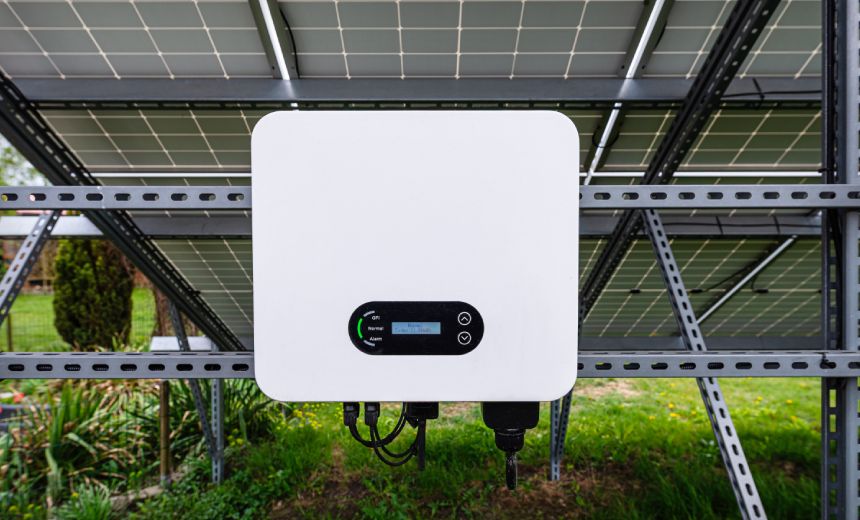
Interagency Review Raises Concerns About Internet-Connected Inverters and Potential Grid Vulnerabilities
In a significant move driven by national security concerns, the U.S. federal government has taken steps to ban the new sale of foreign-made mobile robots and connected power inverters. This decision highlights the growing apprehension regarding the security of the nation’s electric grid and the potential for invasive remote surveillance from foreign entities.
The Federal Communications Commission (FCC) has added both categories of equipment to its existing list of products classified as too risky to receive agency authorization for domestic market sales. This update follows a recommendation from an interagency body convened by the White House, which includes national security agencies emphasizing the critical nature of safeguarding the nation’s infrastructure.
This ban affects all foreign manufacturers, yet there is a provision allowing these entities to apply for what is known as "conditional approval." Obtaining such an exemption typically requires a commitment to establish or expand manufacturing operations within the United States.
FCC Chairman Brendan Carr expressed support for this national security decision, stating, "I welcome these executive branch national security determinations." The ban specifically targets advanced robotic devices, including those that are bipedal and quadrupedal. These devices are deemed capable of gathering sensitive data that could be misused by foreign adversaries for espionage or surveillance operations against American citizens.
Concerns over the security of power inverters have been echoed by cybersecurity experts as well as various international governments. Earlier this year, the French government implemented restrictions on the sale of Chinese photovoltaic components, citing similar security risks. Meanwhile, Lithuania moved to effectively ban Chinese-made inverters from its solar and wind installations in 2024, again due to fears related to remote access and potential manipulation of energy systems.
According to an analysis by cybersecurity firm Forescout from March 2025, widespread vulnerabilities have been identified in a number of leading solar inverters, which could allow malicious actors to hijack solar energy production and threaten the stability of power grids. Notably, more than half of the global solar inverter manufacturers are based in China, raising red flags for U.S. cybersecurity initiatives.
A White House interagency report underscored the alarming statistic that over 46 gigawatts of electric power—equivalent to the output of 46 nuclear power plants—currently relies on inverters in the U.S. grid. The report detailed how the increasing sophistication of these inverters introduces new vulnerabilities that malicious entities may exploit. It warned that foreign firms could potentially disable inverters or use them to gather sensitive data, aiding in surveillance efforts by foreign government actors.
Moreover, the FCC referenced a 2025 annual report supplied to Congress by the U.S.-China Economic and Security Review Commission. This report pointedly indicated that internet-connected inverters could be compromised to relay real-time data and enable remote access by unauthorized actors. The report illustrates a broader worry regarding China’s influence over global power systems, arguing that it could put critical energy infrastructure at risk in other nations.
Although the inverter ban does not specifically target China, a senior FCC official clarified that this regulation does indeed affect any inverter with 35% or more of its components, by value, produced in foreign territories. This nuanced approach underlines the federal government’s intention to impose a politically neutral restriction aimed at ensuring national safety while not directly antagonizing any specific nation.
The determination also referred to a 2024 analysis by the Idaho National Laboratory, which cited “notable supply-chain challenges” regarding unsecured inverters due to their remote access capabilities. This study highlighted a worrying trend—approximately 80% of solar inverters utilized in the United States are imported from countries like China and Germany. The report attributed this dependency to a lack of domestic manufacturing capacity capable of meeting rising demand.
However, recent developments indicate that the U.S. power inverter industry may now possess the capability to satisfy domestic requirements. This enhancement can be attributed to investments made through initiatives like the Inflation Reduction Act of 2022 and the One Big Beautiful Bill Act of 2025, both of which have successfully incentivized domestic production.
Support for the ban on foreign devices has been voiced strongly by domestic companies, signifying a collective recognition of the importance of securing the nation’s energy infrastructure. As America seeks to bolster its defenses against potential foreign threats, this decision serves as a clarion call for a more secure and self-reliant energy strategy.