
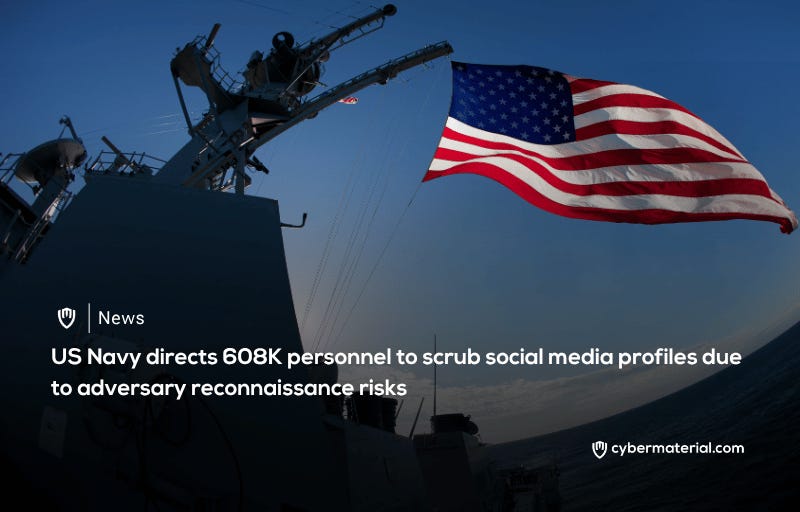


The United States Navy has issued a comprehensive directive mandating the entire workforce to undertake an immediate review and cleanup of their social media presence. This order impacts a sizable community of individuals, including approximately 340,000 active-duty personnel, 58,000 reservists, and 210,000 civilian employees, culminating in a total exceeding 608,000 members across the naval service.
This directive stems from mounting concerns voiced by Navy leadership regarding the vulnerability of personnel to threats posed by hostile foreign intelligence services and other adversaries. These entities are reportedly engaging in the harvesting of open-source intelligence gleaned from social media platforms. By scrutinizing publicly accessible posts, photographs, and profile details, these adversaries can construct intricate profiles of military members and their families.
The specific threats identified are alarming in nature. Foreign adversaries can use this gathered intelligence to ascertain essential personal details about service members, including their identities, home addresses, daily routines, and even the times when their residences may be unoccupied. The inclusion of geolocation data, often present in photos and status updates, coupled with check-ins at military installations and deployment announcements, renders military personnel particularly susceptible to scrutiny. Moreover, posts sharing family vacations can inadvertently disclose periods of absence that could be exploited. This information creates potential access points for targeted operations, social engineering attacks, or even physical security threats against military families.
The directive brings to light a significant operational security concern for the Navy, highlighting a realization that traditional classification measures are falling short in shielding personnel from threats presented by voluntary online sharing of sensitive details. Social media platforms have increasingly morphed into fertile grounds for intelligence harvesters looking to map military networks and identify personnel who possess access to classified information. Such capabilities allow adversaries to find and locate vulnerable targets, thus endangering the safety of both service members and their families.
In response to these pressing concerns, Navy personnel are now being instructed to audit their social media accounts rigorously. They are advised to adjust their privacy settings to ensure that their information is less visible to the public. Furthermore, removing location tags from photographs and refraining from posting information pertaining to work schedules or upcoming deployments is strongly encouraged as part of a proactive strategy to minimize their digital footprint. The Navy underscores that these measures are not mere suggestions but are mandatory operational security requirements relevant to personnel at all levels, irrespective of rank or position.
The initiative reflects a broader recognition within the military of the changing landscape of information sharing and security vulnerabilities in the digital age. As the line between private lives and public personas blurs, especially on social media platforms, the Navy’s directive illustrates a commitment to safeguarding the well-being of its service members and their families. Indeed, the risks associated with social media use have prompted many military branches to rethink their approaches toward information security protocols.
In conclusion, the Navy’s recent directive for its members to reassess their social media activity illustrates how advances in technology can simultaneously offer connectivity and present significant security threats. The emphasis placed on operational security reveals both an awareness and a proactive stance toward mitigating potential risks that could arise from public sharing of personal information, highlighting the necessity for military personnel to adapt to evolving security challenges. The Navy’s measures serve as a powerful reminder of the importance of vigilance in an increasingly interconnected world, where seemingly innocuous online activity can have serious implications for national security and individual safety.