
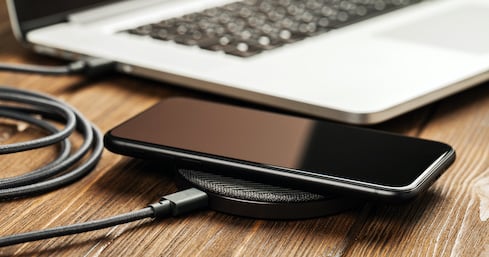
A theoretical attack known as “VoltSchemer” (PDF) has been developed by researchers from the University of Florida and CertiK, which has the potential to allow for the take over of wireless chargers through manipulation of power supply voltage. This attack, if successful, could bring about serious repercussions in terms of damaged charging devices and the ability to bypass the mechanisms of the Qi standard, enabling the manipulation of voice assistants.
The Qi standard, developed by the Wireless Power Consortium, is responsible for managing communication between the power adapter, wireless charger, and the device being charged. While wireless chargers are generally considered more secure than wired chargers due to their reliance on near-field magnetic coupling for power transfer, the use of power signals for transfer presents vulnerabilities that could be exploited to control communication between the charged device and the charger.
In their paper, the researchers explain that schemed voltage noises from the power adapter have the capability to propagate through the power cable and modulate the power signals on the charger’s transmitter coil due to the effects of electromagnetic interference (EMI) on the charger. This could allow an attacker to exploit vulnerabilities and instruct the charger to carry out malicious acts.
It should be noted that the researchers have tested their theoretical attacks against nine different commercial wireless chargers and found all of them to be vulnerable. This highlights the potential widespread impact of the VoltSchemer attack if further actions are not taken to address these vulnerabilities.
This discovery brings attention to the potential risks associated with wireless charging technology, especially as it becomes increasingly integrated into everyday devices and infrastructure. As IoT devices and smart home technology continue to evolve, the need for robust security measures becomes more crucial. The ability to manipulate wireless chargers in such a way could have serious implications for the security of a wide range of devices, from smartphones to smart home devices.
Given the potential for significant disruption and misuse, it is crucial for manufacturers of wireless chargers to take proactive steps to address these vulnerabilities and improve the security of their products. In addition, continued research and development into secure wireless charging technology will be essential to stay ahead of emerging threats and ensure the safety and integrity of these devices.
Overall, the development of the VoltSchemer attack serves as a reminder of the ongoing need for vigilance and proactive efforts to identify and address potential security risks in emerging technologies. As wireless charging continues to gain popularity and become more prevalent in everyday life, it is imperative that security measures keep pace to protect against potential threats and ensure the safety and privacy of users.