


Artificial Intelligence & Machine Learning,
Next-Generation Technologies & Secure Development
Directs Agencies to Expand Commercial Access, Recruit Non-Gov Experts
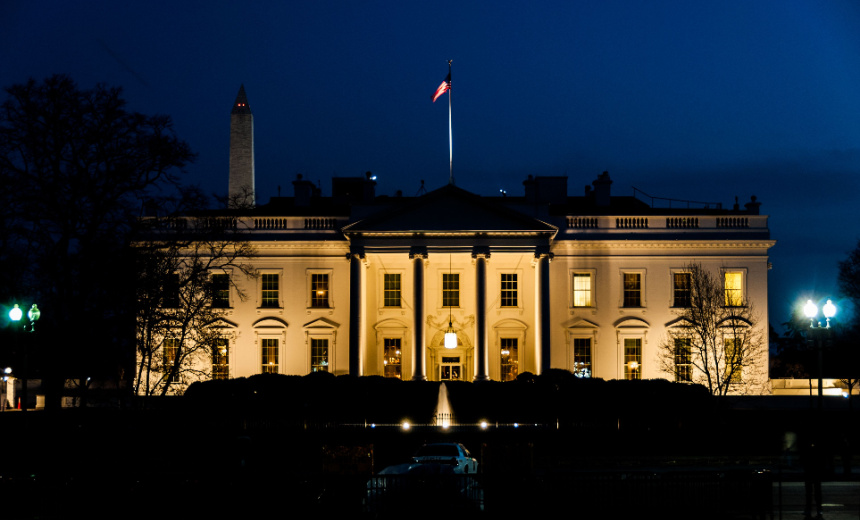
The Trump administration has taken significant steps to enhance the integration of advanced artificial intelligence (AI) within military and intelligence agencies. On Friday, a directive was issued, emphasizing the importance of speeding up the adoption of cutting-edge AI technologies while simultaneously eliminating bureaucratic obstacles that hinder deployment.
The order, encapsulated in a national security presidential memorandum, serves as a pivotal measure aimed at bolstering the government’s utilization of both commercial and open-source AI models. The administration attributed the sluggish pace of AI adoption to “undue bureaucracy” and pointed out the risks associated with over-reliance on single vendor solutions.
In a related development, the Department of Defense had placed AI leader Anthropic on a blacklist earlier in March due to ongoing controversies concerning its Claude model, particularly regarding its use in domestic surveillance and autonomous weaponry. This decision was strongly reaffirmed by Secretary of Defense Pete Hegseth earlier this month, reasserting the administration’s commitment to rigorous scrutiny surrounding AI deployment in military contexts.
The latest directive emphasizes a collaborative relationship between government leaders and private sector developers. It seeks not only to expedite access to various AI models but also to strengthen protections for advanced AI frameworks and the accompanying infrastructures that support them. This strategic approach is designed to ensure that U.S. military and national defense operations maintain a technological edge over global adversaries, all while upholding constitutional protocols surrounding command hierarchies.
Structured around four foundational pillars—adoption, adaptation, assurance, and accountability—the memorandum calls upon key national security agencies, including the FBI, CIA, the Department of Homeland Security, and the Office of the Director of National Intelligence, to broaden access to AI models sourced from multiple vendors. Furthermore, this collaboration will be extended to include partnerships with industry professionals and academic specialists.
Additionally, the administration has mandated the creation of an AI National Security Strategic Reserve. This initiative will recruit a diverse array of non-governmental AI experts from both the private sector and academia to provide insights on emerging security challenges related to AI applications.
To ensure timely execution, the memorandum outlines specific deadlines for key tasks. For instance, within a span of 90 days, Secretary Hegseth is required to revise the Pentagon’s governance directives concerning autonomous weapons systems. This update must reflect new advancements in AI capabilities and their applications in military operations, all the while maintaining human oversight in decisions where the use of lethal force is involved.
Moreover, agency heads have been assigned a task to develop a standardized baseline for AI within the national security framework within 120 days. This will involve initiating joint exchanges of AI data and models, thereby fostering cooperation with AI vendors to enhance defenses against cyber threats, espionage, theft, and other forms of cyberattacks targeted at AI systems.
This recent memorandum evolves from a previous executive order instituted earlier this month, which established a voluntary framework for federal review of advanced AI systems prior to their public rollout. The cumulative effect of these efforts signifies a robust governmental strategy to better harness AI technologies, ensuring that they are not only effectively integrated into national security but are also utilized in a manner that prioritizes safety and ethical considerations.