
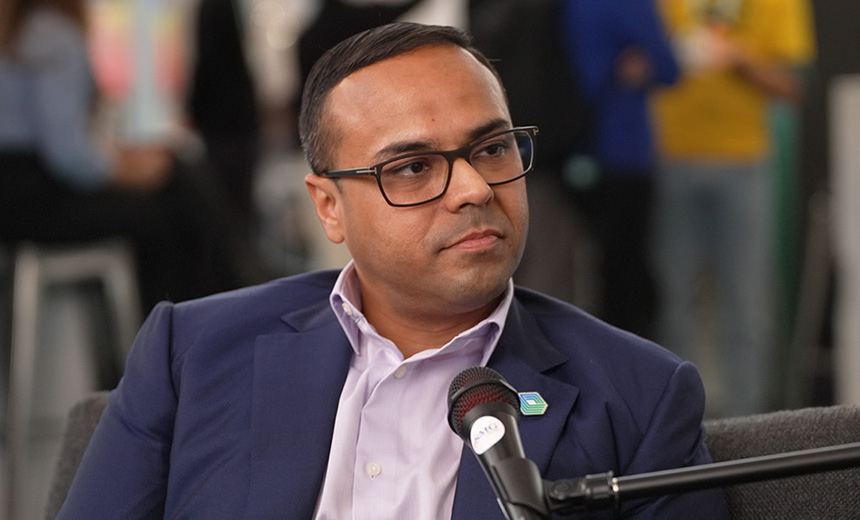
Uniphore’s CEO Umesh Sachdev Emphasizes the Importance of Proprietary Data and Sovereign AI
In a recent discussion at the HumanX Conference in Amsterdam, Umesh Sachdev, the CEO and co-founder of Uniphore, articulated critical insights surrounding the use of artificial intelligence (AI) in enterprises. His remarks highlighted the necessity of protecting proprietary data and safeguarding trade secrets within the evolving landscape of AI technology.
Sachdev pointed out that closed frontier AI models possess the capability to learn from a company’s proprietary data and contextual business operations, thereby transferring this intelligence to subsequent clients. He strongly advocates for what he terms "sovereign infrastructure," which stresses the importance of maintaining core workloads on-premises and under the direct control of enterprises. This model, according to Sachdev, ensures that companies retain ownership and control over their most sensitive data and intellectual property.
The CEO elaborated on the significance of proprietary data and specific workflows, especially within industries that may otherwise appear homogeneous. For instance, he used the example of how banks handle loan underwriting processes, asserting that such distinctive methodologies are pivotal in differentiating enterprises within even the most commodity-driven sectors. This emphasis on custom processes underscores that data is not merely a byproduct of operations but a pivotal asset.
Uniphore customers, as Sachdev explained, typically run their core AI applications in a secure, air-gapped environment on their own Graphics Processing Units (GPUs). This arrangement allows them to utilize open-weight models while relegating less sensitive tasks to cloud-based infrastructures. The ability to manage AI processes in this manner not only secures proprietary information but also enhances operational efficiency by ensuring that critical tasks remain under the company’s complete oversight.
Adding further depth to his analysis, Sachdev stated, "There’s this concept emerging that you should not rent your intelligence. You should own it." The stakes involved extend beyond mere operational efficiency; they encompass the protection of intellectual property. In today’s competitive landscape, storing unique insights and organizational intelligence in a rented cloud environment can expose businesses to risks. The ownership of data, which might manifest as "intelligence tokens," becomes fundamental for the survival and success of any enterprise.
The interview also provided insights into specific challenges enterprises may face while striving for full sovereignty in their data governance. Sachdev discussed five critical infrastructure layers that can potentially hinder progress in this area. By understanding these layers, organizations can better navigate the complexities associated with managing proprietary information and AI technologies.
Sachdev urged organizations to adopt a systematic approach that begins with the implementation of model harnesses, focuses on zero-copy data solutions, and escalates into on-premises inferencing strategies. Such a methodical path facilitates a seamless transition into a more controlled and secure AI deployment strategy.
The importance of enterprise-grade AI engineering was another point of emphasis in Sachdev’s discourse. He argued that its significance far outweighs that of merely emphasizing research advancements. While innovation remains crucial, the application of robust engineering practices in AI deployment ensures organizations can effectively leverage their technologies to produce scalable and governed business outcomes.
Under Sachdev’s leadership, Uniphore has positioned itself as a leading open Business AI platform designed to unify data, knowledge, AI models, and agents. The goal is to deliver coherent and measurable business results while navigating the intricacies of AI and data governance.
In addition to his executive role, Sachdev dedicates time to mentoring startup founders through the U.S.-India Strategic Partnership Forum’s Startup Connect program. This involvement reflects his commitment not only to advancing AI technologies but also to nurturing the next generation of entrepreneurial talent.
As organizations grapple with the challenges of AI integration and data security, insights from leaders like Sachdev bring necessary clarity on the pivotal role of proprietary data and the emerging need for sovereignty in AI ownership. The message is clear: to thrive in this data-driven era, businesses must cultivate and protect their intellectual assets, ensuring that their unique insights remain firmly in their control.