
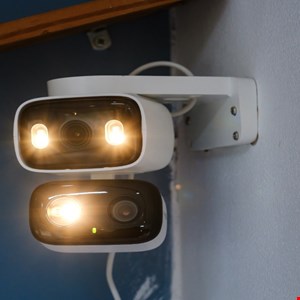
Security Risks Highlighted in TP-Link Camera Vulnerabilities
In a recent revelation, security researchers have disclosed critical details regarding two zero-day vulnerabilities identified in TP-Link security cameras, devices that are commonly utilized in homes and small office settings. Among these cameras is the widely popular TP-Link Tapo C200, which serves various purposes including baby monitoring, general home security, and the protection of small office environments. The vulnerabilities could potentially expose users to serious privacy breaches, allowing unauthorized individuals to spy on them.
The vulnerabilities, designated as CVE-2026-15315 and CVE-2026-15316, were addressed by the manufacturer, TP-Link, through a firmware update labeled V5_1.4.6, released on August 18. The prompt response highlights the ongoing effort to enhance security in consumer-grade electronics, especially those integrated into everyday life.
CVE-2026-15315 is characterized as an authentication bypass that occurs via a replay attack. This particular flaw could empower an attacker who has gained network access to the camera to secure a valid administrative session without the necessity of the user’s password. OPSWAT, the security firm leading the charge in uncovering these vulnerabilities, elaborated on the implications of this flaw, noting that administrative access permits the attacker to execute privileged management functions, modify device configurations, and undertake operations that typically require authorized administrator privileges. Furthermore, this access may expose sensitive camera capabilities, such as live video feeds and archived recordings, thus enabling unauthorized surveillance.
Dahvid Schloss, Chief Operating Officer at Suzu Labs, offered an assessment of the situation, suggesting that while the flaw is severe, its actual danger may be mitigated. Schloss pointed out that for an attacker to exploit this vulnerability, they would need to be on the same local network as the targeted camera. “If someone’s made it that far into your network, they’re not after the baby monitor,” he remarked, emphasizing the more significant concerns of network security should such unauthorized access occur. However, he did note that situations where the camera has been port-forwarded to the internet could reveal more serious design flaws which may warrant further concern, although he views this as not being a common setup among average home users.
The second vulnerability, CVE-2026-15316, focuses on a denial-of-service attack that affects the camera’s onboarding configuration. This flaw stems from the requirement that encrypted credential data should be validated before being processed through cryptographic and configuration routines. According to OPSWAT, an unauthenticated attacker possessing network access could submit an oversize encrypted credential. When this malformed data reaches the device’s vulnerable processing pathways, it can provoke the camera’s HTTPS service to crash, leading to denial-of-service conditions that disrupt functionality.
As concerning as these vulnerabilities are, OPSWAT has disclosed that they are currently collaborating with TP-Link on an additional zero-day vulnerability rated even more critical than the previous two. This impending discovery has alarming implications; it could potentially allow an attacker to fully compromise the camera and use the device as a foothold within the local network. In this context, OPSWAT suggested that the next vulnerability might exploit either a command injection flaw or a memory-safety issue, which could result from leveraging the existing authentication bypass to achieve root code execution. Such attack methods, while common in older consumer IoT devices lacking robust security features, could pose a significant risk even with modern hardware like TP-Link cameras.
The rapid evolution of security threats in everyday technology underscores the importance of vigilance for both manufacturers and consumers. Understanding the risks associated with commonly used devices can inform better security practices and encourage timely updates. OPSWAT has assured that further details regarding the newly discovered vulnerability will be released once a fix becomes available, highlighting their commitment to user safety in the realm of digital security.
As the technology landscape continues evolving and interconnected devices become increasingly prevalent, the vigilance of security researchers, manufacturers, and consumers alike will play a vital role in safeguarding against potential breaches and ensuring a secure digital environment. The implications of these findings are crucial for maintaining privacy and security in an age where information can be easily compromised.