


Startup Symmetry Systems Maps Relationships Across AI, SaaS, and Cloud Assets
Zscaler, a prominent player in the cloud security landscape, has announced its intention to acquire Symmetry Systems, a startup founded by a professor from the University of Texas. This acquisition is poised to enhance Zscaler’s understanding of artificial intelligence (AI) system connections, including identities, applications, and the data they manipulate.
According to Dhawal Sharma, the Executive Vice President of AI Security and Strategic Initiatives at Zscaler, this strategic move aims to provide critical insight into the deployment and utilization of AI technologies within organizations. Zscaler, headquartered in San Jose, California, emphasizes the importance of visibility regarding how AI interacts with various types of data and applications. “AI visibility is often spread across disconnected security products,” Sharma noted, indicating the challenges organizations face in correlating data from diverse security systems.
Sharma elaborated on the complexities businesses encounter as AI becomes increasingly integrated into daily operations, stating, “AI is essentially extending its tentacles everywhere from how employees are doing day-to-day work on internet sites. Bringing all this information together is very complicated.” The problem extends beyond simply maintaining security; it requires a thorough understanding of the lineage of AI assets, such as how they are interconnected with identities and applications.
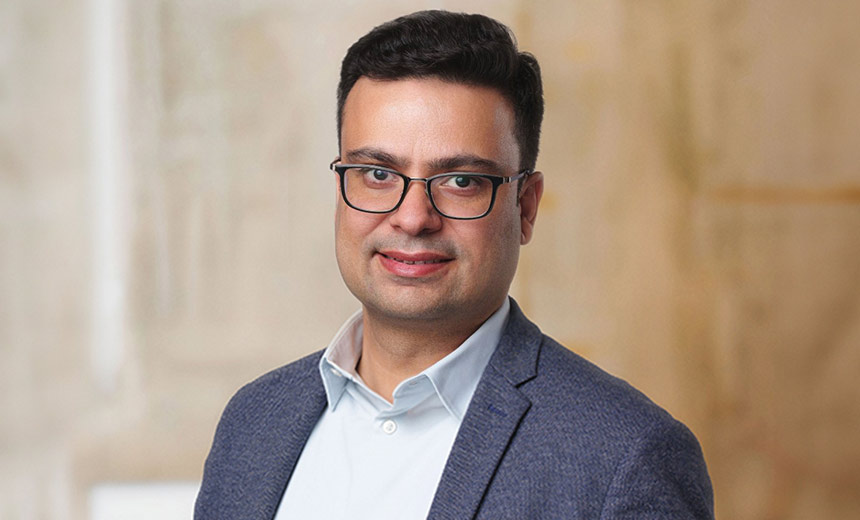
Founded in 2019, Symmetry Systems has made significant strides within a short time, raising a total of $35.7 million, including a robust Series B round of $17.7 million in August 2023 led by Prefix Capital. The company, which employs around 40 to 45 individuals, operates under the guidance of Mohit Tiwari, a professor with a 13-year tenure at the University of Texas, where he focuses on security, privacy, and computer architecture research.
Mapping Relationships with Symmetry’s Technology
Zscaler currently utilizes various tools to monitor its cloud and environment security: endpoint agents to track devices, inline traffic monitoring to oversee data flows, and scanning of public cloud services. However, the company recognizes a significant challenge: synthesizing this disparate data into a coherent understanding of AI-related risks. The acquisition of Symmetry Systems brings a solution. Their access graph technology is designed to bridge these gaps, creating contextual relationships among data, identities, Software as a Service (SaaS) applications, and AI assets.
Sharma explained the critical function of Symmetry’s technology in addressing AI-related challenges: “The bigger problem becomes, ‘How do you connect the dots of these various different systems to understand how they build everything that connects to AI and comprehend its usage, its lineage, and associated risk?’ This is where Symmetry’s access graph technology comes in very handy, because they have already been doing this.”
The technology developed by Symmetry Systems allows companies to map intricate relationships between identities, SaaS applications, datasets, AI models, and cloud resources. By clustering these relationships into smaller, contextual environments tied to specific identities or applications, organizations can more effectively identify anomalies and translate graph data into actionable insights.
“What Symmetry brings uniquely with Zscaler is the ability to elucidate data access details for who’s accessing what and the context of AI applications, including which models and pipelines data traverses,” Sharma continued. “This expands context, enabling the creation of more fine-grained policies.”
As organizations increasingly rely on AI systems that interact with diverse datasets and applications, understanding how identities evolve within this ecosystem becomes paramount. The need for intricate understanding of identity and access management (IAM) structures across various platforms, including hyperscalers and SaaS services, has bolstered the demand for Symmetry’s technology. This provides vital insights into identity relationships that facilitate more granular policy enforcement.
Sharma highlighted the complexity surrounding non-human identities, which often gain access through a human proxy or a service principal if they are autonomous agents. He asserted that there’s a significant gap in crafting precise authorization layers within this deployment model.
Traditional Security Operations in an AI Landscape
In the realm of AI, workflows generate a constant evolution of identities, service relationships, and permission structures as tasks transition between models, pipelines, and autonomous agents. Many organizations find themselves lacking the tools to track these changes effectively across various environments. Zscaler’s vision encompasses the integration of identities, AI models, applications, and data relationships into a single, unified framework.
“The problem we are solving is the multi-channel, multi-model lineage of data and identity within the full context of AI,” explained Sharma. “While some startups and vendors address specific contexts, we aim to solve the broader challenges across the board.”
Zscaler intends to leverage Symmetry’s capabilities to enhance endpoint AI visibility and improve lineage tracking, thereby gaining a clearer understanding of how AI applications interface with identities and datasets. Through this union, Zscaler expects to fortify its zero-trust architecture with identity-aware lineage mapping, thereby establishing tighter controls over AI utilization and data access.
“We are taking a very platform-centric approach to unearth all elements related to AI, secure their use, and govern it,” Sharma concluded. “This foundational layer is essential for developing technology components that will supervise AI operations effectively.”
The insights derived from Symmetry’s identity and lineage intelligence are anticipated to become a significant resource, yielding sharper alerts and reducing the frequency of false positives, which often encumber traditional security operations. In this evolving landscape, Sharma indicated that enhanced incident triage and remediation workflows are on the horizon, demonstrating the clear value of the acquisition for Zscaler’s advanced security posture and operational capabilities.