
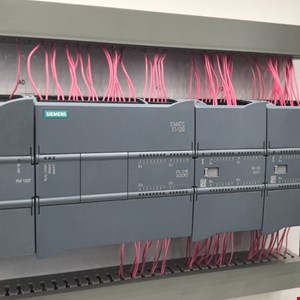


AI-Driven Threats Target Siemens S7 Series PLCs, Warn Agencies
Operators of industrial control systems (ICS) are facing heightened risks as recent warnings highlight the use of artificial intelligence (AI) by threat actors targeting Siemens S7 Series programmable logic controllers (PLCs). This alarming trend presents a serious concern, especially for industries reliant on critical operational technology (OT) systems such as water supply, energy production, and food processing.
The joint advisory issued by several organizations, including the Cybersecurity and Infrastructure Security Agency (CISA) and the Federal Bureau of Investigation (FBI), emphasizes that various sectors using Siemens S7 Series PLCs, along with other similar devices, are susceptible to these cyber threats. The advisory outlines a variety of potential impacts from these attacks, which range from the disruption of essential industrial operations to safety incidents, equipment damage, and even the leakage of sensitive data. Such disruptions could ultimately result in significant real-world consequences, including interruptions in water and energy services, thereby affecting millions of lives.
In light of these vulnerabilities, operators are urged to adopt a proactive stance regarding their cybersecurity measures. The advisory specifically highlights the risks posed to ICS owners and operators who collaborate with third-party service providers or system integrators that may have remote access to their PLCs. Often, asset owners may be unaware that their systems are exposed and at significant risk.
The urgency of this advisory follows a series of earlier warnings from the U.S. government regarding Iranian state-backed hackers targeting internet-exposed industrial systems. These warnings included various brands, such as Rockwell Automation, Allen-Bradley, Schneider Electric, and Siemens. Reports from early August indicated that suspected hackers linked to Iran had been investigating water systems across multiple states in the United States. This context heightens the stakes for industries that rely heavily on these technologies for essential services.
Evolution of ICS Attacks: The Role of AI
The advisory dated August 19 marks a notable evolution in the capabilities of threat actors. The increasing use of AI to generate exploitation scripts signifies a shift in how these malicious activities are being conducted. Threat actors have been observed utilizing legitimate scanning tools such as Censys and ZoomEye to identify Internet-exposed or poorly segmented Siemens S7 Series PLCs. Once they identify vulnerable systems, they deploy AI-generated scripts to execute targeted exploits.
The agencies involved have indicated that PLCs exposed to the internet are at particular risk of exploitation. Following successful breaches, AI plays a critical role in facilitating lateral movement within networks and enhancing attackers’ ability to evade detection systems. By leveraging open-source industrial automation libraries in combination with AI-assisted scripting, attackers are able to create custom tools that mimic legitimate operational technology monitoring solutions, effectively evading the scrutiny of security teams.
These nefarious tools are engineered to provide unauthorized read/write access to the memory, configuration data, and ladder logic programs of Siemens S7 Series PLCs through the S7comm protocol. The authoring agencies believe that these actions are not merely opportunistic; they serve the broader purpose of establishing persistent reconnaissance capabilities that lay the groundwork for future attacks on critical infrastructure.
According to the advisory, “For capability development, actors are testing and refining their exploitation techniques against specific PLC models to improve their ability to compromise the PLCs. To prepare for operational effects, actors leverage read access to understand target environments, enabling preparation and positioning for future write operations to provoke disruption or other operational impacts.”
Strategies for Proactive Defense
In response to these evolving threats, the U.S. government has outlined a series of urgent measures that ICS operators should implement to mitigate risks associated with these newly observed activities. These recommendations include:
- Conducting Proactive Searches: Actively hunt for indicators of compromise, which may include unusual connections from non-engineering workstations and repetitive connection attempts that vary in their parameters.
- Inventory Checks: Immediately inventory all Siemens S7 Series PLCs within operational environments and apply critical patches to affected devices.
- Network Segmentation: Ensure PLCs are not accessible via the internet and maintain strict separation between operational technology and information technology networks.
- Strengthened Access Controls: Tighten access rights by limiting PLC access to authorized engineering workstations and implementing multifactor authentication for all remote access to OT networks.
- Disabling Unused Protocols: Temporarily disable web servers and any unused communication protocols on Siemens S7 Series devices to reduce attack surfaces.
- Consulting with Siemens: Reach out to Siemens for recommendations on model-specific hardening techniques that can further bolster defenses.
Benny Czarny, CEO and founder of OPSWAT, commented on the advisory, stating that the primary takeaway should not solely focus on the threat posed by AI. Instead, he emphasizes the necessity for improved baseline security controls in ICS environments. “AI simplifies the creation and modification of attack scripts targeting PLCs, lowering the barriers for potential attackers,” Czarny noted. He argues that while AI’s role in these threats is significant, the underlying issue remains: organizations must stop providing attackers with pathways to infiltrate critical systems. Reliance on conventional security measures like antivirus software or sandboxes is insufficient to protect vital data flows.
As cyber threats continue to evolve, it is clear that the stakes are higher than ever for ICS operators. Proactive measures and a commitment to enhanced security practices will be essential in safeguarding critical infrastructure against increasingly sophisticated attacks.