


Amazon Web Services Faces Major Billing Anomaly in Cost Explorer Tool
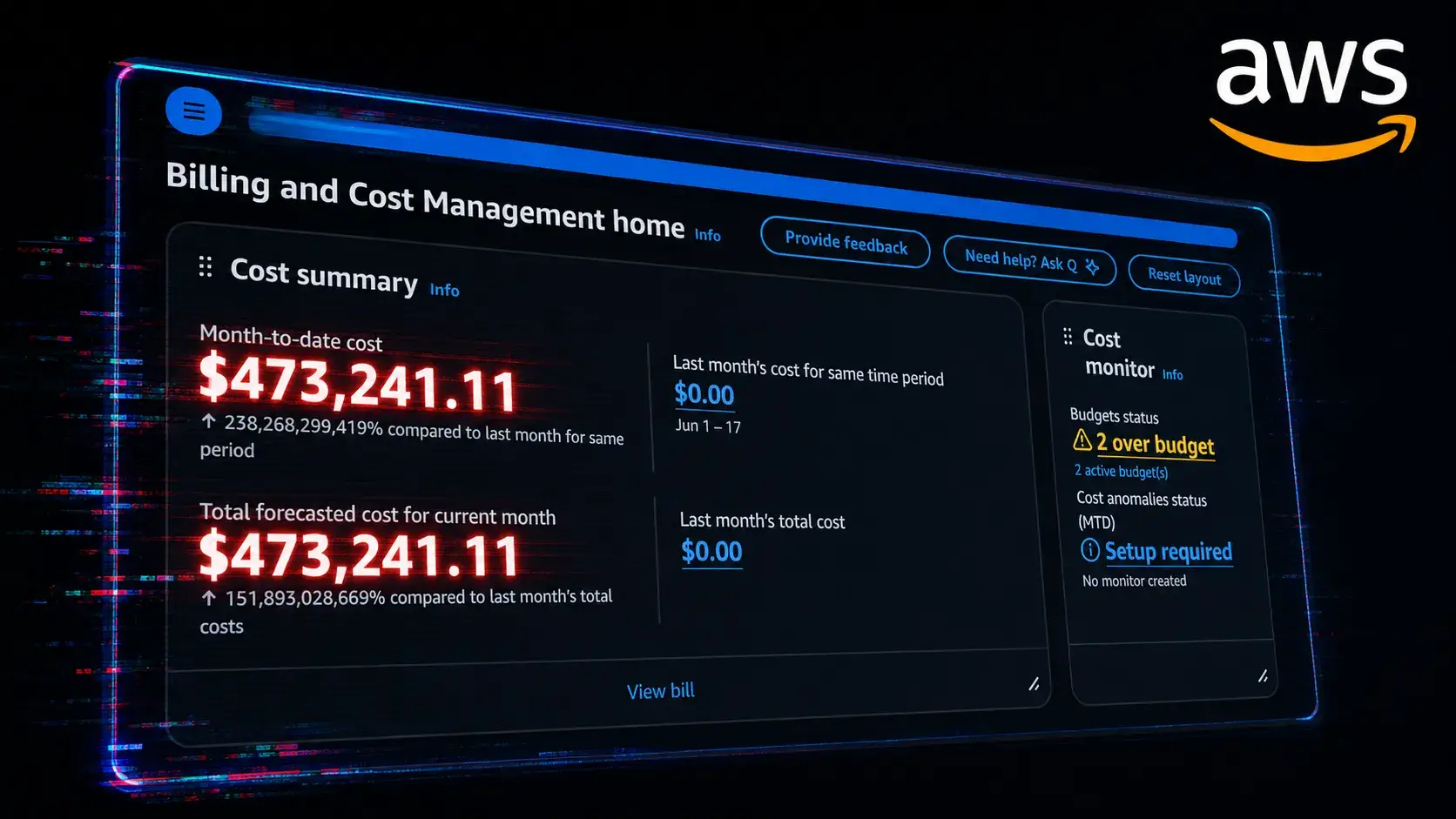
Amazon Web Services (AWS) is plunged into a significant predicament as it investigates a colossal billing issue within its Cost Explorer tool. Reports have surfaced indicating that the anomaly has led to some cloud customers facing astonishingly inflated cost estimates, with figures reportedly soaring into the trillions of dollars. This incident has raised serious eyebrows and generated considerable concern among users and stakeholders relying on the platform for cloud services.
On July 17, 2026, AWS Support publicly acknowledged the billing issue, confirming the confusion and anxiety it has induced within the cloud computing community. Users began to report inexplicable surges in projected usage costs, often despite having minimal or no active resource consumption on their accounts. This situation has understandably sparked fears regarding the accuracy and integrity of cost estimation tools that enterprises depend upon for budget management and financial oversight.
Understanding the Billing Bug
AWS has clarified that the issue is confined to inaccurate estimated billing data, emphasizing that these projections do not represent actual charges. The assurance from AWS officials suggests that the engineering teams are diligently working to identify and resolve the root cause of this anomaly. The incident appears to be isolated to the AWS Cost Explorer interface—a widely utilized analytics tool that provides near-real-time insights into cloud spending patterns, usage trends, and cost forecasting.
According to statements from AWS, the bug has primarily affected estimated billing projections rather than finalized billing statements. This development indicates a possible fault in the data aggregation or forecasting pipeline, rather than the metering or invoicing systems themselves. However, the scale of the discrepancies, with figures reaching unprecedented levels—far beyond any plausible consumption scenarios—has raised alarms about the viability of AWS’s cost visibility mechanisms.
Numerous reports circulating on the social media platform X reveal that the affected users encountered projected bills that ranged anywhere from millions to trillions of dollars. This alarming trend was especially noticeable for accounts that had minimal active infrastructure, raising serious questions about the accuracy of AWS’s cost estimation methodologies.
In one notable instance, a perplexed user questioned unexpected charges despite having no utilization of AWS services. AWS Support reiterated that the discrepancies stemmed from inaccurate estimation data, rather than actual usage. To keep customers informed, the company has directed users to monitor updates through the AWS Health Dashboard, where ongoing status information is being regularly published.
Technical Implications of the Anomaly
From a technical standpoint, this incident sheds light on the complexity of AWS’s billing architecture, which integrates metering data from various services, applies pricing models, and generates forecasts based on historical usage trends and predictive algorithms. A failure in any single component of this intricate pipeline—be it a miscalculated multiplier, erroneous usage metrics, or inaccurate aggregation logic—could result in extreme cost projections.
While AWS has not disclosed specific technical details regarding the root cause, previous incidents have been linked to anomalies in data ingestion or misconfigurations within forecasting models. This incident not only captures the attention of cloud users but also highlights the critical need for effective data validation processes within cloud environments.
Industry professionals focused on security and cloud governance are carefully considering the broader implications of such discrepancies. In environments where automated budget alerts, cost-based scaling policies, or financial anomaly detection systems are integrated with AWS billing data, inaccurate estimates could trigger unintended operational responses. For example, automated shutdown scripts or alerting systems might be activated based on erroneous thresholds, leading to severe disruptions in workloads or incident response processes.
No Evidence of Security Breach
Despite the chaos surrounding this billing anomaly, AWS has not suggested any evidence of a security breach or data compromise associated with the issue. There are currently no indications that attackers exploited the anomaly to manipulate billing data or compromise user accounts, leaving customers to grapple mainly with the implications of erroneous cost projections.
Given the circumstances, this incident underscores the necessity of cross-validating billing data against multiple sources, such as AWS Budgets, Cost and Usage Reports (CUR), and third-party cloud cost management platforms. This practice is particularly crucial in high-assurance environments, where accurate financial oversight is paramount.
As AWS continues its technical investigation, it advises customers to treat current Cost Explorer estimates with caution, urging them to rely on finalized billing reports for sound financial decision-making. Further updates and communication from AWS are anticipated as the company works diligently to restore accuracy and maintain confidence in its billing systems.