
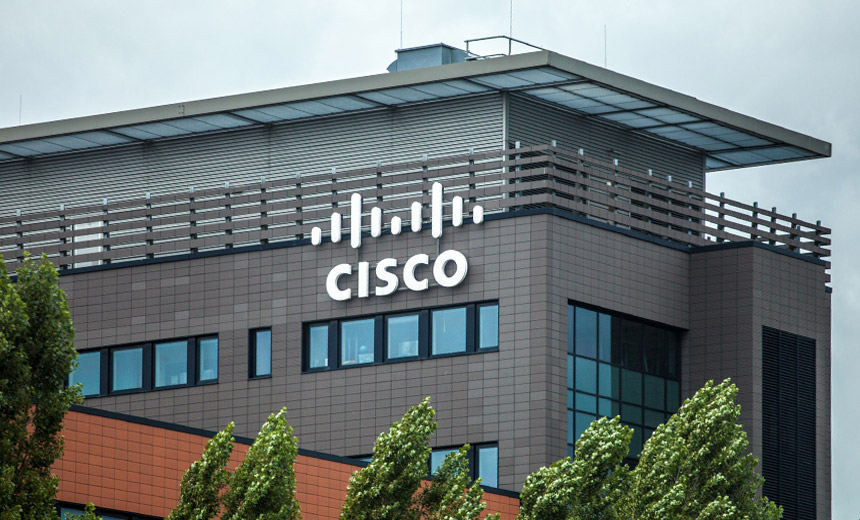


Cisco CEO Chuck Robbins Highlights Increasing Security Risks from Outdated Equipment
In a move that emphasizes the urgency of cybersecurity modernization, Cisco CEO Chuck Robbins has drawn attention to the growing security vulnerabilities organizations face from obsolete technological equipment. Speaking during a recent earnings call, Robbins elaborated on how Anthropic’s Claude Mythos Preview is playing a pivotal role in reshaping security frameworks and enhancing operational efficiency at Cisco.
Robbins noted that the integration of Mythos within Cisco’s internal operations is not only streamlining code testing but also expediting the patching process. The technology incentivizes both Cisco and its clients to transition from outdated systems and infrastructures that are no longer supported or, worse, unpatchable. He stated that concerns surrounding unpatched technology and legacy support problems extend beyond Cisco, affecting numerous organizations globally.
The current fiscal year has seen Cisco secure $5.3 billion in AI infrastructure orders primarily from hyperscalers and anticipates reaching $9 billion by year’s end. This projection nearly doubles earlier estimates and underscores a growing trend in the tech landscape where the demand for modernized security solutions is intensifying.
Robbins emphasized, “There’s a lot of concern about unpatched technology and their infrastructure, not just ours,” pointing to a particular focus on equipment that has recently surpassed its support lifecycle. He underscored the importance of addressing these vulnerabilities, as unpatchable technologies can become prime targets for cyber threats.
Positioned strategically within the industry, Cisco’s involvement with Anthropic’s Project Glasswing and OpenAI’s Trusted Access for Cyber program reflects its commitment to integrating AI into enterprise security frameworks. Although Robbins disclosed that the company did not record significant orders resulting from Mythos in the fiscal quarter ending April 25, he remains optimistic about future developments as Cisco continues collaborations with its clients.
Workforce Reduction amid AI-Driven Transition
In a bittersweet announcement, Cisco revealed plans to lay off approximately 4,000 employees, which constitutes nearly 5% of its workforce. This decision aligns with a broader strategic pivot towards investing in areas of heightened demand, including silicon, optics, security, and AI technologies, rather than merely aiming to cut costs. Cisco CFO Mark Patterson assured investors that these layoffs are not simply about reducing expenses but are instead a calculated move to streamline resources toward more impactful projects.
As of July 26, 2025, Cisco employed around 86,200 individuals worldwide. Robbins emphasized the need for urgency and strategic focus in an era increasingly driven by AI, stating in an email to employees, “The companies that will win in the AI era will be those with focus, urgency, and the discipline to continuously shift investment toward areas where demand and long-term value creation are strongest.”
The layoffs come in the wake of similar actions taken by other companies in the tech sector. Just days before Cisco’s announcement, Cloudflare laid off over 1,100 workers, accounting for 20% of its staff, and Arctic Wolf reduced its workforce by 250 employees, or 7% overall, as both companies also reallocated resources toward AI initiatives. Cisco estimates that costs related to the restructuring could reach up to $1 billion in severance and other one-time termination benefits by mid-2027.
Despite these workforce reductions, Cisco demonstrated a commitment to innovation through acquisitions. The company announced two significant acquisitions last quarter: Astrix, a specialist in non-human identity security, and Galileo, focused on AI observability. These acquisitions are aimed at enhancing Cisco’s capabilities in governance for AI agents as well as establishing robust frameworks for multi-agent systems.
Record Financial Performance Amid Demand Surge
In terms of financial performance, Cisco reported a remarkable quarter, achieving $15.84 billion in revenue—surpassing the expectations of financial analysts who predicted $15.56 billion in sales. The company’s non-GAAP earnings of $1.06 per share also beat estimates of $1.04. Following this impressive performance, Cisco’s stock soared by $20.13, marking a 19.76% increase to close at $122 per share—a new milestone for the company since it went public in February 1990.
Looking ahead, Cisco anticipates generating non-GAAP net income of between $1.16 and $1.18 per share for the fiscal quarter ending July 25, with projected revenues ranging between $16.7 billion and $16.9 billion. This forecast contrasts favorably with analyst expectations of earnings of $1.07 per share and revenues of $15.82 billion, indicating a robust outlook for the company’s performance in the near future.
Cisco’s strategic investments and focus on innovative technologies position it well to address pressing cybersecurity challenges while also steering the company toward sustained growth in an evolving digital landscape.