


Cybersecurity Briefing: Key Alerts and Incidents – October 26, 2026
The cybersecurity landscape is continually evolving with new threats and vulnerabilities emerging regularly. On October 26, 2026, multiple significant incidents have been reported, highlighting the ongoing risks organizations face in securing their digital infrastructures.
North Korean Operators Target PHP Hosts
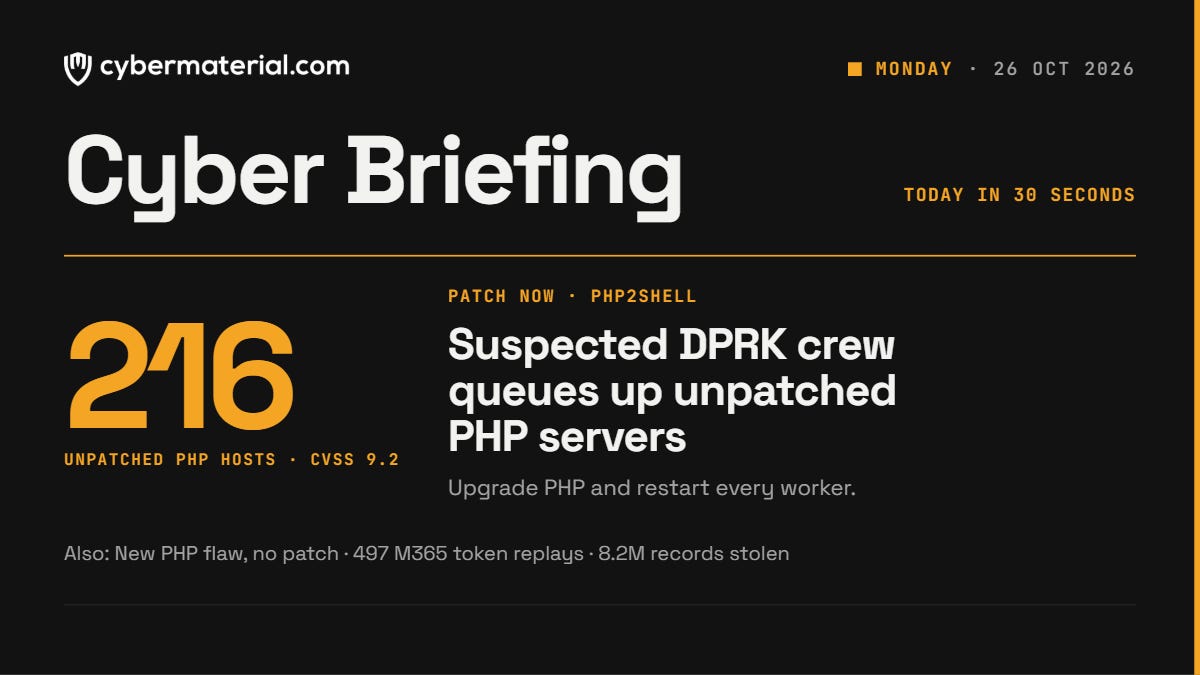
A troubling report from Cyfirma reveals that suspected North Korean cyber operators have compiled a concerning list of 216 internet-facing hosts that still appear unpatched or only partially mitigated for vulnerabilities related to PHP2Shell, namely CVE-2026-109618 and CVE-2026-109619. This alarming information came to light on October 24, when Cyfirma disclosed that these operators, who communicate in Korean, have been observed probing these hosts from 21 compromised scan nodes.
The targets, a mix of government agencies, banks, logistics firms, airports, manufacturing sectors, and online transaction platforms, span across 12 priority regions including the United States, Japan, South Korea, Thailand, Indonesia, Australia, Taiwan, India, Singapore, the United Arab Emirates, Saudi Arabia, and the European Union. The breadth of this operation underscores the urgent need for organizations within these sectors to prioritize patching vulnerabilities and to enhance their cybersecurity awareness.
New PHP Vulnerability Reported
In a separate technical advisory issued on October 23, 2026, PHP disclosed a newly identified remote code execution vulnerability, tagged as CVE-2026-115560. While the PHP team highlighted that exploitation is deemed unlikely, they plan to provide a comprehensive fix in their next regular bugfix release. For now, organizations utilizing PHP runtime environments are advised to take preemptive measures by applying available patches and closely monitoring configurations to mitigate potential risks.
Additionally, affected app settings should ensure that session.upload_progress is disabled, following recommended best practices, especially since no fixed remedial version has been published yet.
Microsoft 365 Token Replay Attack
Cyber incidents affecting Microsoft 365 have surged, with a recent report from Huntress revealing that 497 unauthorized sign-ins were detected across 79 organizations between July and September 2026. This sophisticated attack utilized adversary-in-the-middle techniques to steal and replay authentication tokens, allowing attackers to bypass standard security measures.
Organizations leveraging Microsoft 365 should immediately review their sign-in logs for any irregular activities. Implementing conditional access policies and adopting phishing-resistant authentication methods are crucial steps to reinforce defenses against such cyber exploits.
Generative AI in Cybercrime
In a notable case from South Korea, police have apprehended seven individuals, including the ringleader, following a major cyberattack campaign using generative AI for criminal purposes. This group reportedly hacked around 90 organizations, compromising approximately 8.2 million personal records between September 2023 and January 2025. Though they demanded ransom totaling 360 million won (approximately $250,000 USD) from 38 victims, they ultimately collected only a fraction of that amount—300,000 won—prior to their arrests.
Organizations exposed to such risks are encouraged to scrutinize access logs and ensure that their security controls are updated. It is also crucial to report any extortion attempts to law enforcement promptly.
Enhancements in Security Tools
On the technology front, Kali Linux has released version 2026.3, which includes six new penetration testing tools alongside various improvements to desktop environments and build scripts. Kali Linux is widely utilized by cybersecurity professionals for ethical hacking and penetration testing, and this update represents an ongoing commitment to enhancing essential tools for security assessments.
In summary, this week’s developments emphasize the critical importance of proactive vulnerability management, vigilant monitoring for suspicious activities, and the adoption of advanced security protocols. As cybersecurity threats continue to evolve, organizations must remain agile in their defenses, equipped with the latest security tools and knowledge to thwart potential attacks effectively.