


North Korean Hackers Target Software Developers Worldwide: An In-Depth Analysis
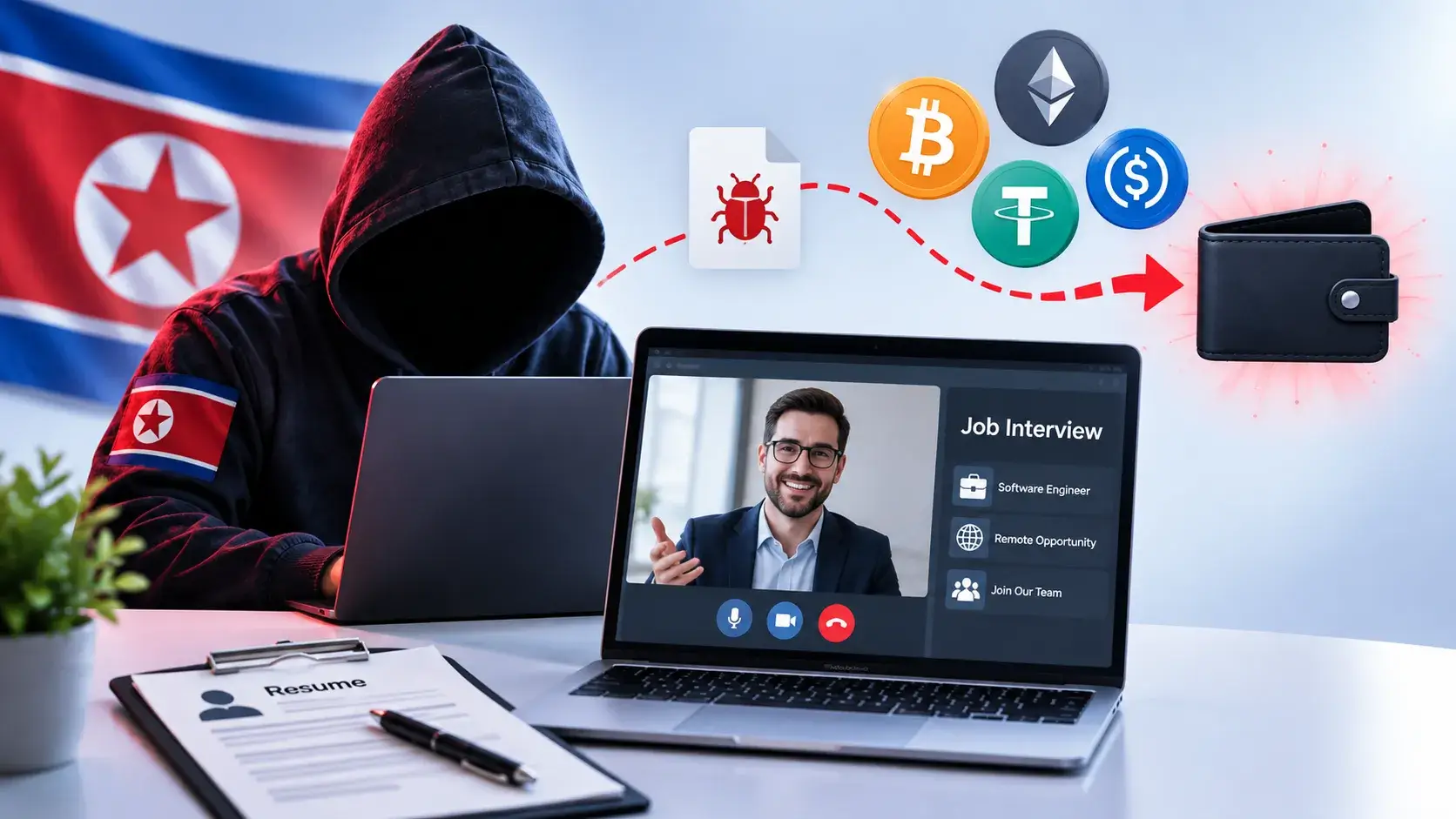
Recent investigations have revealed alarming activities by North Korean threat actors termed WaterPlum, also known as Contagious Interview. This cybercriminal group has successfully compromised at least 30,000 devices across more than 100 countries by employing deceptive tactics aimed primarily at software developers and IT professionals. By luring these individuals into seemingly legitimate job interviews, WaterPlum has orchestrated a sophisticated campaign to distribute malware and facilitate the theft of sensitive information.
The targeted demographic primarily includes web developers, freelancers, blockchain specialists, and individuals engaged in cryptocurrency markets. The attackers utilize persuasive recruitment messages that closely mimic those employed by reputable companies in the rapidly growing fields of artificial intelligence, cryptocurrency, and non-fungible tokens (NFTs). This strategy effectively masks their true intentions, allowing them to ensnare thousands of unsuspecting victims.
The Internet Crime Complaint Center (IC3) has reported that this insidious operation has resulted in the theft of cryptocurrency funds and personal credentials from over 7,000 online wallets. The financial implications of their actions have been staggering, generating an estimated sum of JPY 1.7 billion or approximately $10.71 million for the Democratic People’s Republic of Korea (DPRK).
The Recruitment Strategy: A Web of Deception
WaterPlum hackers reach out to their potential victims through a variety of channels, including social media, job portals, freelance platforms, recruitment services, and online gig marketplaces. They present attractive job opportunities, set up virtual technical interviews, and ask candidates to complete seemingly innocuous coding assignments. However, unbeknownst to the victims, this entire interview process serves as a façade to deliver malware.
Victims are often instructed to download and execute files that the attackers claim are necessary for tasks such as testing code, troubleshooting development issues, or resolving video conferencing complications. These malicious files are cunningly hosted on legitimate software development collaboration platforms and code repositories, making them appear credible to technically inclined targets.
In a strikingly manipulative tactic, the hackers have also employed AI face-swapping technologies during video interviews. After a short period, they disable their video feed and coax the candidates to do the same, citing internet connection problems. This helps them manipulate the interview process further without revealing their identities.
The Underlying Malware Families
The malicious software utilized in WaterPlum’s operation includes several known malware families with distinct capabilities. Notable examples include BeaverTail, a JavaScript-based malware frequently hidden within npm packages; InvisibleFerret, a Python backdoor; and OtterCookie, which combines remote access Trojan functionalities with data exfiltration capabilities. Additionally, StoatWaffle leverages malicious Visual Studio Code projects, executing code through project configurations when inadvertently trusted by victims.
Once the malware infiltrates a system, WaterPlum employs loaders, remote access tools, and information-stealing mechanisms to establish a foothold, enabling them to extract valuable data. The categories of stolen information could range from browser credentials and keystroke logs to private keys for cryptocurrency wallets and sensitive files stored on local devices or shared directories.
Extended Risks of Compromise
The implications of compromising a developer’s system extend beyond individual losses; it poses significant risks to enterprises as well. Such breaches can facilitate corporate espionage, intellectual property theft, and further unauthorized access to enterprise systems, putting businesses and their customers at risk. Investigators have drawn connections between WaterPlum’s activities and organized North Korean schemes involving virtual private servers and laptop farms, which obscure the actual locations of the hackers.
Reporting indicates that WaterPlum’s operations utilize overlapping IP addresses to access these laptop farms and other online job application services, enabling North Korean personnel to secure overseas contracts while impersonating legitimate workers.
Protective Measures and Recommendations
To mitigate these threats, security teams are advised to scrutinize unsolicited interview code, npm packages, and shared development repositories as potential entry points for attacks. Developers are cautioned against executing unfamiliar code on their main workstations or systems containing cryptocurrency assets. Instead, it is recommended that unknown projects be run in isolated virtual machines or sandboxed environments, while Visual Studio Code repositories should remain in Restricted Mode until configuration files are thoroughly vetted.
Organizations are encouraged to implement robust endpoint detection and response systems, enforce least-privilege access policies, and continuously monitor contractor activities. Swift isolation of potentially infected systems is also essential to prevent lateral movement and further exploitation.
For individuals affected by these attacks, immediate action is recommended. Victims should rotate their credentials, transfer cryptocurrency assets to new wallets created on clean devices, and reinstall compromised systems to eradicate any lingering malware.
As the threat landscape continues to evolve, vigilance and responsive measures are paramount to safeguarding against the insidious tactics employed by WaterPlum and other cybercriminal entities worldwide.