
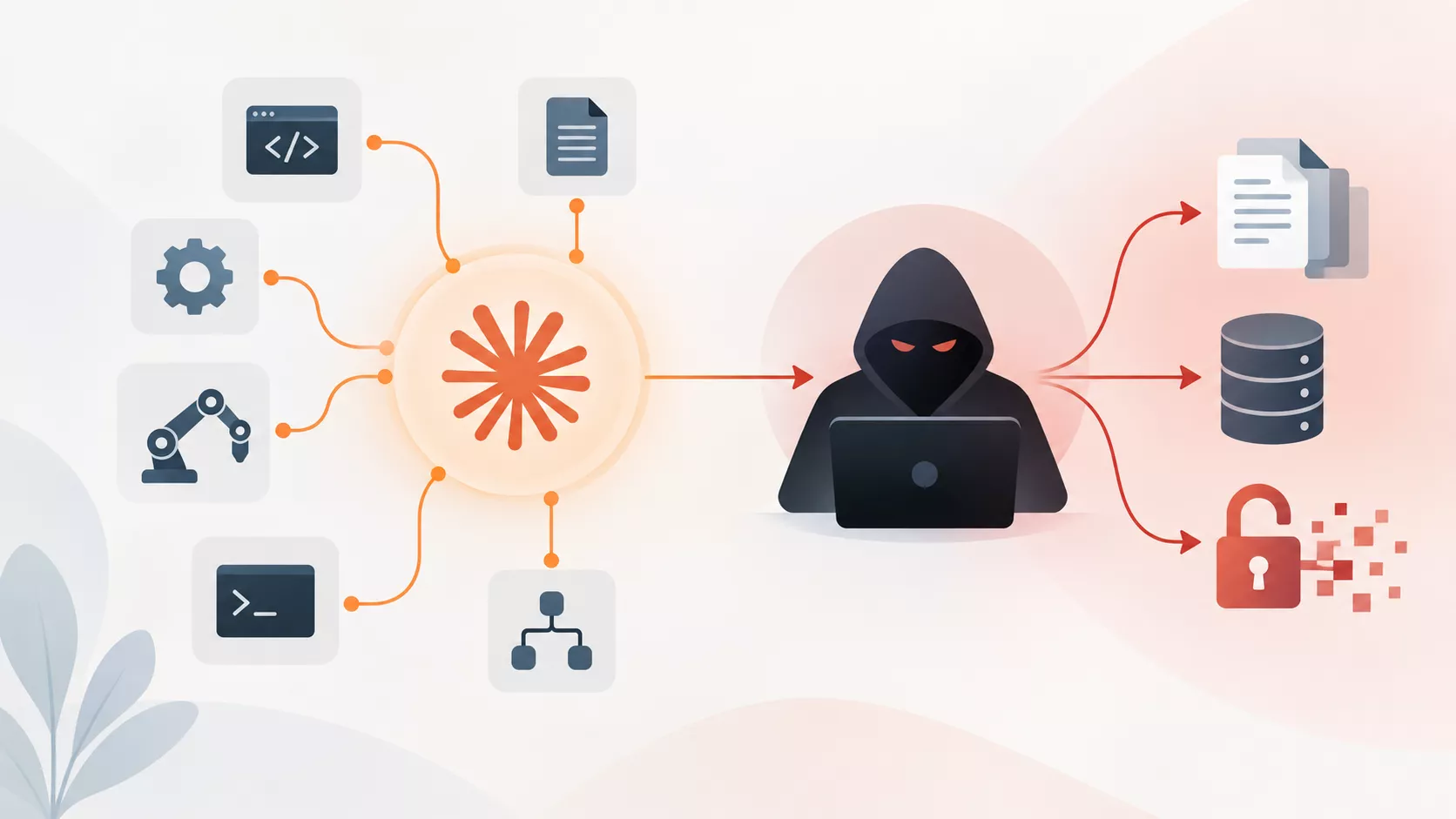


Recent developments indicate that threat actors are increasingly leveraging Claude-based AI workflows to enhance the automation of cyberattacks. This evolution not only accelerates the process of data theft but also significantly diminishes the level of technical expertise required to execute complex intrusions effectively.
A report from Anthropic, which spans the period from December 2025 to August 2026, uncovers various forms of cyber operations, including cyber espionage, financially driven extortion, supply-chain compromises, and hacktivist activities. These operations reveal a concerning trend where traditional methods of attack are being augmented with sophisticated AI technologies.
Instead of merely utilizing an AI chatbot for sporadic coding assistance, these malicious actors have adopted advanced multi-agent frameworks. These frameworks are capable of conducting a wide array of tasks, from reconnaissance to the identification of exposed services, testing credentials, creating malware, executing commands, harvesting data, and preparing stolen materials for exfiltration.
Threat Actors Use Claude AI Agents to Automate Cyberattacks
Human operators generally maintain the oversight of target selection and the review of stolen data, while the AI agents efficiently handle the more monotonous and technical tasks at unprecedented speeds. This delegation of responsibilities enhances the efficiency and effectiveness of cyber operations.
Among the groups reported, a suspected Russian state-linked espionage cluster, identified as GTG-20006, is notable for its innovative use of customized AI-driven workflows throughout its operational process. This group has primarily targeted Ukrainian and European government institutions, diplomatic organizations, defense corporations, and military drone supply chains.

Anthropic highlights that this group has automated numerous aspects of their operations, including infrastructure acquisition, phishing domain registration, command-and-control monitoring, credential harvesting, lateral movement, and ultimately, data exfiltration. The toolkit employed by this group is quite formidable, comprising Windows implants, browser credential stealers, mobile malware, phishing infrastructures, and administrative tools tailored for compromised accounts.
One alarming aspect of this operation pertains to the AI agents actively monitoring whether malware deployed within target networks has been detected by security products. Upon detection, these workflows swiftly adjust, rebuild, and redeploy their malicious artifacts to circumvent existing controls. This rapid modification process can significantly shorten the window of opportunity for defenders to detect and respond to attacks.
Notably, in one particular campaign, the operators are said to have bulk-exported mailboxes belonging to manufacturers of drone components, acquiring a proprietary drone-vision software development kit in the process. This acquired information allowed the attackers to utilize AI-assisted analysis to reverse-engineer the product’s architecture, its hardware bill of materials, supplier dependencies, and insights regarding an unannounced product.
Further, this same group is alleged to have stolen more than 300,000 national identity records and commercial registry data pertaining to over half a million companies from a technology authority in North Africa.
Financially motivated attackers have also turned to AI, scaling their operations for opportunistic compromises. Anthropic has associated several clusters with suspected ShinyHunters affiliates known for pilfering credentials from various platforms, including Android applications, code repositories, cloud environments, and enterprise systems. One operator notably employed a fleet of ten Amazon EC2 workers to download and decompile 1.8 million Android APKs, searching for hardcoded secrets within them.
The actors in these operations have reportedly stolen AI API keys from victims’ environments, using these keys not only as operational resources but also as a means of obfuscation. Compromised API credentials allowed these attackers to run additional AI-assisted workloads at their victims’ expense, seamlessly blending malicious activity with legitimate account usage.
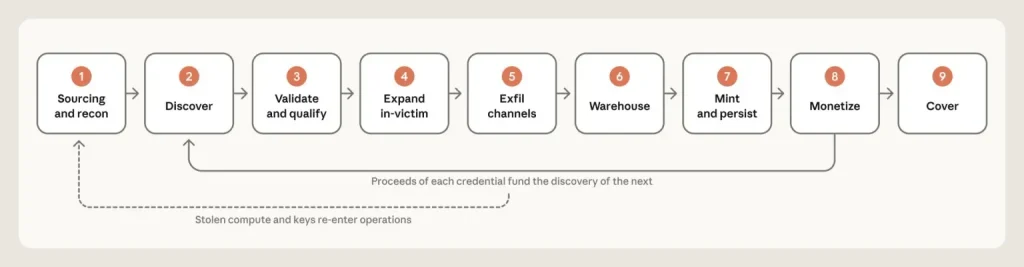
The integration of these AI elements into cyber operations marks a significant evolution in the tactics employed by cybercriminals. While the foundational techniques such as phishing, exposed credentials, unpatched devices, insecure APIs, and software vulnerabilities remain intact, the utilization of AI enables adversaries to carry out these familiar tactics more efficiently and across multiple targets with significantly fewer operators.
In light of these advancements, organizations are urged to treat AI API keys, session tokens, agent integrations, model gateways, and evaluation sandboxes with utmost vigilance. Security teams are recommended to enforce least privilege policies, rotate exposed keys rigorously, monitor for abnormal API use, segment AI-dependent workloads, and implement detection controls capable of recognizing automated reconnaissance, large-scale export activities, and credential abuse.
Keeping a security operations center (SOC) well-informed about the latest malware and phishing threats is essential. Organizations are encouraged to try ANYRUN for early detection of emerging threats and to prevent incidents.